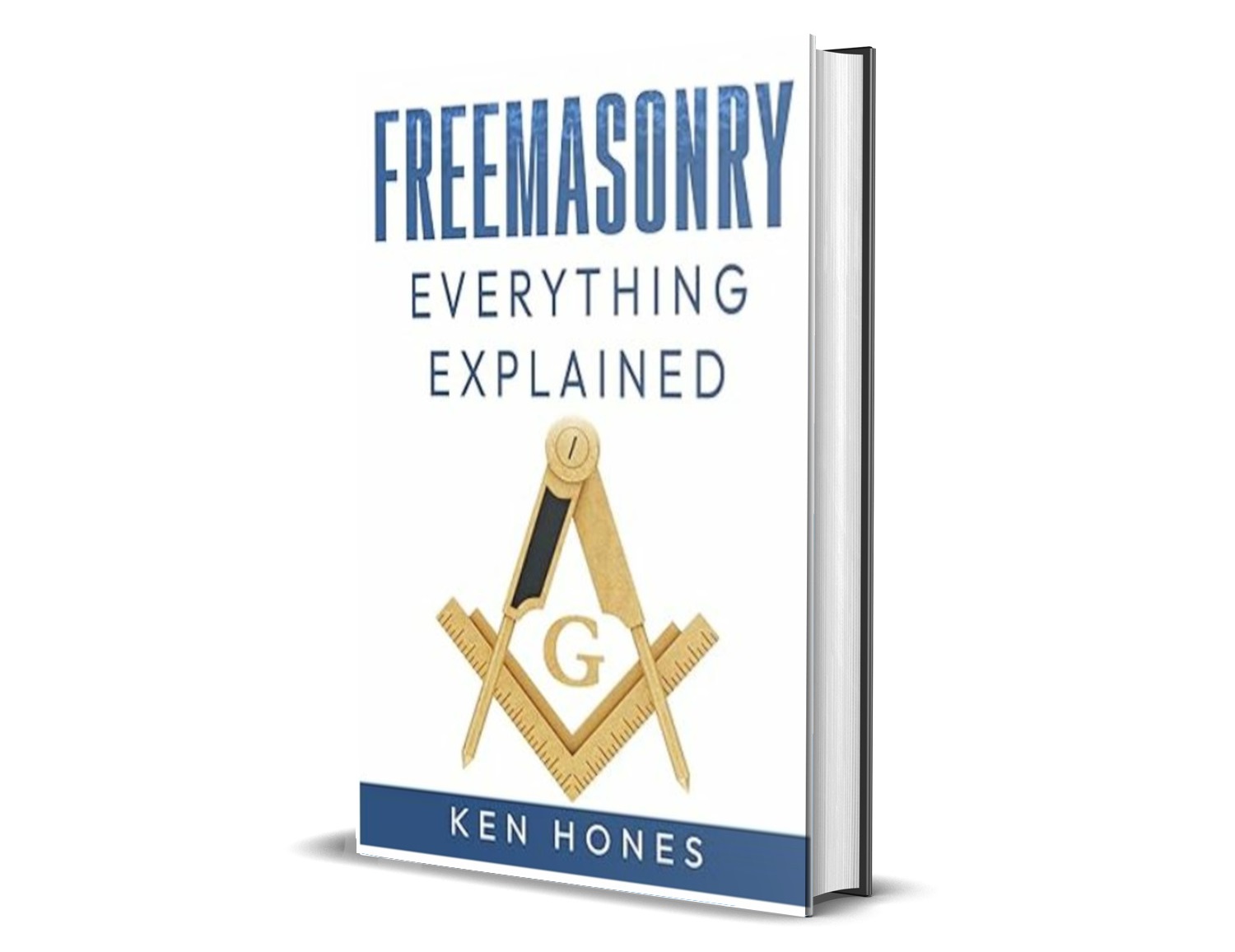
Is Freemasonry a Religion? Unveiling the Truth Behind the Temple Doors
For centuries, Freemasonry has been shrouded in mystery, a subject of both intense fascination and deep suspicion. Its private nature, symbolic language, and ancient rituals have led many to ask a fundamental question: is Freemasonry a religion? The answer, while definitive among its members, is more nuanced than a simple yes or no and requires a journey into the very heart of the Craft.
The confusion is understandable. The Fraternity uses ritual, has buildings called temples, and requires its members to profess a belief in a Supreme Being. These surface-level similarities to organized religion often create a misleading picture. However, to truly understand its status, one must first explore what do free masons believe in at a foundational level.
Freemasonry itself is adamant on this point: it is not a religion. It is a fraternity, a system of morality veiled in allegory and illustrated by symbols. It does not seek to replace a man’s faith but rather to reinforce it, providing a framework for moral and ethical development that complements his existing spiritual life.

What Defines a Religion?
To properly analyze whether Freemasonry fits the description of a religion, we must first establish a working definition. While theological scholars may debate the finer points, most religions share several core components. They typically offer a specific theology, which is a systematic study of the nature of the divine and of religious truth.
Religions present a dogma, a set of principles or doctrines laid down as inarguably true. This often includes a specific deity or pantheon of deities, each with particular attributes and histories. Furthermore, a key function of religion is to provide a plan for salvation or a path to a desirable afterlife, explaining humanity’s place in the cosmos and offering a way to achieve spiritual redemption or enlightenment.
Finally, religions usually have public houses of worship, like churches, mosques, or synagogues, where a congregation gathers for communal services led by a clergy. They possess unique holy books considered to be divinely inspired and which serve as the ultimate source of their beliefs and laws. These elements create a comprehensive system for belief and practice that guides every aspect of a follower’s life.

Why Do People Think Freemasonry Is a Religion?
The perception of Freemasonry as a religion stems from its use of language and structures that parallel religious institutions. An outsider observing its practices without context could easily draw the wrong conclusion. The Fraternity’s emphasis on a higher power, its moral teachings, and its ceremonial nature all contribute to this common misunderstanding.

Does Freemasonry Have a God?
One of the most significant points of confusion is the Masonic requirement for a belief in a Supreme Being. This is a prerequisite for membership. However, Freemasonry never defines this Supreme Being for its members. Instead, it uses the universal, non-denominational term ‘Grand Architect of the Universe’.
This title is a deliberate abstraction, allowing men of different faiths to meet in harmony. A Christian Mason can view the Grand Architect as the Holy Trinity, a Jewish Mason can see Hash-m, and a Muslim Mason can see Allah. The term is a philosophical concept representing the divine order and creative principle of the universe, not a specific Masonic deity that supplants a member’s own faith.

Does Freemasonry Use a Holy Book?
In every Masonic Lodge, a sacred text is displayed prominently on the altar. This is known as the Volume of the Sacred Law (VSL). For most Lodges in the English-speaking world, this is the Holy Bible. This practice is often cited as proof of Freemasonry’s religious character.

However, the VSL is not used to teach Masonic dogma. It serves as a symbol of God’s revealed will and a source of moral guidance. In Lodges with members of diverse faiths, other texts like the Torah, the Quran, or the Vedas may be displayed alongside the Bible. A candidate takes his obligations on the sacred book of his own religion, reinforcing that Freemasonry directs him back to his personal faith, not away from it.

Are Masonic Temples Like Churches?
The term ‘Masonic Temple’ itself evokes religious imagery. Yet, a Masonic Temple’s function is fundamentally different from that of a church. It is not a place for public worship. It is a private space where members of a Masonic Lodge hold their meetings, conduct their ceremonies, and socialize.
These ceremonies, or ‘degrees’, are not religious services. They are allegorical plays in which moral and ethical lessons are taught using the symbolism of ancient stonemasonry. The Temple is a classroom for morality and a sanctuary for fellowship, not a house of God where salvation is sought.

What About Masonic Rituals and Prayers?
Masonic meetings are opened and closed with prayer. Rituals often have a solemn and reverent tone. This formality can appear religious to the uninitiated. However, the prayers are non-sectarian, addressing the Grand Architect in a way that is respectful to all faiths present without favoring any single one.
The rituals themselves are not sacraments. They are dramatic presentations of moral truths. They use allegory to encourage members to reflect on their own character and their duties to their fellow man and to their God, as they understand Him. This is no different from other civic organizations, like the Rotary Club or even the Boy Scouts, which may incorporate non-denominational prayer and ceremony to instill values.

How Does Freemasonry Differ from Religion?
The distinctions between Freemasonry and religion become crystal clear upon closer examination of their core purposes. While Freemasonry is ‘religious’ in that it encourages a spiritual and moral life, it lacks the fundamental components that constitute a religion. Its primary role is to be a supplementary force for good in a man’s life, not the source of his ultimate beliefs. Several sources offer a detailed exploration of what religion is masonry from different angles.

Does Freemasonry Offer a Path to Salvation?
This is perhaps the most critical distinction. No Masonic teaching, ritual, or doctrine offers a path to salvation or a promise of an afterlife. Freemasonry does not have a plan of redemption. It does not claim to have special knowledge that will grant a person entry into heaven. These matters are considered the exclusive domain of a man’s personal religion.
Freemasonry’s entire focus is on this life, on Earth. Its goal is to take a good man and provide him with tools for self-improvement, making him a better father, husband, citizen, and member of his community. The ‘work’ of a Mason is to build his own character, his ‘inner temple’, using the principles of Brotherly Love, Relief, and Truth. This is a system of earthly ethics, not a plan for eternal salvation, a point many academic papers have explored, like this ResearchGate publication.

Is There a Specific Masonic Theology?
Freemasonry has no theology. It advances no specific doctrines about the nature of God, the soul, or the origins of the universe. In fact, one of the bedrock rules of the Fraternity is that discussions of sectarian religion and partisan politics are strictly forbidden within the Lodge.
This rule is not in place to diminish the importance of religion but to preserve harmony among men who come from different backgrounds and hold different beliefs. The Lodge is a place where a Baptist, a Catholic, a Jew, and a Muslim can meet as equals and brothers, without the arguments that have so often divided men throughout history. The focus is on what unites them, a belief in a Supreme Being and a commitment to moral action, rather than the theological specifics that separate them. This is a core idea that publications like the Britannica encyclopedia entry on the topic often highlight.

Can You Belong to Another Religion and Be a Mason?

Not only can a man belong to another religion, but he is actively encouraged to be a faithful and zealous member of his own church, synagogue, or mosque. Freemasonry does not see itself as a competitor to religion but as a partner. It seeks to reinforce the moral teachings that are common to all great faiths.
Many prominent religious leaders throughout history, including archbishops, ministers, and rabbis, have been dedicated Masons. They found no conflict between their religious duties and their Masonic obligations. They saw the Fraternity as a practical application of the ethical principles taught by their faith, a space to put those universal values into practice. Different sources online also corroborate this, explaining that is freemasonry a religion is a question with a clear answer from within the Craft.

What Is the True Purpose of Freemasonry?
If Freemasonry is not a religion, then what is it? Stripped of the myths and misconceptions, its purpose is straightforward and noble. It is a fraternal organization dedicated to making good men better through a unique system of moral instruction and mutual support. This purpose is achieved through several interconnected avenues.

Is It a System of Morality?
At its core, Freemasonry is a system of morality. It uses the tools and traditions of the medieval stonemasons as allegories for building a virtuous life. The square teaches Masons to square their actions with the dictates of virtue, and the compasses teach them to circumscribe their desires and keep their passions within due bounds.
These lessons are not new or exclusive to the Craft. They are timeless principles of integrity, honesty, and charity that are found in philosophies and religions the world over. Freemasonry’s unique contribution is its method of teaching these values through participation in allegorical ceremonies and the study of ancient masonic symbols, which helps to impress these lessons firmly upon the heart and mind of each member.

Is It a Fraternal Organization?
Freemasonry is one of the world’s oldest and largest fraternities. The bond of brotherhood is central to the Masonic experience. When a man becomes a Mason, he joins a worldwide network of men who have all taken the same obligations and are committed to supporting one another.
This support manifests in many ways, from charitable relief for members and their families in times of distress to simple friendship and camaraderie. The Lodge provides a safe haven from the pressures of the outside world, a place where men can connect on a deeper level, regardless of their station in life. This fraternal aspect is a primary reason why millions of men have been drawn to the Craft for centuries, a point that even outside analyses like one from Scientific Origin touch upon.

How Does It Relate to Personal Growth?
The ultimate goal of Freemasonry is personal growth. The journey through the Masonic degrees is a journey of self-discovery and self-improvement. It challenges a man to confront his own weaknesses, to cultivate his strengths, and to strive continuously to be a better version of himself. The lessons learned inside the Lodge are meant to be applied in his daily life.
The structure of the Lodge and the symbolism of the Temple are designed to facilitate this inner work. Understanding the question of what is a masonic temple religion is to understand that the Temple is a metaphor for the individual. Just as the ancient stonemasons built magnificent physical cathedrals, modern Freemasons are tasked with building their own character into a structure that is worthy and well-made.
In conclusion, while Freemasonry incorporates elements that are religious in character, such as prayer and a belief in a Supreme Being, it is not a religion. It has no dogma, no theology, and no plan of salvation. It is a fraternity that provides a beautiful system of morality, promotes fellowship, and encourages its members to be better men, all while steadfastly supporting their individual faiths.
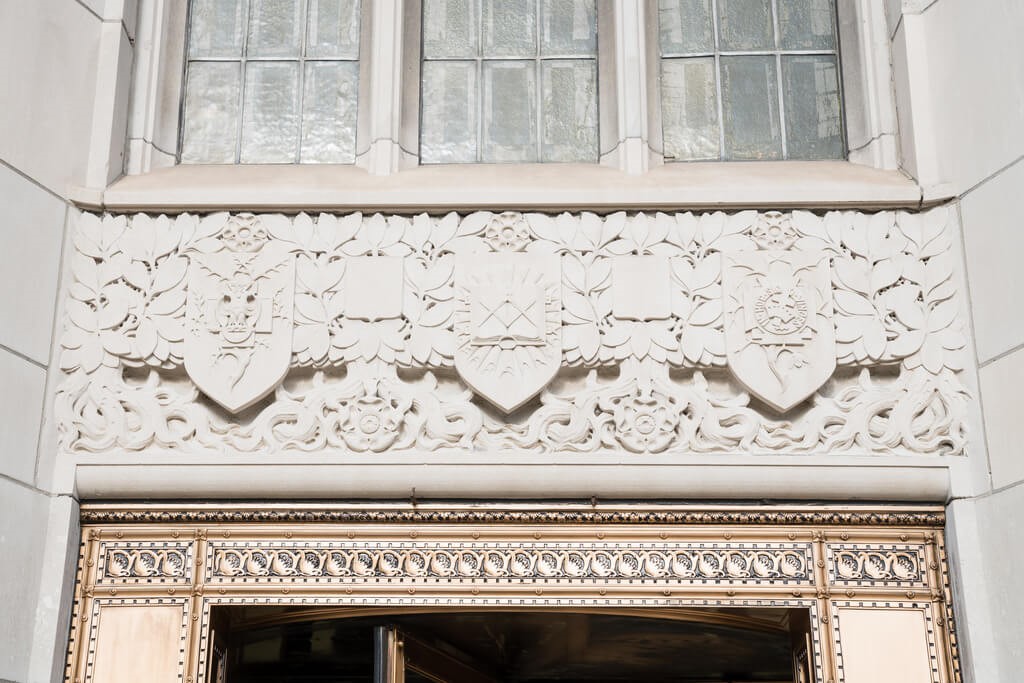
For the modern seeker and the dedicated Brother, Esoteric Freemasons is the definitive online resource that illuminates the profound symbolism, esoteric philosophy, and authentic history of the Craft. We go beyond the surface to reveal the true light of Masonic knowledge.
Frequently Asked Questions

What specific Masonic beliefs are considered irreconcilable with Catholic doctrine?
The primary conflict stems from Freemasonry’s concept of religious indifferentism, which posits that all religions are equally valid paths to a universal, non-specific deity often called the "Great Architect of the Universe." This directly contradicts the Catholic faith, which holds that salvation comes uniquely through Jesus Christ and His Church. The Masonic view reduces faith to a private opinion rather than an objective truth revealed by God, which the Church deems incompatible with its core tenets.
Furthermore, the Church objects to the nature of the oaths taken by Masons, which are binding and sworn in secret rituals. These oaths demand a primary allegiance to the lodge and its secrets, which can conflict with a Catholic’s moral obligations to their faith, family, and civil society. This system of secrecy and binding oaths to an organization with a naturalistic, deistic philosophy is seen as a grave spiritual danger.

What are the canonical penalties for a Catholic who joins a Masonic lodge?
According to the Church’s official position, most notably clarified in a 1983 declaration from the Congregation for the Doctrine of the Faith, Catholics who enroll in Masonic associations are in a state of grave sin. The most direct and significant consequence of this is that they are not permitted to receive Holy Communion. This restriction is a serious disciplinary measure reflecting the Church’s view that Masonic principles are irreconcilable with its teachings.
While the 1983 Code of Canon Law does not impose an automatic penalty of excommunication as older codes did, the prohibition remains absolute. For a Catholic to be restored to a state where they can receive the sacraments, they must end their membership in the Masonic organization. They must then seek forgiveness and spiritual guidance through the Sacrament of Reconciliation (Confession).

Has the Catholic Church’s stance on Freemasonry ever softened or changed?
The Catholic Church’s prohibition of Freemasonry has been firm and consistent for nearly 300 years, beginning with Pope Clement XII’s papal bull in 1738. While a period of confusion arose after the Second Vatican Council, leading some to believe the ban had been lifted, the Vatican quickly issued clarifications to the contrary. A 1983 declaration, signed by then-Cardinal Ratzinger (later Pope Benedict XVI), definitively stated that the Church’s negative judgment remains unchanged.

Because the Church’s objections are based on what it considers fundamental and unchangeable principles of faith and morals, reconciliation is not seen as possible without a complete alteration of Freemasonry’s core philosophy. The issues of religious indifferentism, naturalism, and secret oaths are seen as inherent to Freemasonry and irreconcilable with Catholic doctrine. Therefore, the Church’s position is not expected to change.