Unveiling the Light: A Journey into the Philosophy of Freemasonry
Beyond the whispered secrets and enigmatic symbols lies the true heart of Freemasonry: a profound and enduring philosophical tradition. For centuries, this global fraternity has guided its members on a unique journey of self-discovery and moral development. It is often described as a ‘peculiar system of morality, veiled in allegory and illustrated by symbols’, a definition that hints at its rich and layered nature.
At its core, Freemasonry is not a religion but a framework for personal growth. It encourages each member to be steadfast in his own faith while providing a universal language of symbolism and ritual to explore life’s deepest questions. The entire structure of the Craft is designed to take a good man and provide him with the tools to become a better one, fostering a lifelong commitment to truth, integrity, and enlightenment.
The quest for this betterment is the central pillar of Masonic philosophy. It is a path that moves from figurative darkness, representing ignorance and unenlightenment, toward a radiant and divine Light. This pursuit is what animates every lodge meeting, every ritual, and every lesson taught within the fraternity, creating a shared purpose that transcends borders and generations.

What Are the Ancient Roots of Masonic Philosophy?
To understand Masonic thought, one must look back to the great cathedrals of Europe. The fraternity’s origins are traced to the operative stonemason guilds of the Middle Ages. These men were not just laborers; they were architects, engineers, and artists who possessed a sophisticated knowledge of geometry and structural design, secrets they guarded carefully.
Their lodges were practical workshops where apprentices learned the trade. They used simple tools like the square, compasses, level, and plumb rule to transform rough, uncut stone into the perfectly shaped blocks needed to build magnificent structures. This physical act of creation held a deep allegorical power that would form the basis of speculative Masonry.
Around the 16th and 17th centuries, these operative lodges began accepting men who were not stonemasons by trade. These new members, known as ‘speculative’ or ‘accepted’ Masons, were drawn to the moral and philosophical teachings embedded within the guild’s traditions. They saw the stonemason’s tools not as instruments for shaping rock, but as symbols for shaping one’s character.
The rough stone, or ashlar, came to represent man in his natural, ignorant state. The perfect ashlar, a smooth and squared cube, symbolized a person who, through education and self-discipline, had cultivated virtue and enlightenment. This transition from operative to speculative Masonry marked the birth of the fraternity as we know it today, a system dedicated to building better men instead of stone cathedrals.
This new speculative philosophy did not emerge in a vacuum. It absorbed wisdom from a variety of ancient and contemporary sources. Influences can be seen from the Greek mystery schools, which used allegory and initiation to impart spiritual truths, and from the Hermetic and alchemical traditions of the Renaissance, which sought to understand the divine connection between the cosmos and the individual.
The Enlightenment, with its emphasis on reason, tolerance, and the pursuit of knowledge, also profoundly shaped Masonic thought. It provided a modern intellectual framework for the fraternity’s ancient allegories, solidifying its role as a school of moral and philosophical inquiry.

How Does Freemasonry Define ‘The Pursuit of Light’?
The central metaphor in all of Freemasonry is the concept of Light. This is not merely physical light but a symbol for the ultimate truth, knowledge, and spiritual awareness that a Mason seeks throughout his life. It represents the very essence of the divine, the source of all goodness, and the end-goal of the human journey toward perfection.
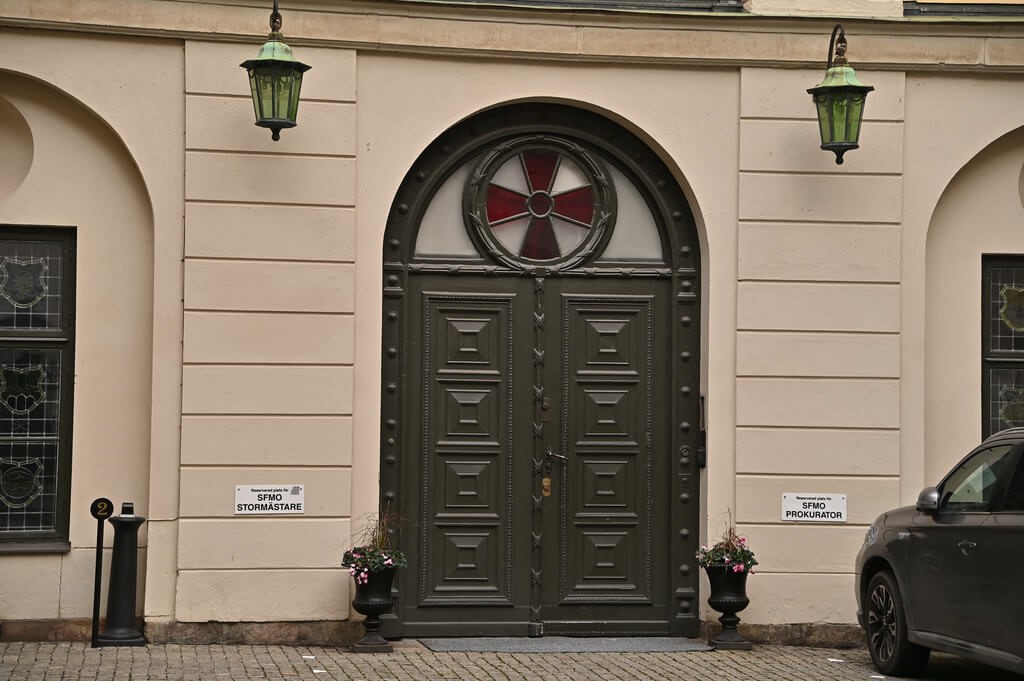
A candidate for Freemasonry begins his journey in a state of symbolic darkness. This represents a state of ignorance, not in an insulting sense, but as an acknowledgment of the human condition. We are all born without innate knowledge of virtue or the nature of the universe. The Masonic journey is a structured process of emerging from that darkness into the brilliant radiance of intellectual and moral Light.
This progression is not a passive reception of dogma. Instead, it is an active, participatory process. A Mason is encouraged to seek Light through study, contemplation, and dialogue with his brethren. The fraternity provides the allegorical framework and symbolic tools, but the work of understanding and internalizing these lessons belongs to the individual. This is a key aspect of what is the philosophy of the freemasons; it is a system of guided self-discovery.

What Role Do Symbols Play in This Journey?
Symbols are the universal language of Freemasonry, allowing men of different cultures, faiths, and backgrounds to communicate complex philosophical ideas. They are, as the saying goes, the ‘veils’ in which the system’s morality is presented. Each symbol is a key that unlocks a deeper layer of meaning.
The most recognizable symbol, the Square and Compasses, represents the interplay between the earthly and the divine. The square is a tool for testing right angles and creating perfect squares, symbolizing morality, fairness, and acting with integrity in our worldly affairs. The compasses, used to draw circles, represent the spiritual realm, our relationship with the divine, and the boundaries we must set for our passions.
Together, they remind a Mason to ‘square his actions by the square of virtue’ while using the compasses to ‘circumscribe his desires and keep his passions within due bounds’. This constant balancing act between our material and spiritual obligations is a cornerstone of Masonic life.
Other symbols, like the Rough and Perfect Ashlars, illustrate the process of self-improvement. The plumb rule represents rectitude of conduct, the level symbolizes equality among all men, and the trowel is the tool used to spread the ‘cement of brotherly love and affection’, binding the members of the fraternity together.

How Are Morality and Virtue Taught?
Freemasonry’s philosophical education is structured through a series of degrees, with the first three being the foundation of the entire system. These are the degrees of Entered Apprentice, Fellowcraft, and Master Mason. Each degree presents a unique set of allegorical lessons that build upon the last, guiding the candidate on a progressive path of moral instruction.
The Entered Apprentice degree focuses on the basics of self-control and the need for a firm foundation in truth. The Fellowcraft degree encourages the pursuit of knowledge, particularly through the study of the liberal arts and sciences. The Master Mason degree confronts the themes of mortality, fidelity, and the hope of immortality, completing the primary cycle of Masonic education.
Central to this teaching are the four Cardinal Virtues: Temperance, Fortitude, Prudence, and Justice. These classical virtues are presented as essential pillars for a well-lived life. Temperance teaches moderation, Fortitude provides courage in the face of adversity, Prudence encourages wisdom in action, and Justice demands fairness and integrity in all dealings. These core tenets are a significant part of the values of Freemasonry and form the moral bedrock of a Mason’s character.

What Lies Beyond the Surface-Level Teachings?
While Freemasonry offers a robust system of morality for all its members, it also contains a profound esoteric dimension for those inclined to seek it. Esotericism refers to the inner, or hidden, meanings concealed within the fraternity’s rituals, symbols, and allegories. It is a path of deeper spiritual and philosophical inquiry.

This is not a separate form of Freemasonry but rather a more profound engagement with the teachings already present. It involves looking past the literal interpretations of the allegories to uncover their connection to ancient wisdom traditions. This level of study often attracts thinkers and seekers, and a look at history reveals many influential Freemason popular members who were drawn to these deeper aspects of the Craft.
The esoteric path encourages a Mason to see the lodge room as a microcosm of the universe and the self. The rituals become a form of active meditation, and the symbols become mandalas for contemplation. This approach transforms the Masonic experience from a moral society into a personal spiritual journey toward gnosis, or direct experiential k