The Power of Masonic Ritual: Why Freemasonry Uses Allegory and Ceremony
For centuries, the ceremonies of Freemasonry have been shrouded in mystery, sparking curiosity and speculation. To the uninitiated, the idea of grown men participating in elaborate rituals can seem strange or archaic. Yet, within these carefully constructed ceremonies lies the very heart of the Masonic method for teaching profound moral and philosophical lessons.
These rituals are not secret rites for the sake of secrecy. They are a timeless and effective system of education, using allegory and symbolism to convey truths that simple words often fail to capture. The journey begins with the first step into this unique world, an experience detailed in the Freemason First Degree ritual, which sets the foundation for a lifetime of learning.
At its core, Masonic ritual is a participatory drama designed to make a man think, reflect, and ultimately, improve himself. It is a shared experience that connects him to millions of Brothers across the globe and through the centuries, all of whom have walked the same symbolic path.

What Exactly Is Masonic Ritual?
In the simplest terms, a ritual is a prescribed order for a ceremony. We encounter rituals in all aspects of life, from graduation ceremonies and weddings to the simple act of a courtroom rising when a judge enters. These actions add weight, meaning, and structure to an event.
Masonic ritual functions in a similar way but on a much deeper, more personal level. It is a series of allegorical plays in which the candidate is the main character. Each part of the ceremony, from the words spoken to the objects displayed in the Lodge room, is imbued with symbolic meaning.
This is not about memorizing lines and performing actions by rote. Instead, it is an immersive learning environment. The ritual engages the candidate’s senses, intellect, and emotions, creating a memorable experience that imparts complex lessons in a powerful and lasting way. It transforms abstract principles into tangible experiences.

Why Does Freemasonry Rely on Allegory?
Allegory is the primary teaching tool of Freemasonry. It is a story or image that can be interpreted to reveal a hidden meaning, typically a moral or philosophical one. The Craft uses the allegory of building King Solomon’s Temple to represent the construction of a man’s own spiritual and moral character.

Isn’t It Easier to Just Say What You Mean?
One might ask why Freemasonry doesn’t simply hand a new member a textbook of ethics and philosophy. The answer lies in the nature of learning and human psychology. Direct instruction is effective for simple facts, but it is often inadequate for conveying deep wisdom.
Lessons taught through allegory require active participation from the learner. He must think for himself, interpret the symbols, and apply the meaning to his own life. This process of discovery makes the lesson his own, embedding it far more deeply than a lecture ever could.
An allegorical lesson speaks to the heart as well as the head. The emotional impact of the ceremonial drama ensures its moral teachings are not easily forgotten. It is the difference between being told that integrity is important and experiencing a story where your own integrity is symbolically put to the test.

What Kinds of Symbols Are Used?
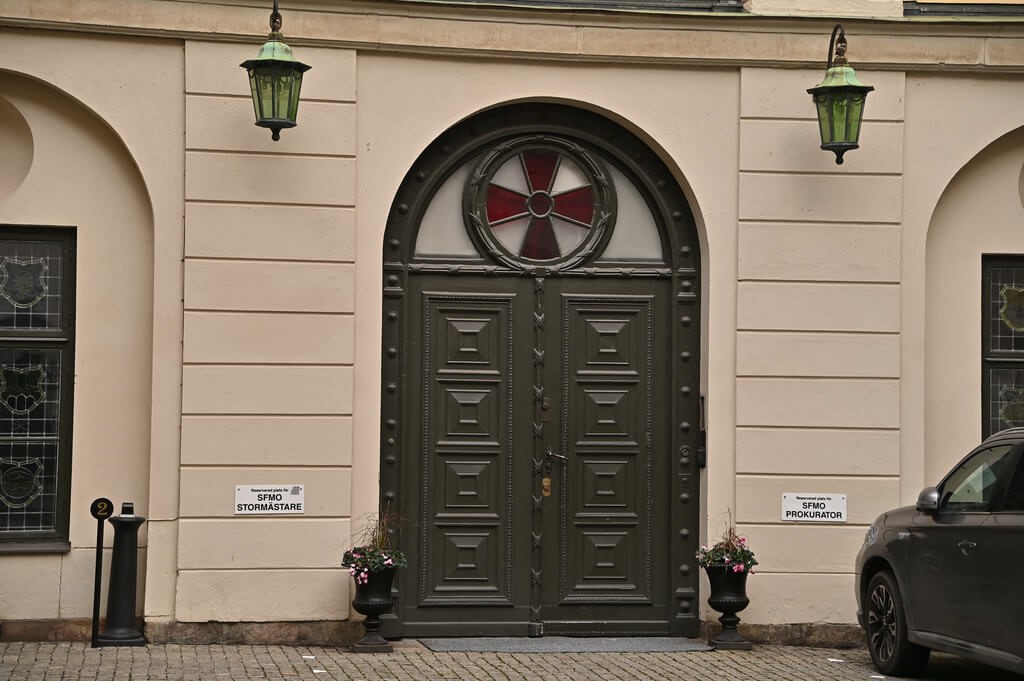
Freemasonry draws its most prominent symbols from the tools of the operative stonemasons of the Middle Ages. These builders used squares, levels, plumb-rules, and compasses to construct magnificent cathedrals. In Speculative Freemasonry, these tools are given a new, symbolic purpose.
The square teaches a Mason to square his actions with the square of virtue. The compasses remind him to circumscribe his desires and keep his passions within due bounds. The plumb-rule is a symbol of uprightness and integrity, while the level represents the fundamental equality of all people.
These are not arbitrary assignments. The function of the physical tool provides a perfect metaphor for its moral application. Just as a flawed stone must be shaped and smoothed to fit into a building, a man’s character must be refined to find its proper place in society. The goal is to build oneself into a ‘living stone’ for that great spiritual temple.

How Does Ceremony Transform a Man?
The ceremonial aspect of Freemasonry is what brings the allegory and symbolism to life. A Masonic Lodge room is configured to represent the universe and to create an atmosphere set apart from the profane or ordinary world. This deliberate separation helps a candidate focus his mind on the lessons being presented.
Participating in a ceremony that has been performed in much the same way for hundreds of years is a powerful experience. It connects the individual to a long chain of history, making him a part of something much larger than himself. This sense of tradition and continuity fosters a deep feeling of belonging and responsibility.
The Masonic journey is a progression through a series of degrees, each with its own unique ritual and lessons. This journey culminates in powerful allegorical lessons. For example, the experience of the 3rd Degree Masonic ritual is a profound dramatic presentation that explores the themes of loyalty, integrity, and the triumph of the human spirit over our mortal limitations.
This structured progression is intentional. The structure is not arbitrary; it follows a pattern refined over centuries. Historical records show how these Masonic rituals have been structured to build upon one another, creating a cohesive system of education that guides a member from basic principles to deeper philosophical contemplation.

Are Masonic Rituals Secret?
One of the most persistent myths about Freemasonry is that it is a ‘secret society’. In reality, it is more accurately described as a society with secrets. This is a critical distinction. The existence of Freemasonry, its meeting places, its membership, and its charitable works are all public knowledge.
The ‘secrets’ of Freemasonry are limited to the traditional modes of recognition, the specific handshakes, words, and signs used to prove membership. These are a legacy from the time of operative stonemasons, who used them to verify their qualifications and protect their trade from unqualified workmen.
Today, these modes of recognition serve to guard the privacy of the Lodge meeting and to ensure that only those who have taken an obligation to the Craft’s principles are admitted. The moral and philosophical teachings of Freemasonry, however, are not secret. They are universal principles of morality, justice, and brotherly love that are encouraged in all great philosophical and religious systems.

In fact, the general content of many rituals has been public knowledge for hundreds of years due to exposures, which were early attempts to reveal the Craft’s workings. Documents like Taylor’s monitor provide a glimpse into the language and structure of historical ceremonies. The true ‘secret’ of Freemasonry cannot be written or spoken; it is the personal experience of undergoing the rituals and the transformative effect it has on one’s character.

How Does Ritual Extend Beyond the Lodge Room?
The purpose of Masonic ritual is not to create men who are good at performing ritual. The purpose is to create good men. The Lodge room is a laboratory for character development, and the lessons learned within its walls are meant to be practiced in the world at large.
A Mason is taught to be a better man