Masonic Universality: The Unseen Tie That Binds Millions Across the Globe
Imagine a bond that stretches across continents, transcends cultural divides, and connects individuals who have never met. This is not a concept from fiction; it is the living, breathing principle of Masonic universality. It is the profound idea that a man, once initiated into the mysteries of Freemasonry, becomes part of a global family, united by shared values, symbols, and a common pursuit of moral and spiritual enlightenment.
At its heart, Masonic universality is the belief that the core tenets of the Craft are applicable to all good men, regardless of their country, religion, or station in life. It is an ideal that seeks to build bridges where society often erects walls, creating a unique space for fellowship and mutual understanding. This shared commitment to a higher purpose is the bedrock of the Masonic fraternity.
The promise of universality is one of the most powerful draws of the institution. It suggests that in any major city in the world, a traveling Mason can find a Lodge, present his credentials, and be welcomed not as a stranger, but as a Brother. This silent, global network is built upon a foundation of trust and a shared allegorical journey, making it one of history’s most enduring and widespread fraternal organizations.

What Are the Foundations of Masonic Universality?
The principle of universality in Freemasonry rests upon a few key pillars that ensure its relevance and accessibility across diverse populations. The most crucial of these is the requirement for a belief in a Supreme Being. This is a non-negotiable landmark of the Craft.
However, Freemasonry cleverly maintains its universal appeal by not defining that Supreme Being. It is referred to in Masonic ritual as the Great Architect of the Universe, a deliberately inclusive term. This allows a Christian, a Jew, a Muslim, a Hindu, and a man of any other faith that acknowledges a higher power to meet together in harmony, each holding his own personal theology sacred and private.
Another foundation is the focus on a shared system of morality, veiled in allegory and illustrated by symbols. The lessons of Freemasonry are not delivered as rigid dogma but through stories and symbols drawn from the art of building. The square teaches morality, the compasses teach self-restraint, and the level teaches equality. These are universal virtues that resonate with all of humanity.
This symbolic language acts as a universal tongue. It communicates complex philosophical ideas without relying on a specific spoken language, allowing the core teachings to remain consistent whether a ritual is performed in English, Spanish, French, or Japanese. This ensures the central experience of becoming a Mason is fundamentally the same everywhere.

How Did Masonic Universality Develop Historically?
The journey toward Masonic universality began with the transition from operative to speculative Masonry in the 16th and 17th centuries. The original stonemasons’ guilds were practical, professional organizations. As the great age of cathedral building waned, these guilds began accepting non-operative members, men of learning and influence who were more interested in the moral and philosophical symbolism of the builder’s tools than in their practical use.
With the formation of the first Grand Lodge in London in 1717, speculative Freemasonry began to codify its practices. The Enlightenment era, with its emphasis on reason, tolerance, and universal human rights, provided fertile ground for the fraternity to grow. Lodges became places where men of different social classes, political affiliations, and religious sects could meet on the level, a radical idea at the time.
As the British Empire expanded, so did Freemasonry. Regiments of the army and the crews of merchant ships carried warrants for Lodges with them, establishing Masonic outposts in North America, India, the Caribbean, and beyond. In these new lands, the Craft adapted, absorbing local members and proving its capacity for cultural flexibility.
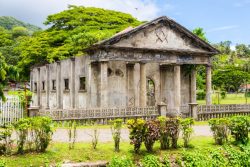
This global spread cemented the idea of a worldwide brotherhood. The rich tapestry of Masonic fraternity history is filled with stories of Masons from warring nations finding common ground and offering aid to one another on the basis of their shared obligation. This historical reality gave tangible proof to the abstract ideal of universality.

What Does Universality Mean for an Individual Mason?
For an individual member, universality is both a privilege and a responsibility. It means that he has a potential home away from home in nearly every country on Earth. The right of visitation is a cherished custom that allows a Mason in good standing to attend meetings in other recognized Lodges.
Imagine the experience of arriving in a foreign city where you know no one and speak the language poorly. By seeking out the local Masonic Lodge, you can find a warm welcome and immediate camaraderie. You will witness a ritual that, despite language differences, is comfortingly familiar in its structure, symbols, and intent.
This profound sense of connection embodies the universality of Freemasonry, transforming a theoretical concept into a lived reality. It fosters a truly cosmopolitan worldview, encouraging members to look beyond their own immediate circle and see themselves as part of a global human family.
The responsibility that comes with this privilege is to uphold the reputation of the fraternity wherever you go. A Mason’s conduct reflects not only on himself and his home Lodge but on the entire institution. He is expected to be an ambassador of its principles of integrity, charity, and brotherly love.

Are There Universal Symbols in Freemasonry?
Yes, absolutely. The symbolic language of Freemasonry is perhaps the strongest thread in the fabric of its universality. While minor details in ritual may vary from one jurisdiction to another, the core symbols remain constant and are instantly recognizable to Masons worldwide.
The most prominent of these is the Square and Compasses, often displayed with the letter G in the center. This emblem is the undisputed international trademark of the Craft. It represents the balanced interplay between our moral and spiritual obligations, a concept that requires no translation.
Other key universal symbols include the All-Seeing Eye, representing the omniscience of the Great Architect, and the two pillars, representing strength and establishment. The rough and perfect ashlars, symbolic of man’s uneducated state and his potential for refinement, are also found in Lodges across the globe.
Even celestial symbols like the Blazing Star in Freemasonry carry meanings that resonate across jurisdictions. It serves as a reminder of the divine guidance that should illuminate a Mason’s path through life. These shared icons create an immediate and deep sense of familiarity and connection.

How Does Symbolism Create a Universal Language?
Symbolism transcends the limitations of spoken and written words. A word in one language may have no direct equivalent in another, but a symbol like the level, representing equality, conveys its meaning instantly and intuitively to anyone who has been taught its Masonic significance.
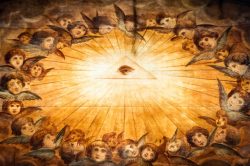
This allows Freemasonry to communicate its most profound truths in a way that is both deep and accessible. The interpretation of these symbols is a personal journey for each Mason, yet it takes place within a shared framework of ritual and tradition. This strikes a perfect balance between individual understanding and collective identity.
This symbolic method ensures that the core lessons remain pure and undiluted as they cross borders. A political or philosophical text can be altered in translation, but the image of a square teaching a man to be ‘square’ in his dealings is a powerful, constant metaphor. It is this feature that allows men from vastly different backgrounds to find common ground in their Masonic work.

What Challenges Does Masonic Universality Face?
While the ideal of universality is beautiful, its practical application is not without complexity. The primary challenge lies in the concept of ‘regularity’ and mutual recognition between the world’s many Grand Lodges. A Grand Lo