Freemasons vs Illuminati: Separating Hollywood Myth from Historical Fact
In the shadowed corners of popular culture, two names echo with an air of mystery and power: the Freemasons and the Illuminati. They are often spoken of in the same breath, tangled in a web of conspiracy theories that suggest a hidden hand guiding world events. This confusion is understandable, as both societies have been historically secretive, employing intricate symbols and rituals that capture the public imagination.
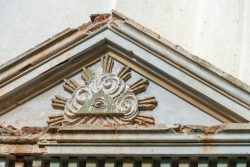
The truth, however, is far more complex and fascinating than the fiction. While their paths did briefly cross in 18th-century Europe, they are fundamentally different organizations with distinct origins, purposes, and legacies. Untangling them requires a journey back in time, separating historical fact from the sensationalism that has defined their modern image. Understanding their true nature begins with exploring their core tenets and the rich visual language they use, such as the powerful symbolism behind the Masonic blazing star symbol.
To truly grasp the difference, we must set aside the novels and blockbusters. We need to look at each group for what it was and what it is. One is an enduring global fraternity dedicated to self-improvement, while the other was a radical, short-lived intellectual movement. This article will illuminate the real story, examining their histories, their philosophies, and the historical moment their worlds collided.

What Exactly is Freemasonry?
Freemasonry is one of the world’s oldest and largest secular fraternal organizations. At its heart, it is a society of men concerned with moral and spiritual values, taught through a system of allegories and symbols. It is not a religion, but it does require its members to believe in a Supreme Being, referred to in Masonic ritual as the Great Architect of the Universe. This non-denominational approach allows men of different faiths to join together.
The fraternity’s core principles are often summarized as Brotherly Love, Relief, and Truth. Members are encouraged to practice charity, support one another and their communities, and pursue a life of integrity and self-improvement. The structure of Freemasonry is organized into Lodges, which are the basic local units, all operating under the jurisdiction of a regional or national Grand Lodge.

How Did Freemasonry Begin?
The precise origins of Freemasonry are debated among historians, but its lineage is most commonly traced to the stonemason guilds of the Middle Ages. These guilds of operative masons, who built the great cathedrals and castles of Europe, had secret signs and passwords to protect their trade secrets and identify their skill levels. They were highly organized and respected craftsmen.
By the late 16th and early 17th centuries, these guilds began to accept non-operative members, men who were not stonecutters but were interested in the moral and philosophical teachings of the guilds. This marked the transition from ‘operative’ to ‘speculative’ Masonry. The tools and rules of the stonemason’s craft, like the square, compasses, and level, were adapted as symbols to teach moral lessons.
The official founding of modern, speculative Freemasonry is dated to 1717, when four London lodges came together to form the first Grand Lodge of England. From there, the fraternity spread rapidly across Europe, the American colonies, and the rest of the world. It became a vibrant part of the Enlightenment, attracting thinkers, leaders, and men of influence who were drawn to its ideals of reason, liberty, and fellowship.

What Are the Core Beliefs of Freemasons?
Freemasonry describes itself as a ‘peculiar system of morality, veiled in allegory and illustrated by symbols’. Its teachings unfold through a series of degrees, typically the three degrees of the Blue Lodge: Entered Apprentice, Fellowcraft, and Master Mason. Each degree involves a ritual drama that uses symbolism to impart moral and ethical lessons.
The central aim is to take a good man and make him better. It is a journey of personal development, encouraging introspection, study, and the application of moral principles in daily life. Freemasonry provides a framework for its members to build their own spiritual and philosophical structure, rather than providing a set of dogmatic answers.

Who Were the Original Illuminati?
Unlike Freemasonry, which evolved over centuries, the Illuminati had a specific and documented beginning. The Order of the Illuminati was a real, historical secret society founded on May 1, 1776, by a German law professor named Adam Weishaupt. It was a product of the Enlightenment, a period of intense intellectual and philosophical change in Europe.
Weishaupt was a radical thinker who felt that society was being held back by the combined power of the state and the church. He envisioned a world governed by reason and science, free from what he saw as religious superstition and monarchical oppression. His Illuminati, meaning ‘the enlightened ones’, was created to be a vehicle for these revolutionary ideas.

What Was the Illuminati’s True Purpose?
The primary goal of the Bavarian Illuminati was to achieve a state of enlightenment where humanity could govern itself without the need for traditional power structures. Weishaupt believed that by secretly educating and placing influential men in positions of power, he could gradually reshape society from within. Their agenda was explicitly political and anti-clerical.
Members of the Illuminati were sworn to secrecy and used pseudonyms to protect their identities. They had a complex hierarchy of degrees, much like Freemasonry, designed to slowly reveal the Order’s true, radical aims to new recruits. The ultimate goal was the abolition of all monarchies and state religions, to be replaced by a new world order based on reason and universal happiness.

Why Did the Illuminati Disappear?
The original Illuminati had a very short lifespan. The Order existed for less than a decade, from 1776 to 1785. Its downfall was swift and decisive. The government of Bavaria, led by Duke Karl Theodor, was deeply conservative and suspicious of secret societies, which it viewed as a threat to its authority.
Internal conflicts and Weishaupt’s own paranoia also weakened the group. In 1785, the Duke issued a series of edicts that banned all secret societies, including the Illuminati and the Freemasons. The government seized the Order’s documents, exposed its membership, and effectively crushed the organization. Weishaupt was forced into exile, and the Bavarian Illuminati ceased to exist as a functioning entity.

Where Did the Confusion Come From?
The persistent link between Freemasonry and the Illuminati stems from a very real historical connection. Adam Weishaupt was himself a Freemason, and he deliberately chose to use Masonic lodges as a primary recruiting ground for his new Order. He saw the existing network of lodges as the perfect vehicle to find and indoctrinate men who were already open to esoteric ideas and fraternal bonds.
This strategy was quite successful for a time. Weishaupt and his associates joined Masonic lodges and worked to bring influential Masons into the Illuminati’s fold. This infiltration created an overlap in membership and led many to believe the two groups were either the same or that the Illuminati had taken control of Freemasonry. This historical footnote is how the Illuminati founder used Freemasonry to start his secret society.
However, it is crucial to understand that the majority of Freemasons were never part of the Illuminati. Many Masonic leaders grew suspicious of Weishaupt’s radical political agenda, which was contrary to the Masonic principle of avoiding political and religious debate within the lodge. The infiltration was limited and ultimately contributed to the Illuminati’s exposure and downfall.