Freemasonry Around the World: A Guide to Global Grand Lodges and Rites
Freemasonry, often shrouded in mystique, is a global fraternity with a rich and complex history spanning centuries. Its presence is felt on every continent, yet it is not a single, monolithic organization with a central world leader. Instead, it is a vast network of independent bodies, each with its own customs and governance, united by a shared set of core principles and symbolic language.
To understand this global tapestry, one must first grasp the concept of the Grand Lodge. These are the sovereign, self-governing administrative bodies that preside over Freemasonry within a specific geographical territory, such as a country, state, or province. The structure and authority of a Freemason Grand Lodge are the very foundation upon which the entire fraternity is built, ensuring order, consistency, and the preservation of ancient landmarks.
This guide will serve as your compass, navigating the intricate world of global Masonic governance. We will explore the origins of the Grand Lodge system, examine how its practices differ across continents, and demystify the various Rites that offer further Masonic light to members. From London to Lisbon and from New York to New Delhi, the Craft takes on many fascinating forms.

What Exactly is a Grand Lodge?
A Grand Lodge functions as the headquarters and supreme authority for all the individual Masonic Lodges, often called constituent or blue lodges, within its jurisdiction. Think of it as the governmental body for Freemasonry in its designated area. It is responsible for issuing charters to new lodges, establishing the rules and regulations of the Craft, and ensuring that traditions are upheld.
Each Grand Lodge is sovereign, meaning it does not answer to any higher Masonic authority. This autonomy is a cornerstone of the fraternity. It dictates its own ritual, constitution, and bylaws. The Grand Lodge is led by a Grand Master, who is elected by the members of the lodges within that jurisdiction for a specific term, typically one or two years.
This structure ensures that Freemasonry can adapt to local cultures and legal systems while maintaining a core set of universal principles. The decisions made by a Grand Lodge, from recognizing other Grand Lodges to managing charitable foundations, shape the character and direction of Freemasonry for thousands of its members.

How Did Grand Lodges Begin?
The modern system of organized Freemasonry traces its origins to a pivotal moment in London. On St. John the Baptist’s Day, June 24, 1717, four existing London lodges came together at the Goose and Gridiron Ale-house. They formed what they called the Grand Lodge of London and Westminster, which would later become the United Grand Lodge of England, or UGLE.
This act was revolutionary. For the first time, it established a central governing body for what had previously been a collection of independent operative and speculative lodges. The new Grand Lodge created a standardized model of governance that could be replicated, providing a blueprint for the fraternity’s expansion.
As the British Empire grew, so did Freemasonry. Traveling Masons, military personnel, and colonists established lodges in new territories across the globe. These new lodges would eventually petition for their own independence, forming their own sovereign Grand Lodges based on the English model. This is how the fraternity spread organically, creating the patchwork of jurisdictions we see today.

Are All Grand Lodges the Same?
While they share a common origin story, not all Grand Lodges are the same or even in communication with one another. The key concepts here are ‘recognition’ and ‘regularity’. For one Grand Lodge to officially recognize another, the other must adhere to a set of core principles known as the ‘ancient landmarks’.

These landmarks generally include an unshakeable belief in a Supreme Being, the presence of a Volume of Sacred Law like the Bible, Torah, or Quran on the lodge’s altar during meetings, and a prohibition on the discussion of sectarian religion and partisan politics within the lodge. Another key tenet for most mainstream Grand Lodges is that their membership must be composed exclusively of men.
Grand Lodges that do not adhere to all these principles are considered ‘irregular’ or ‘unrecognized’ by the mainstream bodies. This creates two major branches of Freemasonry in the world: the Anglo-American ‘regular’ tradition and the ‘Continental’ or ‘liberal’ tradition, which often takes a different stance on these requirements. This diversity is a crucial aspect of the global Masonic experience.

How Does Freemasonry Vary Across Continents?
The expression of Freemasonry is deeply influenced by local culture, history, and philosophy. A lodge meeting in Tokyo will have a different feel from one in Tennessee, even if they share the same fundamental rituals and allegories. This regional variation is most apparent when examining the dominant Masonic traditions on each continent.

What Defines British Freemasonry?
As the birthplace of modern Grand Lodge Masonry, England holds a position of historical prominence. The United Grand Lodge of England (UGLE) is not a worldwide headquarters, but it is considered the ‘mother’ Grand Lodge by most regular jurisdictions. Its standards for recognition are the benchmark for mainstream Freemasonry globally.
English Freemasonry is known for its formal decorum, precise ritual work, and significant emphasis on charity. The leadership structure is well-defined, with a clear hierarchy leading up to the Grand Master. Learning about who is the head of the Masons in the UK provides insight into this historic and influential institution. Its traditions have shaped Masonic practice in countless countries, particularly those within the Commonwealth.

What About Continental Europe?
Across the English Channel, a different style of Freemasonry flourished. Known as Continental or Liberal Freemasonry, this branch is most prominently represented by the Grand Orient de France (GOdF). In 1877, the GOdF removed the requirement for its members to believe in a Supreme Being, a change that led to a major schism with the UGLE and the Anglo-American Masonic world.
Continental Freemasonry often permits and sometimes encourages the discussion of politics and religion in its lodges, viewing the lodge as a forum for social and philosophical debate. This approach reflects the secular and humanistic intellectual traditions of the European Enlightenment. This fundamental difference in philosophy remains the primary dividing line in world Freemasonry.
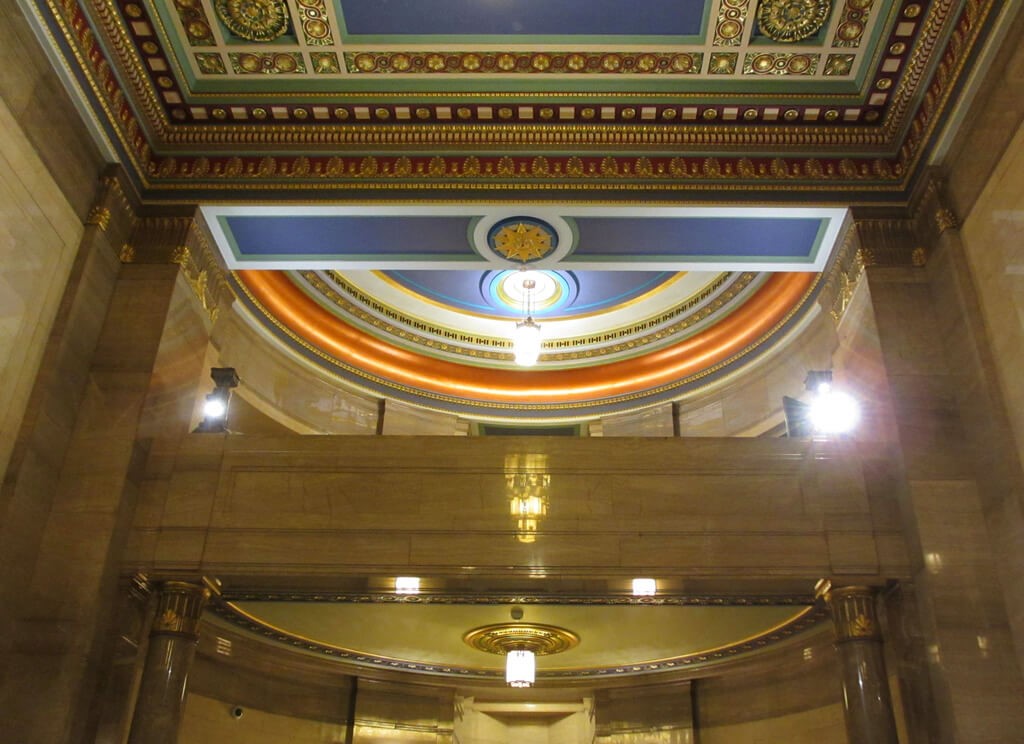
How is Freemasonry Structured in the United States?
American Freemasonry followed the English model of sovereign jurisdictions. There is no single National Grand Lodge of the United States. Instead, there is a separate and independent Grand Lodge for each of the 50 states and the District of Columbia. These Grand Lodges are in mutual recognition with each other and with regular Grand Lodges worldwide.
Two major streams of regular Freemasonry exist in the US: the state Grand Lodges and the historically African American jurisdictions known as Prince Hall Grand Lodges. While historically separate, many of these Grand Lodges now formally recognize one another as Masonically legitimate. The broader world of Freemasonry has a rich and detailed history in America, intertwined with the nation’s own story.