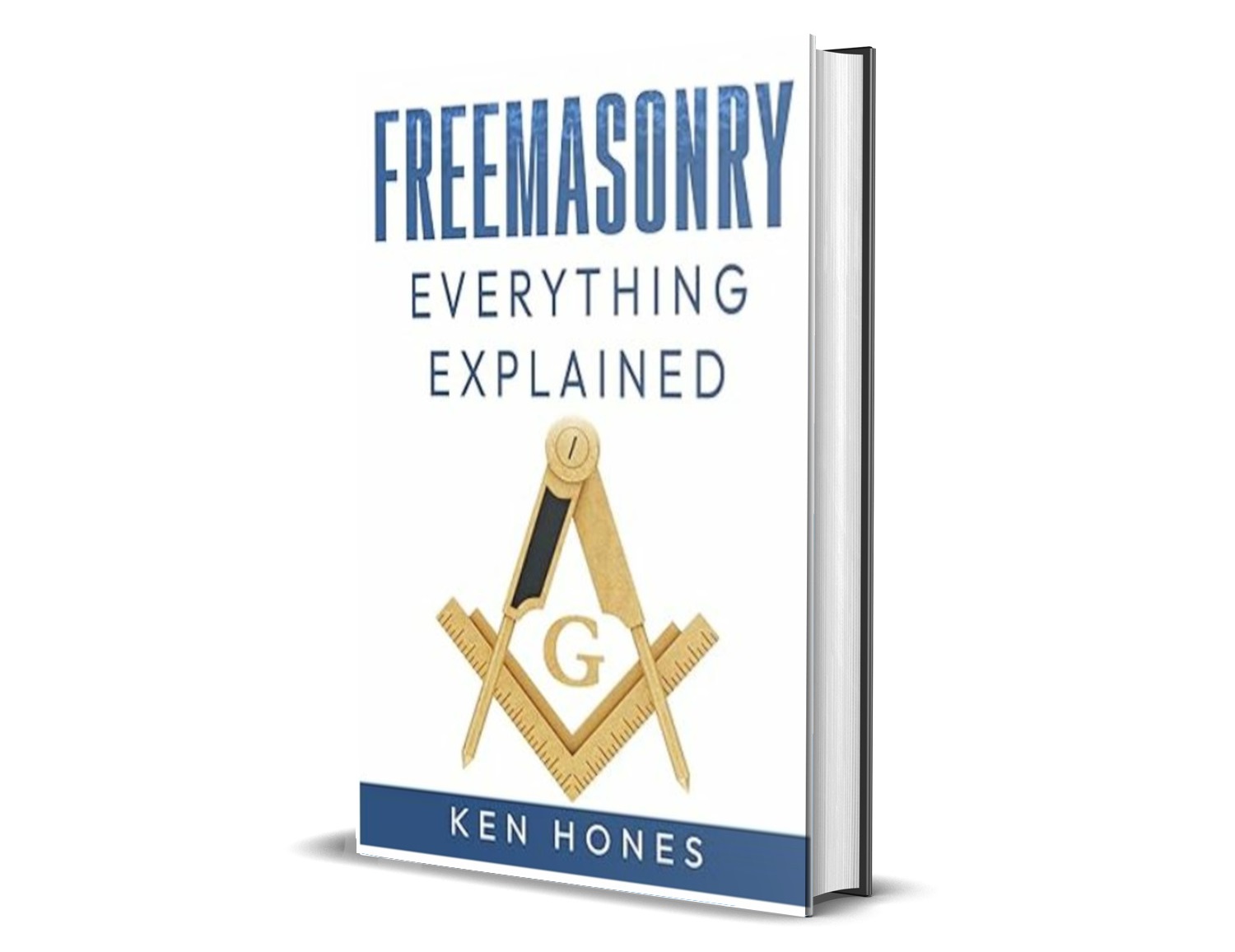
A Complete History of Freemasonry: From Ancient Guilds to Modern Lodges
Freemasonry, a name that evokes images of secret handshakes, mysterious symbols, and influential men meeting behind closed doors, has captivated the public imagination for centuries. It is the world’s oldest and largest fraternity, a brotherhood bound by shared ideals of morality, charity, and the pursuit of truth. But where did this enigmatic organization truly come from? Its story is not one of ancient conspiracies, but a fascinating evolution from a practical tradecraft into a profound system of philosophical inquiry.
The journey of the Craft is a rich tapestry woven through the pivotal moments of Western history. It is a narrative that begins not in the shadows of Solomon’s Temple or with fugitive Knights Templar, but in the dusty, industrious workshops of medieval Europe’s great cathedral builders. Understanding this transition from a guild of operative stonemasons to a fraternity of speculative thinkers is key to grasping the essence of the institution.
To truly appreciate its depth, one must explore A Complete History of Freemasonry: From Ancient Guilds to Modern Lodges, tracing its path from a society that built physical edifices to one that focuses on building better men. This history is a guide to the fraternity’s enduring relevance and its unique place in the modern world.

Did Freemasonry Begin with the Knights Templar or Ancient Egyptians?
Many romantic theories attempt to link Freemasonry’s origins to ancient and mystical sources. Tales of the Knights Templar, fleeing persecution and preserving their secrets within a new brotherhood, are popular but lack credible historical evidence. Likewise, connections to the mystery schools of ancient Egypt or the builders of King Solomon’s Temple are allegorical, not literal history.
These legends serve a vital purpose within Masonic ritual and philosophy. The story of the building of King Solomon’s Temple, for example, is the central allegory of Masonic degrees. It provides a rich symbolic framework for teaching moral and ethical lessons.
However, historians separate this symbolic or ‘legendary’ history from the authenticated, documented origins of the fraternity. The factual record points not to a dramatic, ancient beginning but to a gradual and practical evolution that began in the Middle Ages.

What Were the Operative Masonic Guilds?
The verifiable history of Freemasonry starts with the guilds of operative stonemasons who built the magnificent castles and cathedrals of Europe. Beginning around the 10th and 11th centuries, these skilled craftsmen possessed a sophisticated knowledge of geometry and engineering, secrets of the trade they guarded closely.
To protect their craft and maintain high standards, they formed lodges. A lodge was originally a simple workshop or shelter built on the side of a construction project where masons would eat, sleep, and receive their instructions. Within these lodges, a system of governance, training, and mutual support developed.
Apprentices learned the trade over many years, eventually becoming a Fellow of the Craft and, ultimately, a Master Mason capable of overseeing a project. They used secret words and signs to prove their skill level and status when traveling to new work sites, a practical necessity in an era before formal certifications.
The earliest surviving documents that outline the regulations and legendary history of these guilds are the Regius Poem, dated around 1390, and the Cooke Manuscript, from around 1410. These texts establish a direct lineage from practical stonework to the ethical framework that would later define Freemasonry.

How Did Masons Transition from Operative to Speculative?

As the great age of cathedral building waned in the 16th and 17th centuries, the demand for operative stonemasons declined. The guilds and lodges faced a crisis of purpose and membership. To survive, they began to change.
Lodges started accepting men who were not stonemasons by trade. These ‘accepted’ or ‘speculative’ Masons were gentlemen, scholars, and free thinkers of the era, attracted by the guild’s moral philosophy, its structured organization, and its allegorical teachings.
The first recorded initiation of a non-operative Mason was that of John Boswell, the Laird of Auchinleck, into a lodge in Edinburgh, Scotland, in 1600. Over the next century, this practice became increasingly common throughout Scotland and England.
This marked the fundamental shift in the fraternity’s purpose. The tools of the stonemason, like the square, compasses, and level, were reinterpreted as symbolic tools for moral and spiritual self-improvement. The focus moved from building physical temples of stone to building a spiritual temple in the heart of each member. This is essentially how Freemasonry as we know it started, transforming a trade guild into a philosophical brotherhood.

When Was the First Grand Lodge Formed?
The pivotal moment in modern Masonic history occurred on June 24, 1717. On St. John the Baptist’s Day, four existing lodges in London met at the Goose and Gridiron Alehouse near St. Paul’s Cathedral. Their purpose was to establish a central governing body, the first of its kind.
This assembly formed the Grand Lodge of London and Westminster. This act was revolutionary. It marked the formal birth of organized, speculative Freemasonry, providing a structure for lodges to work together, standardize rituals, and promote the Craft on a wider scale. Anthony Sayer was elected the first Grand Master.
In 1723, under the direction of Grand Master John Theophilus Desaguliers, a scientist and colleague of Isaac Newton, the Grand Lodge published the ‘Constitutions of the Free-Masons’. Written by the Reverend James Anderson, this book codified the rules, regulations, and legendary history of the Craft, providing a foundational document for all of Freemasonry to follow.
This new, organized form of Freemasonry spread rapidly. Today, this founding body is known as The United Grand Lodge of England, and it is recognized as the ‘mother’ Grand Lodge by a majority of Masonic jurisdictions around the world.

What Role Did the Enlightenment Play in Freemasonry’s Growth?
The 18th century, known as the Age of Enlightenment, was the perfect incubator for the growth of speculative Freemasonry. The era’s emphasis on reason, scientific inquiry, religious tolerance, and individual liberty aligned perfectly with the core tenets being developed in Masonic lodges.
Lodges became private spaces where men from different social classes and religious backgrounds could meet ‘on the level’. Here, they could freely discuss philosophy, politics, and science without the rigid constraints of a hierarchical society. The lodge became a microcosm of the ideal Enlightenment society.

This intellectual appeal attracted many of the era’s greatest thinkers, leaders, and artists. Men like Voltaire, Montesquieu, Wolfgang Amadeus Mozart, Benjamin Franklin, and George Washington were all drawn to the Craft. Their membership lent Freemasonry immense prestige and helped spread its influence across Europe and to the American colonies. This connection to the intellectual currents of the time is a key part of the origin story of Freemasonry.

How Did Masonic Symbolism Evolve?
As Freemasonry shifted from operative to speculative, its symbolism underwent a profound transformation. The working tools of the medieval stonemason were imbued with deep moral and philosophical meaning. This allegorical method of teaching became the hallmark of the Masonic experience.
The Square teaches Masons to square their actions by the square of virtue with all mankind. The Compasses remind them to circumscribe their desires and keep their passions within due bounds. The Gavel represents the force of conscience, necessary to divest the heart and mind of the vices of life. Even the discovery of the oldest Masonic symbol ever found provides a tangible link to this rich symbolic heritage.
Each symbol serves as a reminder of a particular moral lesson, encouraging a Mason to reflect on his character and his relationship with his creator and his fellow man. This rich visual language is universal, allowing Brothers from different cultures and languages to connect through a shared understanding. The study of Masonic symbols and their meanings is a lifelong pursuit for every member of the Craft.

How Did Freemasonry Spread Across the Globe?
Following the formation of the Grand Lodge of England in 1717, Freemasonry experienced explosive growth. Its spread was closely tied to the expansion of the British Empire. Traveling lodges, attached to army regiments and naval fleets, carried the Craft to the farthest corners of the globe.
Lodges were established in India, the Caribbean, and North America throughout the 18th century. In the American colonies, Freemasonry played a significant role in the intellectual climate leading up to the Revolution. Many of the Founding Fathers, including a large number of signatories of the Declaration of Independence and the U.S. Constitution, were Masons.
During this period of expansion, a rivalry developed in England between the original Grand Lodge, which critics called the ‘Moderns’, and a competing ‘Antient’ Grand Lodge formed in 1751. This schism lasted for over 60 years until the two factions reconciled in 1813, forming the United Grand Lodge of England that exists today.
This global expansion created a worldwide network of lodges, each with its own unique local character but all connected by the same fundamental principles and rituals. This complex and fascinating expansion is detailed in many sources, including this detailed history of Freemasonry which provides a broad overview of its global journey.

What Challenges Has Freemasonry Faced?
Freemasonry’s history has not been without conflict and opposition. Its secrecy, combined with its influence in politics and society, has often made it a target of suspicion and hostility. Throughout its history, the fraternity has weathered numerous storms.
In the United States, the ‘Morgan Affair’ of 1826, involving the disappearance of a man who threatened to expose Masonic secrets, sparked a powerful anti-Masonic movement that crippled the fraternity for decades. In Europe, the Catholic Church has issued numerous papal bulls condemning Freemasonry, a prohibition that remains in effect.

Totalitarian regimes of the 20th century were particularly hostile. Both Nazi Germany and the Soviet Union, along with other fascist and communist states, suppressed Freemasonry, seeing its emphasis on individual liberty and international brotherhood as a direct threat to their ideologies. They closed lodges, confiscated property, and imprisoned or executed Masons.
Despite these periods of intense persecution, the fraternity has always endured, its principles proving more resilient than its opponents. Those interested in the intellectual and philosophical underpinnings that helped it survive can find a wealth of information in resources like a complete Masonic library of historical documents.

What is the State of Freemasonry Today?
In the 21st century, Freemasonry continues to be a vibrant global fraternity, with millions of members worldwide. While its core principles of Brotherly Love, Relief, and Truth remain unchanged, the institution is adapting to the modern world.
Many Masonic jurisdictions now have a more public-facing presence, with websites and social media accounts designed to demystify the Craft and attract new members. The focus on charity remains paramount, with Masonic organizations donating millions of dollars to various causes every day, from hospitals and medical research to local community projects.
Freemasonry faces the contemporary challenges of declining membership in some Western countries and the need to remain relevant in a fast-paced, secular society. Yet its fundamental offering remains as potent as ever: it provides a unique space for men to pursue self-improvement, form lifelong bonds of friendship, and connect with a system of moral philosophy that has guided good men for centuries.
From the rough-hewn lodges of medieval stonemasons to the polished halls of modern Grand Lodges, the history of Freemasonry is a testament to the enduring human desire for light, knowledge, and fellowship. It is a story of building, not just with stone, but with character.

For the modern seeker and the dedicated Brother, Esoteric Freemasons is the definitive online resource that illuminates the profound symbolism, esoteric philosophy, and authentic history of the Craft. We go beyond the surface to reveal the true light of Masonic knowledge.
Frequently Asked Questions

How did Freemasonry’s principles influence the founding documents of the United States?
Many of the American Founding Fathers were Freemasons who embraced Enlightenment ideals central to the fraternity, such as liberty, religious tolerance, and the pursuit of reason. These principles are clearly reflected in the Declaration of Independence’s emphasis on unalienable rights and governance by the consent of the governed. The Masonic concept of a brotherhood of men working toward a common good provided a philosophical blueprint for a new nation.
This influence also extended to the structure of the U.S. Constitution, which established a balanced and orderly system of government. Masonic lodges operate with elected officers, written constitutions, and a system of checks and balances, models that resonated with the framers’ goal of creating a stable republic. The idea of building a more perfect society, stone by stone, was a Masonic allegory that aligned perfectly with the ambitious project of building the United States.

What caused the widespread anti-Masonic movement in the 19th century?
The primary catalyst for the anti-Masonic movement was the "Morgan Affair" of 1826, a major public scandal that fueled widespread suspicion against the fraternity. William Morgan, a disillusioned Mason in New York, threatened to publish a book exposing the organization’s secret rituals and oaths. Shortly before its publication, he was abducted by a group of Masons and disappeared permanently, widely presumed to have been murdered.
This event ignited public outrage and tapped into existing fears about secret societies wielding undue influence in a democratic nation. The backlash evolved into a potent political force, the Anti-Masonic Party, the first third-party in U.S. history, which argued that the fraternity’s secret oaths were incompatible with American citizenship. This intense period of public hostility caused a massive decline in Masonic membership and forced many lodges to close for decades.

How did Prince Hall Freemasonry emerge and what was its significance?
Prince Hall Freemasonry was established because free Black men in the 18th century were denied admission to the established colonial Masonic lodges due to racial discrimination. In 1775, its namesake, Prince Hall, and fourteen other free Black men were initiated into a Masonic lodge attached to a British military unit stationed in Boston. After the British departure, they were granted a charter from the Grand Lodge of England in 1784, officially forming African Lodge No. 459.
The creation of this separate Masonic body was profoundly significant, as it provided one of the first and most enduring institutions for Black community organizing, leadership development, and social advocacy in America. Prince Hall lodges became vital centers for the abolitionist movement and the broader struggle for civil rights, offering a structured and respected space for Black men to build networks and support their communities. This parallel Masonic tradition continues to thrive today as a proud and independent branch of the fraternity.