Masonic Symbols Explained: A Complete Glossary of Meanings
Walk through any historic town or flip through the pages of a history book, and you are likely to encounter them. The Square and Compasses, the All-Seeing Eye, the letter G; these are the silent emblems of Freemasonry, a fraternity that has captivated the public imagination for centuries. Often shrouded in mystery, these symbols are not secret codes for a hidden agenda, but rather a rich visual language designed to teach and inspire.
At its core, Freemasonry is a system of morality, veiled in allegory and illustrated by symbols. For anyone seeking to understand the Craft, a deep dive into Freemasonry symbols is the essential first step. These images are the keys that unlock the philosophical and ethical teachings passed down through generations of Masons.
This glossary will serve as your guide, demystifying the most prominent symbols of the fraternity. We will explore their origins, their meanings, and the profound lessons they are intended to convey to every Mason. This is a journey from the surface-level image to the deep well of wisdom it represents.

Why Does Freemasonry Use Symbols?
To understand Masonic symbolism, one must first appreciate its historical and pedagogical purpose. The use of symbols is an ancient practice, a universal language that transcends cultural and linguistic barriers. In an era before widespread literacy, complex ideas about ethics, philosophy, and the nature of the divine were communicated through tangible images.
Freemasonry, with its speculative origins in the operative stonemason guilds of the Middle Ages, inherited this tradition. The tools of the stonemason, like the square, level, and plumb rule, were transformed from instruments for building physical structures to implements for building a better self. Each tool became an emblem of a particular virtue or moral principle.
This method of teaching is remarkably effective. A symbol can hold multiple layers of meaning, revealing deeper insights as an individual progresses in their understanding. It engages the mind in a way that simple text cannot, encouraging contemplation and personal reflection. The symbols are not just objects to be memorized; they are concepts to be internalized and lived.

What Are the Most Common Masonic Symbols?
The fraternity uses a wide array of allegorical imagery, but a few key symbols are universally recognized as the hallmarks of Freemasonry. These are the emblems most frequently seen on rings, buildings, and documents. Each one tells a part of the larger Masonic story, a story of self-improvement, integrity, and the search for truth.

What is the Meaning of the Square and Compasses?
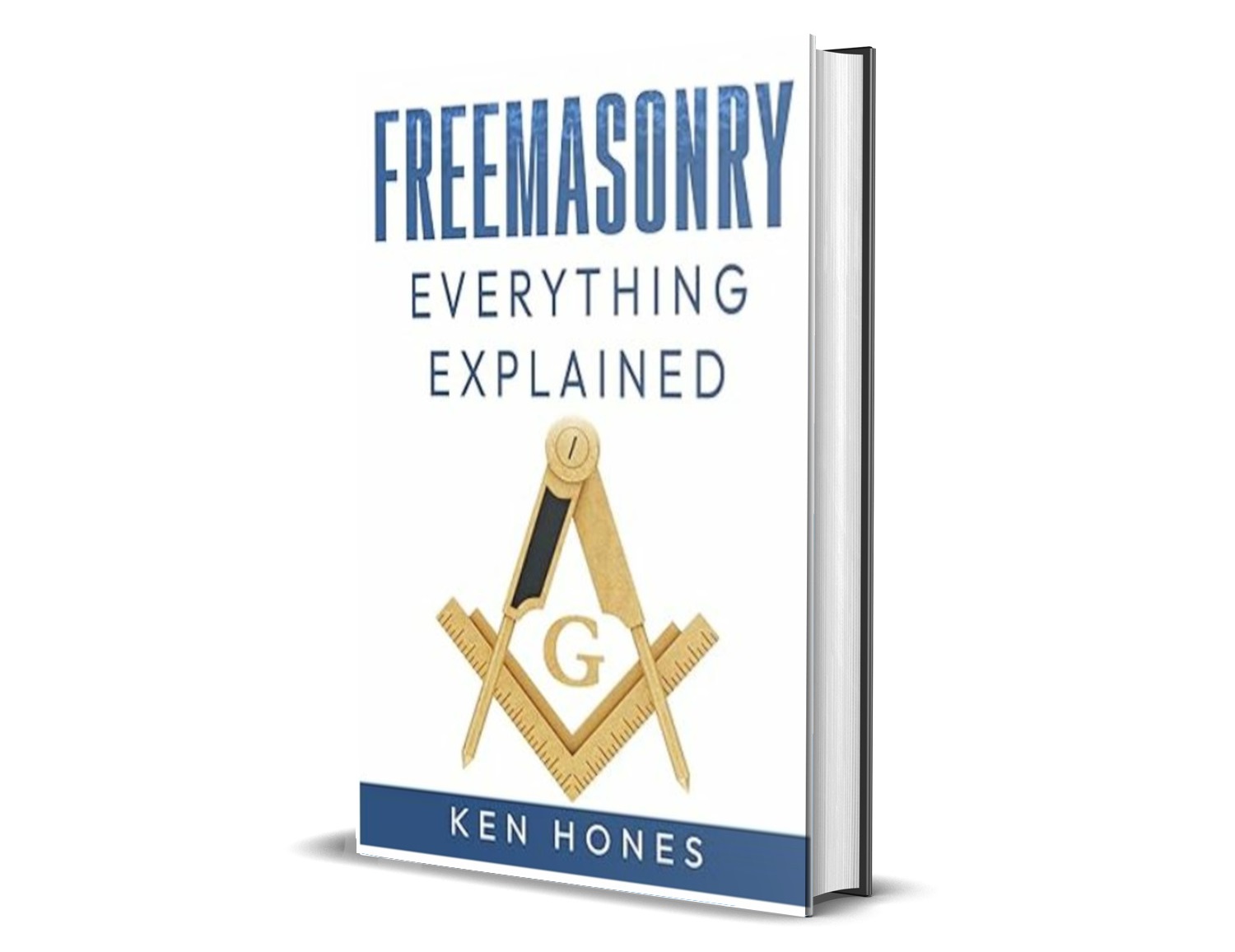
This is undoubtedly the most famous emblem of the Craft. The Square and Compasses, often with the letter G at the center, is the definitive symbol of Freemasonry. It is not one symbol but a combination of three distinct elements, each with its own profound meaning.
The Square is an emblem of morality and virtue. It is a tool used to ensure that a stone is perfectly formed and will fit properly within a structure. For a Mason, it is a constant reminder to ‘act on the square’, meaning to live with honesty, integrity, and fairness in all dealings with mankind. It represents the earthly, material plane of existence.
The Compasses are used to draw circles, defining boundaries and creating perfection. Symbolically, they represent the importance of self-restraint and circumscribing one’s passions and desires. Keeping one’s actions within due bounds is a cornerstone of Masonic teachings, and the Compasses remind a Mason to maintain control over his spiritual and personal life. They represent the heavenly or spiritual realm.
The arrangement of these two tools is also significant. In the early degrees of Freemasonry, the points of the Compasses are obscured by the Square, symbolizing that a Mason’s spiritual understanding is still developing. As he progresses, the points of the Compasses are revealed, signifying the increasing dominance of spiritual and intellectual faculties over material desires. The variety of common Masonic and Mason symbols often includes this central emblem in various forms.

What Does the All-Seeing Eye Represent?
Often a source of wild speculation, the All-Seeing Eye, or the Eye of Providence, is one of the most misunderstood Masonic symbols. It is not an emblem of sinister surveillance but a representation of divine omniscience and watchfulness. It is a symbol of the Grand Architect of the Universe, a non-denominational term for a Supreme Being.
The Eye serves as a reminder to every Mason that his thoughts and actions are observed by this higher power, even when in secret. It encourages him to live and act with the knowledge that he is always accountable for his deeds. This is not meant to inspire fear, but rather to promote sincerity and a clear conscience.
This symbol long predates its use in Freemasonry, appearing in ancient Egyptian mythology as the Eye of Horus and later in Christian art as a symbol of the Trinity. Freemasonry adopted it as a fitting emblem for the concept of divine truth and light. Understanding these further explained Masonic symbols helps to place them in their proper historical and philosophical context.

Why is the Letter G So Important?
Positioned at the heart of the Square and Compasses, the letter G is a symbol of immense significance. It holds a dual meaning, representing both God and Geometry. This connection between the divine and the scientific is central to Masonic philosophy.
For Masons, the letter G stands for the Grand Architect of the Universe, the ultimate source of all creation. It reinforces the theological foundation of the fraternity, which requires a belief in a Supreme Being from all its members. It is a constant focal point for reverence and contemplation.
Simultaneously, G stands for Geometry. In the Masonic tradition, Geometry is considered the noblest of sciences, the basis upon which the universe was constructed. By studying its principles of order, harmony, and proportion, a Mason can gain a greater understanding of the divine plan and apply those principles to his own life. An exploration of the an array of Freemason symbols reveals the G’s central role in the Craft’s intellectual heritage.

What Do the Plumb, Level, and Square Teach?
Beyond the primary emblem, the working tools of a stonemason provide some of the most important lessons in Freemasonry. The Plumb, Level, and Square are presented to a Mason early in his journey to teach fundamental virtues. They are known as the Movable Jewels.
The Plumb is a weight suspended from a line, used to determine a true vertical. Symbolically, it represents uprightness of conduct. It reminds a Mason to live an erect and honorable life before God and man, never deviating from the line of integrity.
The Level is a tool used to ascertain a true horizontal line. In Freemasonry, it is an emblem of equality. It teaches that all men are created equal and share the same journey from birth to death, regardless of their station in life. It promotes humility and respect for all people.

The Square, as discussed before, is the emblem of morality and virtue. It is the tool by which a Mason can ‘square his actions’ and ensure they are aligned with the principles of the Craft. Together, these three tools provide a complete blueprint for moral conduct, and having these Masonic symbols explained in more detail is crucial for a new member.

Are There Deeper, Esoteric Meanings?
While the moral lessons of the working tools are straightforward, Freemasonry also contains a deeper, esoteric dimension. This aspect of the Craft is concerned with self-knowledge, spiritual enlightenment, and the individual’s search for divine truth. It is here that the symbolism takes on a more philosophical and mystical quality.
This is not about magic or occultism in the popular sense. Rather, it is about using allegory and symbolism to explore the great questions of existence. The Masonic Lodge becomes a laboratory for the soul, where a member can work on his own personal and spiritual development, a process often referred to as speculative masonry. The journey involves unveiling the secrets behind the Craft, which are not hidden facts but personal insights gained through contemplation.

What is the Significance of Light and Darkness?
Light is one of the most powerful and pervasive symbols in Freemasonry. It represents truth, knowledge, wisdom, and spiritual awareness. The entire Masonic journey is characterized as a progression from darkness to light.
Darkness symbolizes the state of ignorance and unenlightenment. A candidate for Freemasonry is said to be in a state of darkness, seeking the ‘light’ of the fraternity. This light is not a secret doctrine but a way of life based on reason, ethics, and a connection to the divine.
The search for light is a lifelong pursuit for a Mason. It involves continuous learning, self-reflection, and the application of moral principles. The ultimate goal is to achieve a state of intellectual and spiritual illumination, to become a source of light for others in the world.

What Do the Two Pillars, Boaz and Jachin, Symbolize?
Prominently featured in any depiction of a Masonic Lodge are two large pillars, named Boaz and Jachin. These are references to the two bronze pillars that stood at the entrance to King Solomon’s Temple, a central setting in Masonic allegory. Their symbolism is rich and complex.
On one level, the names are said to mean ‘in strength’ (Boaz) and ‘to establish’ (Jachin), suggesting that God would establish his temple in strength. They represent stability and permanence. However, their deeper meaning lies in the concept of duality and the balance of opposing forces.
The two pillars symbolize the great dualities of nature: light and darkness, active and passive, masculine and feminine, reason and emotion. They represent the pairs of opposites that define our existence. The true path for a Mason is not to choose one over the other but to walk the middle way between them, finding harmony and equilibrium in his own life. Understanding the meanings behind these symbols is a key part of the Masonic educational journey.

Do Other Masonic Groups Use Similar Symbols?
The principles of Freemasonry have inspired a number of associated organizations, often referred to as the Masonic family. These groups, while independent, share a common philosophical heritage with the Craft and often use related symbolism to teach their own valuable lessons.

Groups such as the Order of the Eastern Star, which is open to both men and women, have their own unique set of symbols and rituals centered on the lives of heroic female figures from the Bible. Similarly, youth orders like Job’s Daughters and DeMolay International use symbolism to instill values of leadership, integrity, and reverence in young people.
While the specific emblems may differ, the underlying purpose is the same: to use allegory and symbolism as a framework for moral and personal development. Learning about a Freemason sister organization or a youth group reveals how the core tenets of the Craft have been adapted to serve the wider community.

How Can I Learn More About These Symbols?
This glossary provides only a brief introduction to a vast and profound subject. The true understanding of Masonic symbolism cannot be gained from simply reading definitions. It comes from a process of study, reflection, and personal application.
For those within the fraternity, the meanings of these symbols are revealed gradually through participation in the degrees and rituals of the Lodge. Each ceremony unfolds new layers of meaning, prompting the Mason to think more deeply about the emblems he sees around him.
For those outside the Craft, a wealth of reputable books and online resources can provide further insight. The key is to approach the subject with an open mind, seeking to understand the philosophical lessons rather than searching for sensational secrets. The symbols of Freemasonry are not meant to be hidden but to be contemplated by all who seek wisdom.
In the end, the symbols of Freemasonry are a testament to the enduring power of visual language. They are timeless tools designed to build better individuals, and through them, a better world. Their message of morality, equality, and enlightenment is as relevant today as it was centuries ago.

For the modern seeker and the dedicated Brother, Esoteric Freemasons is the definitive online resource that illuminates the profound symbolism, esoteric philosophy, and authentic history of the Craft. We go beyond the surface to reveal the true light of Masonic knowledge.
Frequently Asked Questions

Are Masonic symbols exclusively used by Freemasons, or do they appear in other cultures?
Many symbols prominently featured in Freemasonry are not exclusive to the fraternity and have origins in much older traditions. For example, the All-Seeing Eye can be traced back to ancient Egypt as the Eye of Horus, while geometric shapes like the square and circle have held philosophical significance for millennia. Freemasonry adopted these powerful, pre-existing symbols and integrated them into its own unique system of moral and ethical instruction.
The genius of Masonic symbolism lies in this re-contextualization, where universal archetypes are used to illustrate specific tenets of the craft. The sun, moon, and stars, for instance, are common in many belief systems but are used within the lodge to represent key officers and the orderly nature of the universe. Therefore, while the symbols themselves may be ancient and widespread, their specific arrangement and allegorical meaning within Masonic ritual are unique to the fraternity.

How important is personal interpretation for understanding Masonic symbolism?
Personal interpretation is not only important but is a fundamental aspect of the Masonic journey. While the fraternity provides a foundational meaning for its symbols, they are ultimately presented as tools for individual contemplation and moral discovery. Each Mason is encouraged to reflect on the symbols and apply their lessons to his own life and character.
This process is often described as making "a daily advancement in Masonic knowledge," which is a deeply personal endeavor. Two Masons may look at the same symbol, such as the beehive, and while both understand its general meaning of industry, they may draw different personal lessons from it based on their unique experiences. The goal is not a uniform understanding, but a shared framework that inspires individual growth.

Why is there so much secrecy surrounding the meaning of certain Masonic symbols?
The perception of secrecy is often a misunderstanding of the Masonic principles of privacy and tradition. The meanings of most Masonic symbols, such as the square and compasses or the plumb line, are widely discussed in publicly available books and online resources. The true "secrets" of Freemasonry are limited to its traditional modes of recognition and the specific allegorical details of its degree ceremonies.
This discretion is maintained not to hide information from the public, but to preserve the integrity and impact of the initiatory experience for new members. The fraternity believes that the moral and philosophical lessons conveyed through its symbols are most profound when they are experienced within the proper ceremonial context. It is about ensuring a genuine and personal journey of discovery for each member, rather than concealing universal truths.