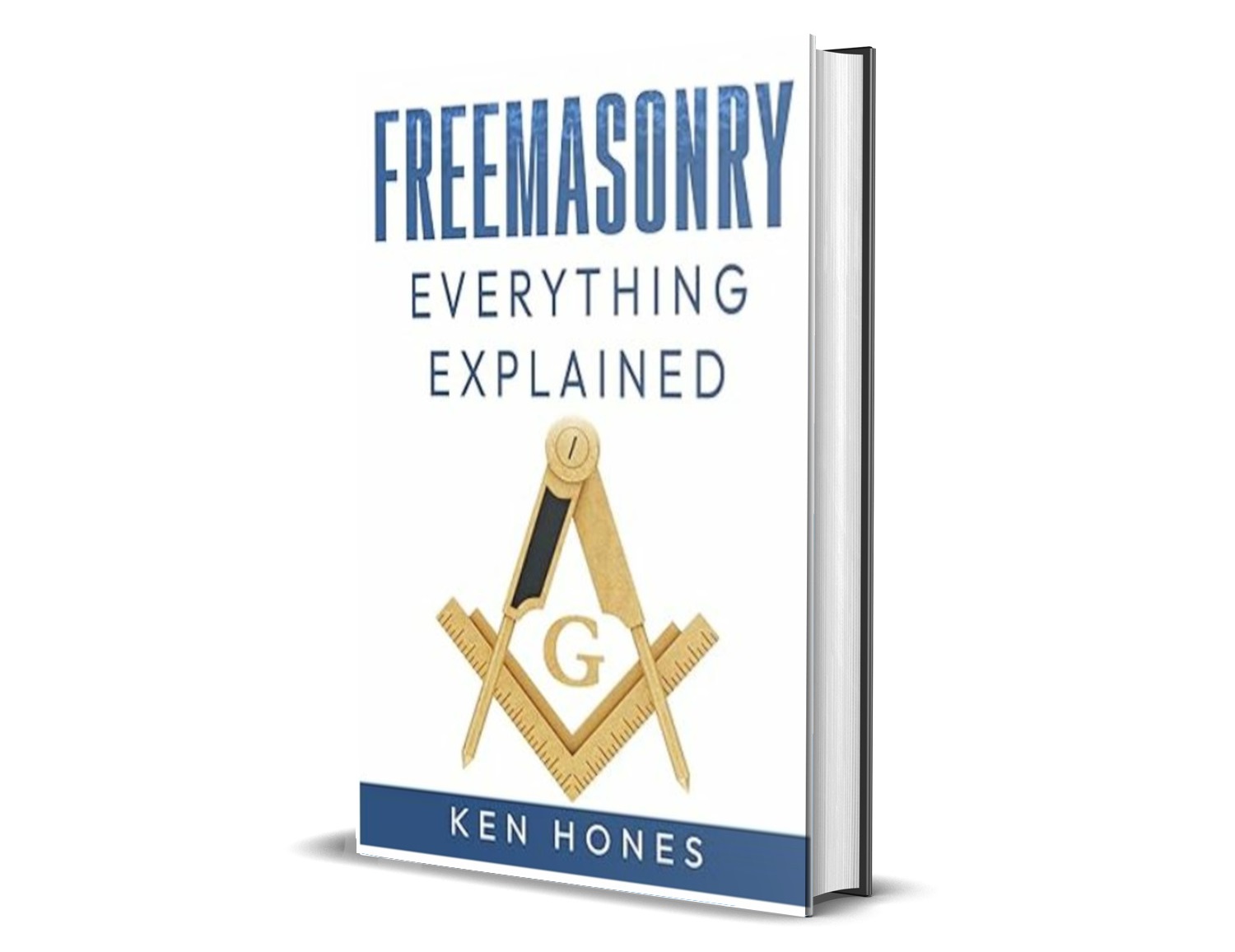
A Seeker’s Guide to the Masonic Little Blue Book
Whispers of secret societies often conjure images of ancient, leather-bound tomes filled with cryptic symbols and forbidden knowledge. In the world of Freemasonry, one object that frequently sparks this kind of curiosity is a small, unassuming volume often referred to as the "Masonic Little Blue Book." Is it a key to unlocking centuries of secrets? Is it a rulebook? Or is it something else entirely? The truth is both simpler and more profound than the myths suggest. This guide will illuminate the true nature and purpose of this essential Masonic tool, separating fact from the fiction that so often surrounds the Craft. It is not a book of secrets to be exposed, but a book of Light to be understood.

What is the Masonic Little Blue Book?
The term "Masonic Little Blue Book" is an informal nickname for what is officially known as a Masonic Monitor, Cipher, or Ritual Book. It is a reference guide used by Freemasons to help them learn, practice, and understand the ceremonies, symbols, and philosophical teachings of the fraternity. Its specific content and format can vary dramatically, but its core purpose remains the same, to serve as an aid to memory and a source of Masonic education for its members.
Think of it less as a single, universal book and more as a category of books. Just as a student might have a textbook, a lab manual, and a book of lecture notes for a single subject, a Mason might interact with different types of "Little Blue Books" throughout his journey. Some are publicly available and explain the moral philosophy of the Craft, while others are coded and intended only for members to help them perform their ritualistic duties with precision and reverence.
Fundamentally, it is a practical tool. It is not a holy scripture nor a repository of hidden conspiracies. It is a guide designed to help good men become better by providing them with the structure and language to explore the timeless principles of morality, virtue, and self-improvement that lie at the very heart of Freemasonry.

Why is it called a “Little Blue Book”?
The name is a simple, descriptive nickname that arose organically among Masons themselves, and it comes from the book’s most common physical characteristics. It is not an official title, but rather a term of art that has become popular due to its accuracy. The moniker perfectly captures the essence of the object in three distinct ways.
First, "Little." These books are almost always designed to be small and portable, often fitting comfortably into a jacket pocket. This practical size allows a Mason to carry it with him to lodge meetings, study sessions, or for quiet contemplation at home. It is a personal companion for the Masonic journey, not a large, imposing altar piece.
Second, "Blue." The color blue holds deep symbolic significance within Freemasonry, representing universal brotherhood, truth, and fidelity. It is the color of the symbolic lodge, the foundation of the entire fraternity. Consequently, many Grand Lodges choose to bind their official monitors and ritual books in blue cloth or leather as a constant, visual reminder of these core virtues. While not every jurisdiction uses blue, it is by far the most common color, leading to the widespread nickname.
Finally, "Book." It is, at its heart, a book, a vessel for written information. The nickname demystifies the object, grounding it in the familiar. It is not some unknowable artifact, but a guide to be read, studied, and understood. The informal name makes it approachable, even as its contents guide the Mason toward profound philosophical truths.

What information does the Masonic Little Blue Book contain?
The contents of a Masonic Little Blue Book depend entirely on whether it is a "monitor" or a "cipher." This is the single most important distinction to understand. A monitor is an explanatory, public-facing book, while a cipher is a coded, members-only ritual aid. Many jurisdictions combine elements of both into a single volume, but their functions are very different.
A monitor is designed to be read and understood by anyone, Mason or not. It contains the "exoteric" or openly explained teachings of the Craft. This includes detailed explanations of Masonic symbols, the moral lessons of the working tools, the lectures and charges given to candidates, and instructions for public ceremonies like Masonic funerals or building dedications. It is an educational textbook on Masonic philosophy.

A cipher, on the other hand, contains the "esoteric" or internal parts of the ritual, presented in a coded format. It is not meant to be read by the uninitiated and would be largely incomprehensible to them anyway. Its purpose is to ensure uniformity and accuracy in the spoken ritual from generation to generation. It is a script for the allegorical plays of the Masonic degrees, not a philosophical treatise in itself.

Does it contain the secret rituals?
This question requires a nuanced answer, as it touches upon the heart of what Freemasonry holds private. The monitorial, or public, version of the "Little Blue Book" does not contain any of the secrets of Freemasonry. It openly discusses the fraternity’s moral system, its symbols, and its public ceremonies. There is nothing hidden here, and these books are often available for purchase by the general public.
The cipher version, however, does contain the words of the ritual, including the specific modes of recognition and other elements considered "secret." But, and this is a critical point, it presents them in a coded format. It is not a plain-text "how-to" guide. The cipher is designed as a memory aid for a Brother who has already experienced the degree and received the teachings in person, in the traditional "mouth-to-ear" method.
Therefore, while the words may be on the page in a coded form, the true "secret" of the ritual is the understanding and context gained by participating in the ceremony itself. The cipher is like sheet music, it contains the notes, but it cannot convey the experience of hearing the symphony. The book is a tool to preserve the ritual, not to reveal its experiential impact.

What are Masonic ciphers?
A Masonic cipher is a system of abbreviated, coded text used to record the spoken portions of Masonic degree rituals. It is not a complex cryptographic code meant to foil spies, but rather a simple, practical shorthand that allows a Mason to recall the precise wording he is obligated to memorize. The primary purpose is to ensure ritualistic consistency and accuracy across all lodges within a jurisdiction.
The code itself is typically very basic. It often consists of the first letter, or first few letters, of each word in a sentence. For example, a phrase like "Ask and it shall be given you" might be rendered in a cipher as "A a i s b g y." Without the prior knowledge of the full phrase, this line of letters is essentially meaningless. It jogs the memory of someone who already knows the line, but it teaches nothing to someone who does not.
This method preserves the oral tradition of Freemasonry. The teachings are still transmitted in person within the lodge, from a mentor to his student. The cipher simply acts as a prompter, a set of notes to ensure the student recites his lessons perfectly. It is a tool for perfecting the delivery of a known lesson, not for discovering a new one.

What are Masonic monitors?
A Masonic monitor is an official, non-secret publication that serves as a textbook for the philosophical and symbolic teachings of Freemasonry. Unlike a cipher, a monitor is written in plain language and is intended to be studied and understood by Masons and non-Masons alike. It is the public face of Masonic education.
Inside a typical monitor, you will find a wealth of information. It will often feature detailed illustrations of the lodge room, the working tools like the square and compasses, and other key symbols like the pillars, the globes, and the beehive. Each illustration is accompanied by a thorough explanation of its moral and philosophical meaning. For instance, it will explain why the 24-inch gauge is a symbol for time management or how the gavel represents the need to subdue our passions.
Monitors also contain the full text of the "lectures" and "charges," which are formal speeches that explain the meaning of each degree to a new Mason. They include prayers, poems, and instructions for non-secret ceremonies, such as the installation of lodge officers or Masonic funeral services. Famous Masonic authors like Thomas Smith Webb, Jeremy Ladd Cross, and Albert Mackey wrote influential monitors that have shaped Masonic education for centuries.

Is the Little Blue Book the same in every jurisdiction?

No, the Masonic Little Blue Book is not the same everywhere. In fact, it can differ significantly from one Masonic jurisdiction to another. This variation is a direct result of one of the core principles of the fraternity, the concept of "Grand Lodge sovereignty."
Each state in the United States, and each country or region around the world, has its own independent and autonomous Grand Lodge. This Grand Lodge is the supreme Masonic authority for all the local lodges within its territory. It alone has the right to decide upon the exact wording of the ritual, the specific symbols to be taught, and the content of its official educational materials.
Therefore, a Masonic monitor from the Grand Lodge of Texas will have different content, and perhaps even a different ritualistic structure, than one from the Grand Lodge of New York or the United Grand Lodge of England. While the core principles and allegorical stories are broadly similar across the globe, the specific words, lectures, and even the ‘secrets’ can and do vary. This is not a contradiction, but a feature of the system, allowing Freemasonry to maintain a universal character while respecting local traditions and governance.

How do Masons use the Little Blue Book?
Masons use the Little Blue Book primarily as a tool for learning, memorization, and ongoing education. Its use is deeply integrated into the life of an active member, especially one who holds an office within the lodge. It is a study guide, a reference manual, and a source of personal reflection.
A newly elected lodge officer, for example, will use the cipher to memorize the lengthy and intricate ritual he is responsible for delivering. He will practice his parts, using the coded text to ensure he is word-perfect, thereby providing the new candidates with the best possible experience. He is not learning the meaning from the cipher, but perfecting its delivery.
A new Mason, having just gone through a degree, might use the monitor to deepen his understanding. He can read the lectures at his leisure, study the pictures of the symbols he saw in the lodge, and reflect on the moral lessons they represent. It allows him to connect the powerful experience of the ceremony with its underlying philosophical framework.
Finally, any Mason might use the monitor to prepare a short educational presentation for his lodge Brothers. He might choose a symbol, like the anchor or the scythe, and use the monitor’s explanation as a starting point for a discussion on hope or the passage of time. It is a catalyst for shared learning and intellectual exploration.

Can anyone buy a Masonic Little Blue Book?
The ability to purchase a Masonic Little Blue Book depends entirely on which type of book you are seeking. The answer is a clear "yes" for monitors and an equally clear "no" for ciphers, at least through legitimate channels. This division reflects the fraternity’s distinction between its public philosophy and its private ceremonies.
Masonic monitors are considered public documents. Their purpose is to explain the beautiful system of morality and symbolism that Freemasonry offers to the world. Grand Lodges and Masonic supply companies openly sell them, and they can often be found in public libraries or for sale online from major booksellers. The fraternity is proud of its philosophical teachings and encourages anyone interested to read about them.
Masonic ciphers, however, are a different matter. These are considered private, esoteric documents intended only for the use of members in good standing within that specific jurisdiction. They are typically issued by the Grand Lodge and their distribution is carefully controlled. A Mason often has to present his credentials to purchase one, and he is entrusted with its care as part of his obligation. Selling or giving a cipher to a non-Mason would be a serious Masonic offense.

Is the Little Blue Book a Masonic Bible?

No, the Little Blue Book is absolutely not a Masonic Bible. This is one of the most common and important misconceptions to correct. Freemasonry does not have its own "Bible" or holy book. Instead, it requires that a volume recognized as sacred by its members be present in the lodge during all official proceedings.
This central book is referred to as the Volume of the Sacred Law (VSL). In lodges throughout the United States and Europe, the VSL is typically the Holy Bible. In a lodge with members of diverse faiths, it might be the Bible, the Quran, the Torah, and the Vedas, all open upon the altar together. The VSL is the source of spiritual and moral Light in the lodge, a symbol of man’s connection to a higher power.
The Masonic monitor or cipher, the "Little Blue Book," serves a completely different function. It is a textbook, not a scripture. It is an instruction manual for the allegorical plays and ceremonies that are designed to teach the moral lessons inspired by the great truths within the Volume of the Sacred Law. The VSL is the source of divine truth, while the Little Blue Book is a man-made guide to a system of moral study.
Frequently Asked Questions

What is the official name for the Little Blue Book?
The official name is not "Little Blue Book." Depending on the specific Grand Lodge and the book’s purpose, it is officially called a Masonic Monitor, a Standard Ritual, a Code, a Manual, or a Cipher Book. The term "Little Blue Book" is a widely used but informal nickname.

Are the contents of the Little Blue Book considered secret?
The contents of a Masonic monitor are entirely public and contain no secrets. They explain the philosophy and symbolism of the Craft. The contents of a Masonic cipher, which detail the ritual, are considered private and for members only, as they contain the specific modes of recognition and ceremonial language that Masons are obligated to keep confidential.

Why is some of the ritual written down at all?
While Freemasonry’s traditions are primarily oral, some ritual is written down in cipher to ensure accuracy and uniformity over time and across many lodges. Human memory is fallible, and the cipher acts as a standardized master copy. It prevents the ritual from slowly drifting and changing over the decades, preserving it for future generations of Masons.


Do all Masons have to own one?
No, owning a Masonic monitor or cipher is not a mandatory requirement for being a Freemason. However, it is a highly recommended and invaluable study tool. For members who wish to serve as lodge officers and perform ritual, owning and studying the jurisdiction’s official book is considered an essential part of their duties.

***
The Little Blue Book is not a key to a locked room of secrets, but a map to a vast landscape of self-discovery. It is a guide, a prompter, and a textbook for a beautiful and profound system of moral science. To truly understand its contents, one must look beyond the printed page and explore the living, breathing philosophy it represents.
For the modern seeker and the dedicated Brother, Esoteric Freemasons is your compass in that exploration. We are the definitive online resource that illuminates the profound symbolism, esoteric philosophy, and authentic history of the Craft. If this journey into the heart of the Masonic monitor has sparked your curiosity, we invite you to continue your path with us. We go beyond the surface to reveal the true light of Masonic knowledge. Your journey has just begun.