Masonic Symbols Explained: A Complete Glossary of Meanings
Freemasonry, one of the world’s oldest and most well-known fraternities, often evokes images of mystery and secrecy. At the heart of this mystique lies a rich and complex system of symbolism. These emblems are not secrets in the conventional sense but are tools for moral and philosophical instruction, a universal language that communicates the core tenets of the Craft to its members across the globe.
This system of teaching through allegory and symbolism is a foundational aspect of the Masonic experience. For centuries, these visual lessons have guided Masons on a path of personal development, integrity, and enlightenment. Understanding these symbols is the key to unlocking the profound moral philosophy that Freemasonry offers to those who seek its light.
Each symbol is a piece of a larger puzzle, representing virtues to be emulated and principles to live by. This article serves as a comprehensive glossary, delving into the meanings behind the most significant Freemasonry symbols and illuminating the timeless wisdom they contain.

Why Does Freemasonry Use Symbols?
Freemasonry’s use of symbolism is a tradition rooted in history and practicality. In an era before widespread literacy, complex ideas about morality, ethics, and the nature of existence had to be conveyed through more accessible means. Symbols and allegorical stories became the perfect vehicle for this education, creating a visual and memorable language.
This symbolic language also possesses a unique universality. A square is a square, and a compass is a compass, regardless of the native tongue of the person viewing them. This allows Freemasonry’s lessons to transcend cultural and linguistic barriers, uniting men from diverse backgrounds under a shared understanding of virtue and brotherhood.
Ultimately, Masonic symbols are tools for introspection. They are not merely decorative elements but are meant to be contemplated. Each Mason is encouraged to reflect on their meanings and apply the inherent lessons to his own character, making them a catalyst for personal growth and self-improvement.

What Are the Most Common Masonic Symbols?
The landscape of Masonic symbolism is vast, with each emblem carrying layers of meaning that are revealed as a Mason progresses through the degrees of the Craft. However, a core set of symbols is universally recognized and forms the bedrock of Masonic teaching. These are the icons that even non-members might recognize, though their deeper significance is often misunderstood.
From the central emblem of the Square and Compasses to the philosophical depth of the Rough and Perfect Ashlars, these symbols are woven into the fabric of Masonic ritual and lodge architecture. They serve as constant reminders of the fraternity’s guiding principles. Exploring them provides a window into the moral universe of a Freemason.

What is the Meaning of the Square and Compasses?
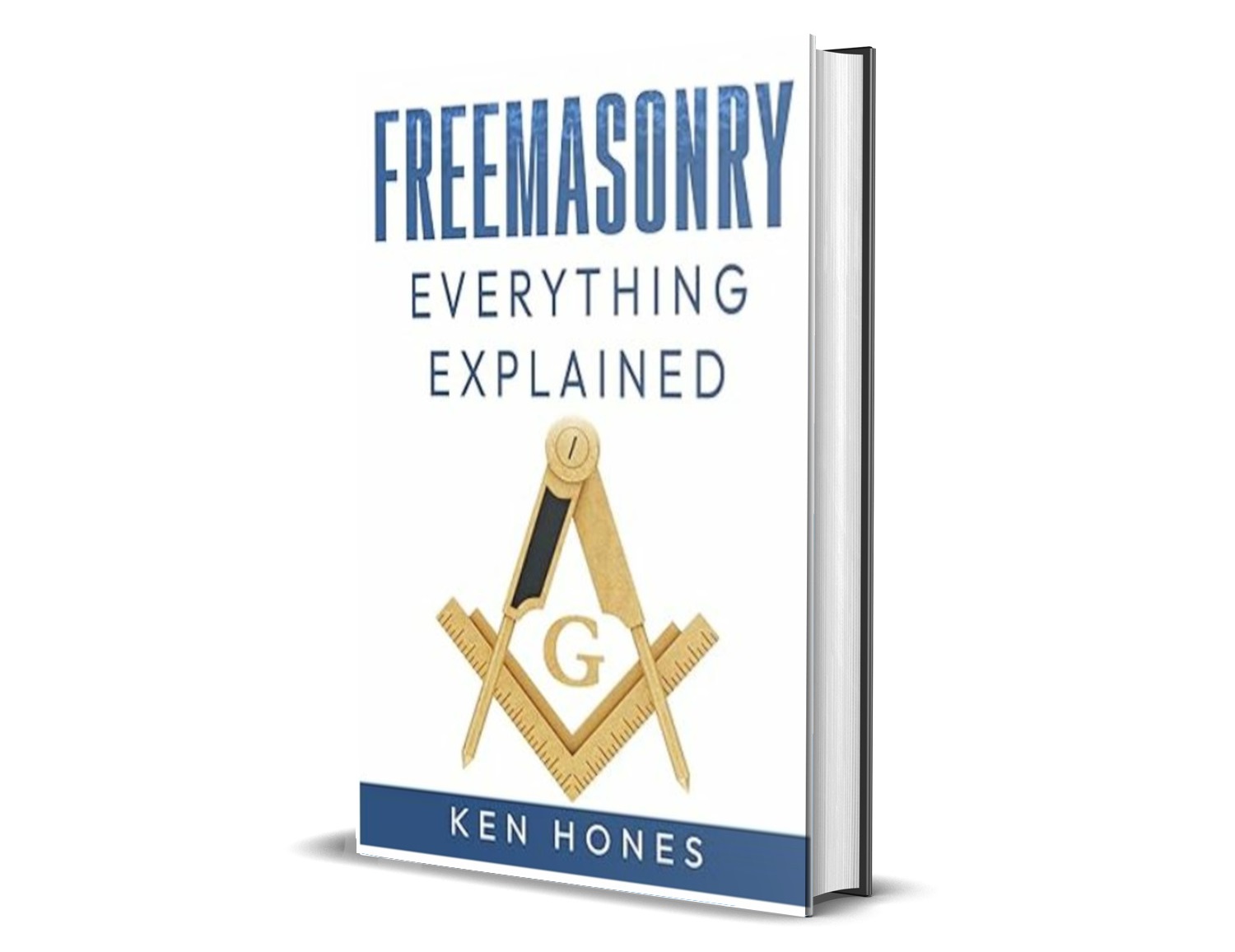
Without a doubt, the Square and Compasses are the most widely recognized emblem of Freemasonry. This single image encapsulates the fraternity’s core philosophy. Often, you will see it with the letter ‘G’ in the center, creating a powerful and multi-layered icon that is central to a Mason’s journey. Understanding what is the Freemason symbol truly means starts here.
The Square is an architect’s tool for ensuring true angles and straight lines. Symbolically, it represents morality, truthfulness, and honesty. It exhorts a Mason to ‘square his actions’ with all of mankind, acting with virtue and integrity in all of his dealings. It is the tool that tests the stones for a building, just as a man must test his own character against the unerring standard of virtue.

The Compasses are used to draw circles, defining boundaries and limits. In a Masonic context, they symbolize the importance of self-restraint and keeping one’s passions and desires within due bounds. It is a reminder to circumscribe personal desires and to practice moderation and prudence, creating a well-rounded and disciplined life.
The letter ‘G’ often found in the center holds a dual meaning. For many, it represents God, or the Grand Architect of the Universe, who is central to the Masonic framework. It also stands for Geometry, which is described as the noblest of sciences and the basis upon which the superstructure of Freemasonry is founded.

What Do the Three Great Lights Represent?
In every Masonic lodge, three ‘Great Lights’ are prominently displayed. These are considered the essential guides for a Mason’s path. They are the Volume of the Sacred Law, the Square, and the Compasses. Together, they provide the spiritual and moral illumination necessary for a Mason to do his work.
The Volume of the Sacred Law is the holy book revered by the members of a particular lodge. This could be the Bible, the Quran, the Torah, or another sacred text. It represents the revealed will of the Grand Architect and serves as the ultimate guide for a Mason’s faith and conduct.
As mentioned, the Square is the symbol of morality and virtue, while the Compasses represent self-restraint and discipline. When placed with the Volume of the Sacred Law, they form a trinity of guidance. A Mason is taught to use the divine wisdom of the sacred text, the moral rectitude of the Square, and the boundary-setting of the Compasses to build a life of purpose and integrity.

What Are the Working Tools of a Mason?
Freemasonry draws its primary allegories from the craft of stonemasonry. The tools used by ancient builders are adopted as symbols to teach moral lessons. These working tools are presented to a candidate as he progresses through the three initial degrees of the Craft.
In the first degree, the Entered Apprentice is introduced to the 24-inch gauge and the common gavel. The gauge, divided into three parts, symbolizes the 24 hours of the day, which should be divided into time for service to God, for one’s usual vocations, and for refreshment and rest. The gavel represents the force of conscience, used to chip away the vices and superfluities of life, shaping one’s character from a rough stone into a perfected one.
In the second degree, the Fellowcraft’s tools include the Plumb, the Square, and the Level. The Plumb is a tool for finding a true vertical line, symbolizing uprightness of conduct. The Square, as we know, represents morality. The Level is a tool for ensuring a true horizontal plane, symbolizing the fundamental equality of all men before God. Together, they are the tools of a craftsman dedicated to perfecting his work.
Finally, the tools of a Master Mason include all the preceding instruments, but the Trowel is presented as his unique emblem. The Trowel is used by operative masons to spread cement, binding the individual stones of a building together. Symbolically, it represents brotherly love, the ‘cement’ that unites the members of the fraternity into a strong and supportive structure. Reaching this level is a significant achievement for any member, and understanding what is a master mason involves embracing the lessons of all these tools.

What Is the Significance of the All-Seeing Eye?
The All-Seeing Eye, often depicted within a triangle or surrounded by rays of light, is another prominent Masonic symbol. Also known as the Eye of Providence, it is a potent reminder of the constant presence and watchfulness of the Supreme Being. It signifies that a Mason’s every thought, word, and deed is observed by the Grand Architect of the Universe.

This symbol is not exclusive to Freemasonry and can be found in various cultures and religious traditions throughout history, including on the Great Seal of the United States. In a Masonic lodge, it is typically placed in the East, the symbolic source of light. Its presence encourages sincerity and high moral conduct, as a Mason is always in the presence of his Creator.
It serves as a symbol of divine truth and omniscience. For a Mason, it is a source of both comfort and accountability. It provides the assurance of divine guidance while also reinforcing the principle that one must live a life worthy of that constant observation. There is a great deal to learn about the history and application of Masonic symbols and their meanings.

Why Are the Sun, Moon, and Stars Important?
The celestial bodies play a significant role in Masonic symbolism, representing order, regularity, and the concept of light. The Sun, Moon, and Master of the Lodge are seen as the three lesser lights of Freemasonry. The Sun is said to rule the day, and the Moon to govern the night, while the Worshipful Master is charged with ruling and governing his lodge with equal regularity.
This symbolism reinforces the importance of order and discipline in the lodge and in a Mason’s personal life. Just as the heavens operate according to a divine and predictable plan, so should a Mason conduct his life with purpose and reliability. The journey from darkness to light is a central theme in Freemasonry, and these celestial symbols are a constant reminder of that illuminating path.
Furthermore, the presence of the Sun and Moon in the lodge room alludes to the universality of Freemasonry, over which these bodies are constantly shining. They are part of the beautiful ‘ornaments’ of the lodge, meant to inspire awe and contemplation of the grand design of the universe, a concept that is further Masonic symbols explained.

What is the Meaning of the Two Pillars?
Positioned at the entrance to the symbolic lodge room are two large pillars, named Boaz and Jachin. These are representations of the two bronze pillars that stood at the porch of King Solomon’s Temple, a central setting for Masonic allegory. The names are Hebrew; Boaz is typically translated as ‘in strength’, and Jachin as ‘to establish’.
Together, their meaning is interpreted as ‘In strength, God will establish His house’. Symbolically, they represent the dual concepts of strength and stability. They serve as a gateway through which a candidate must pass, signifying his entry into a new state of being, one founded upon these powerful principles.
These pillars remind Masons that any great undertaking, whether building a temple or building one’s character, must be founded upon strength and a firm establishment in faith and principle. The rich history behind these pillars provides a deeper layer of meaning for those who study it, making it one of the more profound Masonic symbols explained in detail.

What Do the Rough and Perfect Ashlars Represent?
The ashlars are two symbolic stones found in a Masonic lodge. The Rough Ashlar is a stone taken directly from the quarry, in its natural, unworked state. It represents man in his ignorant and uncultivated condition, before he has received the benefits of education and the refining influence of Masonic teachings.
The Perfect Ashlar, by contrast, is a stone that has been shaped and smoothed by the working tools of the stonemason into a perfect cube. It represents a man who, through the process of self-improvement, education, and living a virtuous life, has perfected his character and made himself fit for the ‘spiritual building’ of the divine.

These two symbols powerfully illustrate the entire purpose of speculative Freemasonry. They represent the journey from a state of raw potential to one of refined character and moral perfection. Every Mason is, symbolically, a Rough Ashlar, and his life’s work is to transform himself into a Perfect Ashlar with the help of the fraternity’s moral tools.

How Are Other Symbols Used in Freemasonry?
Beyond the most prominent emblems, a host of other symbols enrich the Masonic allegorical system. Each carries a specific moral lesson intended to guide a Mason’s conduct. The Beehive, for instance, is a symbol of industry and cooperation. It teaches that Masons should work together diligently for the common good, just as bees cooperate to support their hive.
The Anchor and Ark are symbols of a well-grounded hope and a well-spent life. The Anchor represents the unwavering hope that provides security during the turbulent seas of life, while the Ark symbolizes the divine protection that carries one through those challenges. The Hourglass and Scythe are powerful reminders of the fleeting nature of time and the certainty of mortality, urging a Mason to make productive use of every moment he is given.
Another important symbol is the Cable Tow. This is a rope that is worn by a candidate during his initiation degrees. Symbolically, it represents the bond of obligation that connects him to the fraternity. The idea of a bond or token is a recurring theme, and the Cable Tow is a physical representation of this Freemason sign of commitment.
Perhaps one of the most personal and significant symbols is the Lambskin Apron. It is the first gift a Mason receives and is considered his ‘badge’. Made of white lambskin, it symbolizes innocence, purity, and the honorable nature of Masonic labor. It is a symbol worn by all Masons, regardless of rank, signifying their shared commitment to the fraternity’s values. These additional layers of symbolism are worth exploring Masonic symbolism further to gain a complete picture.
How Does One Truly Understand These Symbols?
Simply memorizing the definitions of Masonic symbols is not the same as understanding them. True understanding comes from a personal journey of reflection, study, and application. Freemasonry is often described as ‘a beautiful system of morality, veiled in allegory and illustrated by symbols’. The veil is lifted not by a simple explanation, but through a Mason’s own contemplative efforts.

The meanings of these symbols are designed to unfold over time. A symbol that a new Mason understands in one way may take on a much deeper and more personal significance after years of experience within the Craft. The lessons are meant to be lived, not just learned.
This process is the essence of the Masonic path. It is a lifelong pursuit of light, or knowledge, using the fraternity’s rich symbolic language as a map. The goal is to internalize the virtues represented by the working tools and emblems, transforming oneself from a Rough Ashlar into a Perfect Ashlar, ready to take his place in the grand design of the universe.
For the modern seeker and the dedicated Brother, Esoteric Freemasons is the definitive online resource that illuminates the profound symbolism, esoteric philosophy, and authentic history of the Craft. We go beyond the surface to reveal the true light of Masonic knowledge.
Frequently Asked Questions

Are Masonic symbols considered secret or sacred?
Masonic symbols themselves are not secret; in fact, many are widely recognizable and visible in public on buildings, rings, and car emblems. The "secret" aspect of Freemasonry pertains to the specific allegorical lessons and modes of recognition that these symbols are used to teach within the privacy of a lodge meeting. These emblems serve as a complex visual language to convey moral, ethical, and philosophical principles to members.
While these symbols are treated with great reverence, they are not typically considered "sacred" in a religious sense, like an icon or deity. Their value is in the profound virtues and universal truths they represent, such as morality, equality, and truth. Masons hold them in high regard because they are constant reminders of the fraternity’s teachings and a member’s personal commitment to self-improvement.

Can non-Masons use Masonic symbols in their own logos or artwork?
Legally, many of the most common Masonic symbols, like the Square and Compasses, are in the public domain and not subject to copyright, allowing for their use by the general public. However, specific logos belonging to a particular Grand Lodge or subordinate lodge are often trademarked and protected as intellectual property. Using these specific, official emblems without permission would be an infringement.
Beyond the legal considerations, there is the matter of respect and context. Using Masonic imagery without understanding its meaning can be seen as disrespectful by members of the fraternity, especially if used for commercial profit or in a way that misrepresents Masonic values. It can also be misleading, creating a false impression of an association with or endorsement by the Masonic organization.

Do all Masonic lodges use the exact same symbols and logos?
While certain core symbols are universal to Freemasonry across the globe, there are notable variations in how they are depicted and used. The most prominent example, the Square and Compasses, changes its arrangement to signify a Mason’s progression through the degrees. Similarly, symbols like the letter ‘G’ are central in many jurisdictions but may be less emphasized or absent in others.
Furthermore, individual lodges and regional Grand Lodges almost always have their own unique logos or seals. These custom designs will typically incorporate universal Masonic symbols but combine them with elements specific to that lodge’s name, number, or local history. This allows each lodge to maintain a connection to the broader fraternity while also celebrating its own distinct identity.