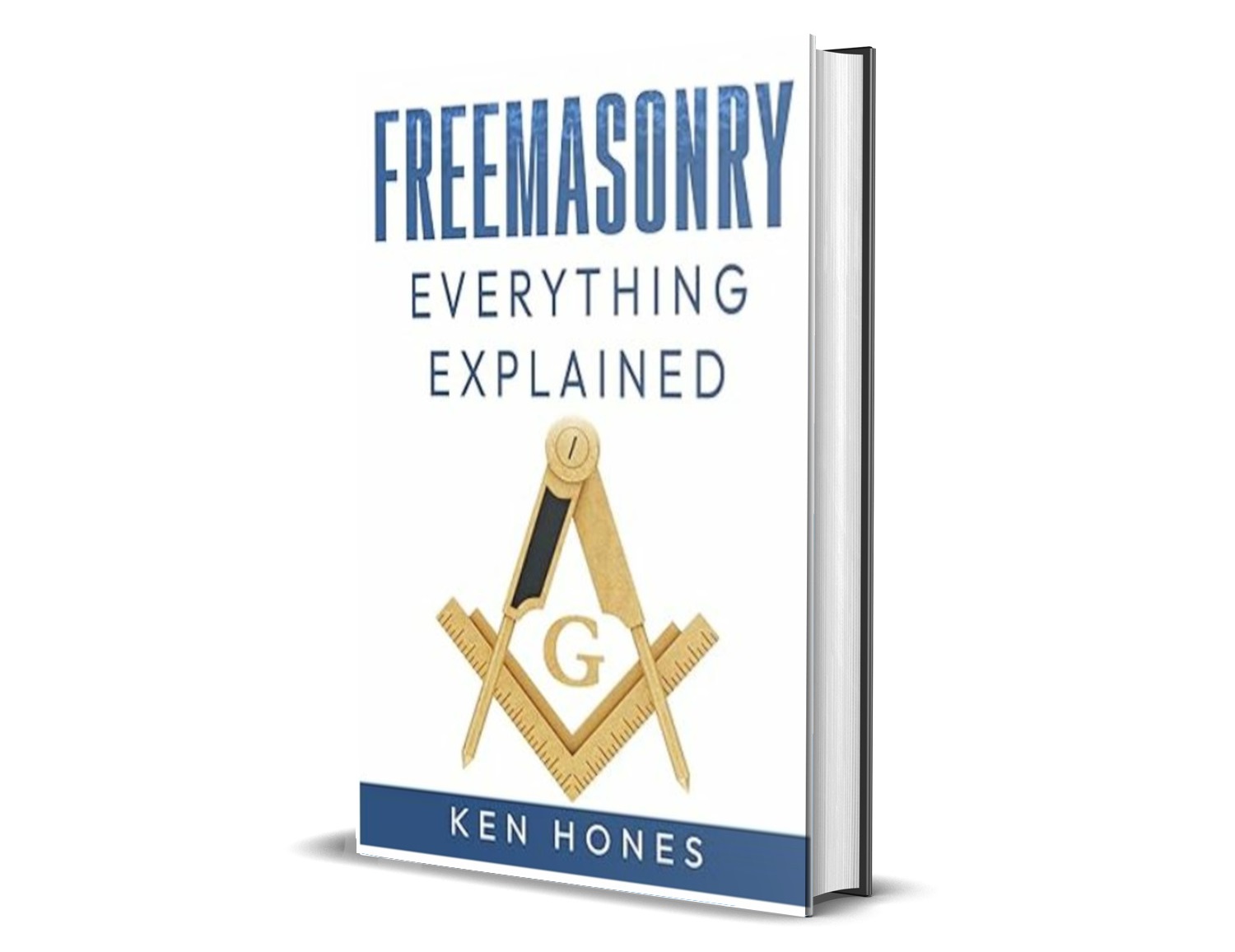
Is Freemasonry a Religion? Unveiling the Truth Behind the Temple Doors
For centuries, the enigmatic nature of Freemasonry has fueled speculation and debate. Veiled in allegory and rich with symbolism, the Craft has often been misunderstood, with no question being more persistent than this: is Freemasonry a religion?
The answer, stated plainly by Grand Lodges and Masons around the world, is a definitive no. Freemasonry is not a religion, nor is it a substitute for one. However, the confusion is understandable. The fraternity is deeply concerned with morality, truth, and the nature of a Supreme Being, leading many to see the features of a faith-based system. Understanding what do free masons believe in is the first step in untangling this complex question.
To truly grasp why Freemasonry is not a religion, we must first define our terms and explore the structure and purpose of the Craft. It is a system of morality that seeks to make good men better, using ancient forms of teaching to impart timeless lessons. It does not offer a path to salvation but rather a framework for personal development in this life.

What Exactly Defines a Religion?
Before we can assess Freemasonry, we need a working definition of religion. Generally, a religion includes several key components. It typically possesses a specific theology or set of dogmatic beliefs about God, the afterlife, and the nature of the soul.
Religions offer a plan of salvation, a way for adherents to achieve a state of grace or eternal life. They have an established clergy, such as priests, ministers, or rabbis, who are ordained to lead worship and administer sacraments. Furthermore, religions are centered around specific holy books, like the Bible, the Quran, or the Torah, which are considered the ultimate divine revelation. Finally, they have public houses of worship open to all who wish to join in a particular service.

So, What is Freemasonry?
In contrast, Freemasonry is best described as a fraternity. It is a worldwide brotherhood dedicated to the moral and spiritual improvement of its members. It is often called a ‘system of morality, veiled in allegory and illustrated by symbols’. Its primary goal is to take a good man and provide him with tools and lessons to become a better man: a better father, husband, citizen, and friend.
The structure of Freemasonry is built around a series of degrees, each one teaching specific moral lessons through allegorical plays or dramas. These lessons are drawn from the story of the building of King Solomon’s Temple. The core tenets are Brotherly Love, Relief, and Truth. It is a society of men concerned with moral and spiritual values, but it approaches these subjects from a philosophical, not a theological, perspective. A great deal of information explaining what is Freemasonry can be found from Masonic sources themselves.

Why is Freemasonry Often Mistaken for a Religion?
The confusion primarily stems from several key aspects of Masonic practice that appear, on the surface, to be religious in nature. These elements are fundamental to the Craft, yet their purpose is often misinterpreted by those outside of it.

Does Freemasonry Require Belief in God?
Yes, one of the unshakeable requirements for any man wishing to become a Mason is a belief in a Supreme Being. This is a non-negotiable landmark of the fraternity. However, Freemasonry never attempts to define that Supreme Being for its members.
Masons use the term ‘Great Architect of the Universe’ to refer to this Supreme Being. This allows men of different faiths to meet in Lodge and collectively acknowledge a higher power without conflict. A Christian, a Jew, a Muslim, or a Hindu can each interpret the Great Architect in the context of their own personal faith. This prerequisite ensures that every member acknowledges a moral authority higher than himself.

Are Masonic Rituals a Form of Worship?

Freemasonry is rich with ritual and ceremony. These elaborate, symbolic proceedings are used to teach the moral lessons of each degree. To the uninitiated, these rituals can look like religious services. They involve obligations, prayers, and solemn moments of reflection.
However, the purpose of these rituals is educational and symbolic, not worshipful. They are allegorical plays in which the candidate is the main character, learning lessons through participation. Many secular organizations use ceremony; consider the pomp of a university graduation or the solemnity of a courtroom. Masonic ritual serves a similar function: to impress important lessons upon the minds of its members.

What About the Masonic Altar and Holy Book?
Every Masonic Lodge has an altar at its center. Upon this altar rests a ‘Volume of the Sacred Law’. This is another source of confusion, as it immediately brings to mind a religious setting.
Again, the function is universal rather than specific. The Volume of the Sacred Law is the holy book of the members of that particular Lodge. In a Lodge in the United States or England, it is typically the King James Bible. In a Lodge with many Jewish members, the Tanakh might be present. In a Lodge in a Muslim country, it would be the Quran. When a Mason takes an obligation, he does so on the sacred text of his own personal faith, making his promise binding according to his own conscience and belief system. The altar represents the place where man meets God, as each man understands Him.

Don’t Masons Use Religious Symbols?
Many symbols used in the fraternity are also found in various world religions, which contributes to the perception of Freemasonry as a religious institution. The most famous example is the All-Seeing Eye, or the Eye of Providence. This symbol is used in a Masonic context to represent the watchful eye of the Great Architect, reminding a Mason that his actions are always observed by his creator.
While this symbol has religious connotations, its use in Masonry is symbolic and moral, not theological. It serves as a personal reminder of accountability. The exploration of Freemasonry symbols and images reveals a rich tapestry of meaning meant for contemplation, not worship. These symbols are tools for teaching, not icons for veneration.

Why is Freemasonry Not a Religion?
Despite the ‘religious’ characteristics, Freemasonry lacks the fundamental components of a religion. The distinctions are clear and critical to understanding the true nature of the Craft. Exploring the topic of Freemasonry and religion reveals these key differences.

Does Freemasonry Have a Specific Theology or Dogma?
No. Freemasonry has no dogma. It requires a belief in a Supreme Being but stops there. It does not teach about the nature of God, the trinity, or the identity of any prophet. These are matters for an individual’s personal faith and are strictly forbidden as topics of discussion within a Masonic Lodge.
The purpose is to unite men, not divide them. Introducing specific religious dogma would instantly create division, defeating the fraternity’s core principle of brotherhood among men of diverse backgrounds. The official answer to is Freemasonry a religion from Masonic authorities is always a clear ‘no’ for this very reason.

Does Freemasonry Offer Salvation?
Absolutely not. Freemasonry offers no plan of salvation or path to the afterlife. Its teachings are focused entirely on this life, on the ‘here and now’. It aims to improve a man’s character and his conduct within society.

A religion’s primary concern is often the eternal destiny of the soul. Freemasonry’s primary concern is a man’s moral conduct on earth. It teaches men how to live, not how to be saved. The question of salvation is left to a Mason’s individual religion.

Does Freemasonry Have a Clergy?
There is no Masonic clergy. The officers of a Lodge, including the leader known as the Worshipful Master, are elected by the members. They are not ordained, and they hold no priestly authority. Their role is to manage the Lodge’s affairs and preside over the ceremonial degree work.
These officers are ‘brethren among brethren’, not spiritual authorities. They lead the rituals, but they do not administer sacraments or act as intermediaries between members and God. This lack of an ordained class is a fundamental difference between Freemasonry and a religion.

How Does Freemasonry Interact with Established Religions?
Freemasonry sees itself not as a competitor to religion but as a supporter of it. It encourages every member to be active in the faith of his choice. A man who is not faithful to his own religion cannot be expected to be faithful to his Masonic obligations.
This encouragement is a core part of its philosophy. By strengthening a man’s moral fiber, Freemasonry hopes to make him a better Christian, a better Jew, a better Muslim, or a better follower of whatever faith he professes. Yet, despite this supportive stance, the relationship between Freemasonry and some organized religions has been fraught with conflict.

What is the Stance of the Catholic Church?
The most well-known opposition comes from the Catholic Church. Since the 18th century, a series of Papal Bulls have condemned Freemasonry, and the Church’s position is that membership is incompatible with the Catholic faith. The 1983 Declaration on Masonic Associations affirmed that ‘the faithful who enroll in Masonic associations are in a state of grave sin and may not receive Holy Communion’.
The Church’s objections are complex, based on historical conflicts, a belief that Masonic naturalism is incompatible with Christian faith, and the secretive nature of the fraternity’s obligations. The history between the Church and the Craft is a long and complicated one, leading many to wonder about the existence of Catholic Freemasons.

How Do Other Religions View Freemasonry?
Opinions vary widely. Many Protestant denominations have no objection to their members joining the fraternity, and many prominent clergymen have been Masons. Some fundamentalist or evangelical groups, however, view it with suspicion, echoing some of the Catholic Church’s concerns about secrecy and perceived religious syncretism.
Islam also has a mixed view, with some interpretations seeing it as incompatible with Islamic teachings, while others do not. Judaism has generally had a positive relationship with Freemasonry, with many Jews finding its principles of charity, brotherhood, and belief in one God to be highly compatible with their own faith.

If Not a Religion, Why is it ‘Religious’ in Character?
This is the heart of the matter. Freemasonry is not a religion, but it is ‘religious’ in the sense that it deals with the great questions of life: morality, truth, and our relationship with the divine. It is a fraternity that uses a religious foundation, the belief in a Supreme Being, to build its entire philosophical structure.
It provides a space where men of different faiths can come together and explore these profound subjects without the sectarian arguments that so often divide society. The prayers used to open and close Lodge meetings are non-denominational, crafted to be acceptable to all members. This shared spiritual acknowledgement, stripped of all dogma, is what gives the fraternity its unique character. It is not a religion, but it is a powerful vehicle for spiritual and moral contemplation, which is why the question of Freemasonry as a religion continues to be asked.
In the end, Freemasonry occupies a unique space. It is a brotherhood that uses the language and symbols of architecture to build better men. It requires a belief in God but prescribes no specific faith. It uses ritual to teach morality but offers no path to salvation. It is a system of self-improvement for this life, leaving the concerns of the next to the religion of each individual’s choice.
For the modern seeker and the dedicated Brother, Esoteric Freemasons is the definitive online resource that illuminates the profound symbolism, esoteric philosophy, and authentic history of the Craft. We go beyond the surface to reveal the true light of Masonic knowledge.
Frequently Asked Questions

Why is Freemasonry considered incompatible with the Catholic faith?
The Catholic Church’s opposition to Freemasonry is rooted in fundamental and irreconcilable differences in philosophy and theology. The Church teaches that Freemasonry promotes naturalism and religious indifferentism, which is the idea that all religions are equally valid paths to God, who is seen as a generic "Great Architect." This directly contradicts the core Catholic belief in the unique divinity of Jesus Christ and the singular truth of the Catholic faith as established by Him.
Furthermore, the Church objects to the nature of the oaths taken by Masons, which are seen as binding a person under a grave obligation of secrecy that can conflict with their duties to their faith and civil society. Historically, some Masonic bodies have also actively promoted anti-clerical and anti-Catholic agendas, solidifying the Church’s stance. This long-standing prohibition has been affirmed by numerous popes and is detailed in canon law.

How do the core principles of the Knights of Columbus differ from those of Freemasonry?
The Knights of Columbus is founded upon four core principles: Charity, Unity, Fraternity, and Patriotism, which are all explicitly rooted in and subordinate to the Catholic faith. The organization’s entire purpose is to empower Catholic men to live their faith at home, in their parish, and in their community, while providing for the financial security of their families. Its structure and activities are designed to be in full communion with the teachings and authority of the Catholic Church.

In contrast, Freemasonry’s principles are based on a deistic and syncretic worldview that is intentionally separate from any specific religion. While it promotes fraternity and charity, it does so under a framework of universal brotherhood that places Catholic doctrine on the same level as any other belief system. This fundamental difference in their foundational worldview—one centered on Christ and the Church, the other on a universal, non-specific deity—is the primary distinction.

Are the ceremonies of Catholic fraternal orders like the Knights of Columbus also secret?
Catholic fraternal orders, most notably the Knights of Columbus, do have private ceremonies for the initiation and advancement of their members. These ceremonies use symbolism and lessons to instill the order’s core principles, and their private nature is intended to foster a sense of solemnity and brotherhood among participants. However, these rituals are not "secret" in the same way as Masonic rites, as their content is fully consistent with Catholic teaching and morality.
The key distinction lies in the purpose and nature of the privacy. For the Knights, the ceremonies are private to enhance the member’s experience, but nothing within them contradicts Church doctrine, public law, or morality. Unlike the binding oaths of secrecy in Freemasonry which have been a point of contention for the Church, the Knights’ rituals are open to review by Church authorities and contain no oaths that would supersede a member’s duties as a Catholic.