Masonic Symbols Explained: A Complete Glossary of Meanings
For centuries, the symbols of Freemasonry have sparked curiosity and speculation. From the iconic Square and Compasses adorning lodge buildings to the mysterious All-Seeing Eye on currency, these emblems are a visible yet enigmatic part of our cultural landscape. They are not merely decorative; they are the very language of the Craft, a rich tapestry of allegory and meaning designed to teach profound moral and philosophical lessons.
This article serves as a guide for the curious, a glossary to demystify these ancient emblems. It peels back the layers of speculation to reveal the core teachings they represent. For a Mason, these symbols are tools for self-improvement, constant reminders of the principles they vow to uphold on their journey from darkness to light.
At its heart, Freemasonry is a system of morality, veiled in allegory and illustrated by symbols. Understanding the foundational Freemasonry symbols is the first step toward appreciating the depth and history of this global fraternity. Each one tells a part of a larger story about virtue, equality, and the pursuit of truth.

Why Does Freemasonry Use Symbols?
To understand Masonic symbolism, one must look to the fraternity’s origins. It evolved from the guilds of operative stonemasons who built Europe’s magnificent cathedrals and castles. In an era when literacy was rare, symbols were a universal language. A stonemason’s tools were not just for his trade; they became emblems of his skill and identity.
These guilds used signs and tokens to protect the secrets of their craft and to identify a traveling brother’s level of experience. This ensured that only qualified masons were employed on a construction site. It was a practical system of recognition and quality control, built on a shared visual language.
As the era of grand cathedral building waned, Freemasonry transitioned from an operative craft to a speculative one. Men who were not stonemasons began to join the lodges, drawn by their moral and philosophical teachings. The tools of the stonemason were retained but given a new, allegorical meaning.
The gavel, once used to chip away rough stone, now represented the need to divest one’s mind of vice. The square, once used to ensure a perfect right angle, became a symbol of morality and virtue. This symbolic language allowed Freemasonry to teach complex ethical concepts in a way that was both memorable and profound, transcending cultural and linguistic barriers.

What Are the Most Common Masonic Symbols?
The world of Masonic symbolism is vast, but a core set of emblems appears consistently across lodges and rituals. These are the primary building blocks of Masonic education, each with layers of interpretation that a Mason will continue to explore throughout his life. Exploring Masonic symbols and their meanings reveals a system designed for deep personal contemplation.

What is the Meaning of the Square and Compasses?
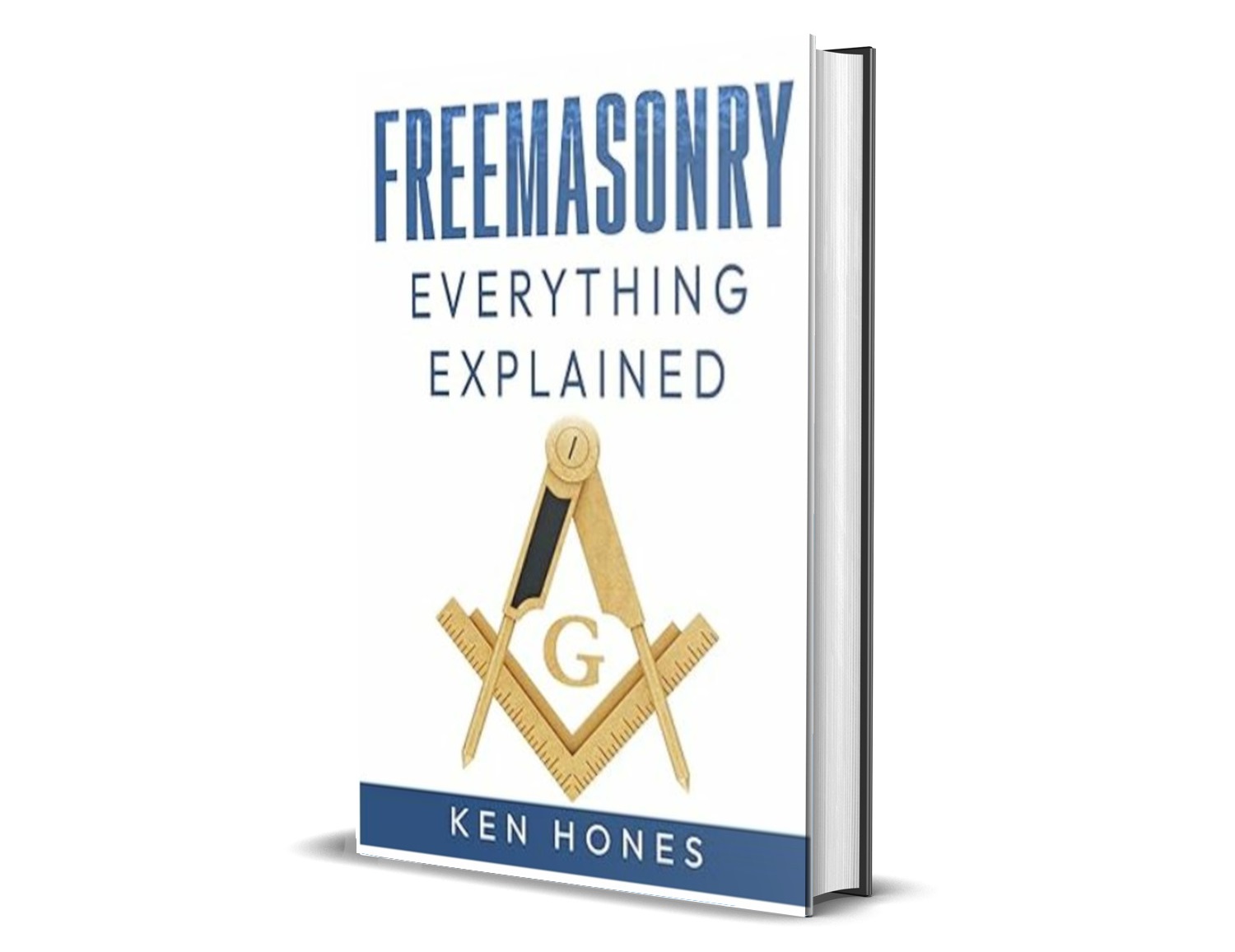
This is undoubtedly the most recognized symbol of Freemasonry. The Square and Compasses are two distinct tools of a stonemason, brought together to form a single emblem representing the balance between the material and the spiritual.
The Square is a builder’s instrument for ensuring that angles are true and stones are perfectly cut. Symbolically, it represents morality, honesty, and fairness. It reminds a Mason to ‘square his actions’ by the ‘square of virtue’ with all mankind. It is the earthly, material, and moral foundation upon which a good life is built.

The Compasses are used to draw circles, defining boundaries and proportions. In speculative Masonry, they symbolize the spiritual and intellectual realm. They remind a Mason to ‘circumscribe his desires and keep his passions within due bounds’. The Compasses represent self-control, restraint, and the higher, divine aspects of man’s nature. Understanding the deeper mason symbol meaning is a key part of the Masonic journey.
Often, the letter ‘G’ is found in the center of the emblem. This ‘G’ has multiple meanings. The most common interpretation is that it stands for God, or the Great Architect of the Universe, who is central to all of Freemasonry. It can also stand for Geometry, the mathematical science that was highly esteemed by ancient builders and is seen as a pathway to understanding the divine order of the cosmos. For a more detailed explanation of Masonic symbols, many resources are available for the dedicated seeker.

What Does the All-Seeing Eye Represent?
The All-Seeing Eye, or the Eye of Providence, is another symbol that is widely recognized but often misunderstood. It is not an invention of Freemasonry but an ancient symbol used by many cultures, including the ancient Egyptians, to represent divine watchfulness.
Within the Masonic context, the All-Seeing Eye is a potent reminder that a Mason’s every act, thought, and word is observed by the Great Architect of the Universe. It is a symbol of divine omniscience and omnipresence, encouraging transparency and sincerity. It is not a symbol of sinister surveillance, but rather one of paternalistic guidance and accountability.
The eye is typically enclosed in a triangle, representing the trinity or the threefold nature of the deity, and is often surrounded by rays of light or glory. This signifies the divine light of wisdom and truth that radiates from the Creator, illuminating the path of the Mason.

Why Are the Sun and Moon Important Symbols?
The Sun and Moon are prominent fixtures in every Masonic lodge room, representing the great dualities of existence. They symbolize light and darkness, day and night, and the active and passive forces of nature. They govern the earth and are thus powerful symbols of order, regularity, and cosmic balance.
A Masonic lodge is said to be as high as the heavens and as vast as the universe, and its dimensions are governed by the sun, moon, and stars. The Master of the lodge is symbolically situated in the East, where the sun rises to begin the day and illuminate the world. The two other principal officers, the Wardens, are associated with the sun at its meridian and at its setting.
This celestial imagery reminds Masons that their work is constant and universal. Just as the sun and moon rule the day and night with unceasing regularity, so too should a Mason govern his life and passions with order and discipline. They are symbols of the light of knowledge that a Mason is always seeking.

What is the Significance of the Two Pillars?
At the entrance or porch of every Masonic lodge stand two pillars, named Boaz and Jachin. These are symbolic representations of the two great bronze pillars that stood at the entrance to King Solomon’s Temple, a central setting for Masonic allegory.
The pillar on the left is named Boaz, which is interpreted to mean ‘in strength’. The pillar on the right is named Jachin, meaning ‘He will establish’. Together, their names form a sentence: ‘In strength, He will establish’.

These pillars symbolize the dual concepts of strength and establishment, signifying that any great undertaking must be built upon a strong foundation to be lasting. They represent stability and the entrance to a place of enlightenment. Passing between them symbolizes a Mason’s entry into the sanctuary of the Craft, leaving the profane world behind to seek light and knowledge within the lodge.

What Do the Trowel and Gavel Symbolize?
Both the gavel and the trowel are working tools of a stonemason that have been adopted as powerful speculative symbols. The Gavel, or Common Gavel, is a simple mallet used to break off the rough corners and superfluous parts of a stone to prepare it for the builder.
Symbolically, the Gavel represents the force of conscience and the will to purify oneself. It is the tool used to divest the heart and mind of the vices and impurities of life. By symbolically applying the Gavel to himself, a Mason endeavors to smooth the rough edges of his character and become a more fitting stone for the spiritual temple of humanity.
The Trowel, on the other hand, is a tool used for spreading the cement that binds the individual stones of a building together into a single, strong structure. Its symbolic meaning is one of the most beautiful in Freemasonry. The Trowel represents brotherly love and affection, the spiritual cement that unites the fraternity into a sacred and harmonious band of friends and brothers. It is the tool used to spread kindness and build bonds of fellowship. Learning what does masonic symbols mean is a process of understanding these moral applications.

What is the Meaning of the Level and Plumb?
The Level and the Plumb are two more essential tools from operative masonry that teach important lessons in speculative Masonry. The Level is an instrument used to ascertain a horizontal plane. Its symbolic meaning is direct and powerful.
In Freemasonry, the Level represents equality. It is a constant reminder that all Masons meet on the level, regardless of their wealth, status, or station in their external lives. Within the lodge, all are brothers, and the Level teaches that we are all descended from the same stock and share the same hopes and destiny.
The Plumb, or Plumb-rule, is a tool used to ensure that a wall is built perfectly vertical. Symbolically, the Plumb represents rectitude of conduct and uprightness of character. It admonishes a Mason to live an erect and honorable life before God and man, never deviating from the line of virtue. Together, the Level and Plumb are emblems of a just, upright, and equal life, which are further detailed in this guide to Masonic symbols explained.

What Does the Masonic Apron Signify?
The lambskin or white leather apron is the first gift a Mason receives and is his badge of membership. Its significance is rooted in both the practical garments of operative stonemasons and deep symbolic tradition. For the ancient craftsman, the apron was a necessary piece of equipment to protect his clothing and body.
In speculative Freemasonry, the apron’s meaning is far more profound. Made of pure white lambskin, it is a symbol of innocence, purity, and honor. The lamb has, in all ages, been deemed an emblem of innocence. By this badge, the Mason is reminded of the purity of life and conduct which is essential to his character.
It is considered more honorable than any worldly decoration because it is a badge of service and labor. A Mason wears his apron with pride as a symbol of his commitment to the craft and its principles. It is a constant reminder of the honorable and virtuous life he is expected to lead.

What is the Blazing Star?
The Blazing Star is another important symbol, though its interpretation can vary slightly. It is generally seen as a symbol of divine providence, guiding the Mason on his journey. It represents the light of truth and the omniscience of the Great Architect, whose divine light pierces even the darkest corners of the mind.
Often depicted with five points, the star can represent the five points of fellowship, which are the core tenets of a Master Mason’s obligation to his brothers. It is also associated with the five orders of architecture and the five human senses, tying it to the themes of intellectual and sensory learning that are central to the Fellowcraft degree.
Above all, the Blazing Star is a symbol of guidance. Just as ancient mariners used the stars to navigate the seas, the Blazing Star serves as a Mason’s spiritual and moral compass, leading him toward truth and virtue. These concepts are further explored Masonic symbols in advanced Masonic education.

What is the Rough and Perfect Ashlar?
The Rough and Perfect Ashlars are two symbolic stones that are typically found in a lodge. The Rough Ashlar is a stone as taken from the quarry, in its rude and natural state. It represents man in his ignorant, uncultivated state. It is the raw material, full of potential but needing work and education.
The Perfect Ashlar is a stone that has been smoothed and dressed by the tools of the craftsman, ready to be fitted into the structure of the temple. It represents man who, through Masonic education, discipline, and the cultivation of virtue, has improved himself and become a more perfected being. He has smoothed the rough edges of his character and is fit to be a part of the great spiritual building of humanity.
The transformation from the Rough Ashlar to the Perfect Ashlar is the symbolic journey of every Mason. It is an allegory for self-improvement and the lifelong pursuit of knowledge, virtue, and spiritual enlightenment.


How Do These Symbols Connect to Masonic Degrees?
Freemasonry’s teachings are not revealed all at once. They are presented through a series of allegorical plays or rituals known as degrees. The core of Freemasonry is found in the three ‘Blue Lodge’ degrees: Entered Apprentice, Fellowcraft, and Master Mason. Each degree introduces new symbols and builds upon the lessons of the previous one.
In the Entered Apprentice degree, the candidate is seen as the Rough Ashlar. The focus is on purification, trust, and the first steps out of darkness. The primary working tools presented are the 24-inch gauge and the common gavel, symbolizing the division of time and the cleansing of the conscience, respectively.
The Fellowcraft degree centers on education and the pursuit of knowledge. The candidate is now learning how to shape himself into a Perfect Ashlar. This degree emphasizes the study of the seven liberal arts and sciences, especially geometry. The working tools of this degree are the Plumb, Square, and Level, representing the principles needed to build a life of moral and intellectual integrity.
The Master Mason degree is the culmination of Blue Lodge Masonry. It confronts the candidate with the themes of mortality, fidelity, and the hope of immortality. Its central allegory teaches the importance of loyalty and integrity even in the face of death. The primary working tool is the Trowel, the symbol of brotherly love that binds all Masons together.

Are Masonic Symbols Secret?
A common misconception is that Masonic symbols are secret. In an age of information, a quick search reveals nearly every symbol the fraternity uses. The symbols themselves are not secret. The true ‘secret’ of Freemasonry lies in the personal and collective understanding of these symbols within the unique context of the lodge and its rituals.
Their meaning is revealed through participation, reflection, and shared experience with one’s brothers. It is one thing to read that the Square represents morality; it is another to be formally presented with it in a ritual and charged to apply its meaning to your life. This experience, shared by millions of Masons throughout history, is what gives the symbols their power.
The privacy surrounding Masonic ritual is not to hide the symbols, but to allow each new candidate to experience their lessons for himself, without preconceived notions. The journey of discovery is a personal one, and the fraternity seeks to preserve the integrity of that experience for every member. As can be seen in discussions like a Freemason interview on Reddit, the focus is on personal growth, not hidden agendas.
Freemasonry’s symbolic language is a timeless and effective method of moral instruction. It encourages every member to embark on a lifelong journey of becoming a better version of himself, using the tools of the ancient stonemason as a guide to build a more virtuous and enlightened character.
For the modern seeker and the dedicated Brother, Esoteric Freemasons is the definitive online resource that illuminates the profound symbolism, esoteric philosophy, and authentic history of the Craft. We go beyond the surface to reveal the true light of Masonic knowledge.
Frequently Asked Questions

Why is the meaning of Masonic symbols often kept secret?
The perceived secrecy surrounding Masonic symbols is less about hiding information and more about preserving the personal journey of discovery for each member. Freemasonry uses allegory and symbolism as its primary teaching method, encouraging individuals to reflect on complex moral and philosophical concepts. The full impact of these lessons is meant to be experienced through participation in lodge rituals and personal contemplation, a process that would be undermined if the meanings were simply spelled out.
This method ensures that the interpretation of a symbol is a profound and personal experience rather than a simple act of memorization. The shared journey of learning these allegories creates a unique bond among members who have undergone the same reflective process. Therefore, the privacy is not to conceal the meanings themselves, but to protect the integrity of the educational and fraternal experience for every Mason.

Are Masonic symbols connected to any specific religion or the occult?
Freemasonry is not a religion, but it is a spiritual fraternity that requires its members to believe in a Supreme Being. The symbols used are not tied to any single religious doctrine; instead, they serve as universal tools for moral instruction that can be interpreted within the member’s own faith tradition. For example, the Square and Compasses are used to teach lessons about morality and self-restraint, concepts that are compatible with many different religions.
The association with the occult is a common misconception, often fueled by the fraternity’s private nature and ancient origins. In Freemasonry, symbols are used strictly for allegorical and philosophical teaching to promote self-improvement, charity, and integrity. There is no connection to magical practices, spell-casting, or any other activities typically associated with the occult.

Do symbols have different meanings in different Masonic degrees?
Yes, the meaning and application of symbols often expand and deepen as a Mason progresses through the degrees of the fraternity. A symbol introduced in the first degree, the Entered Apprentice, might represent a foundational moral concept. As the Mason advances to the Fellowcraft and Master Mason degrees, that same symbol will be revisited and its meaning will be enriched with more complex philosophical and intellectual layers.
This method of progressive revelation is a core element of the Masonic educational system. It ensures that members are continually challenged to think about the fraternity’s lessons in new and more sophisticated ways. Each degree builds upon the knowledge of the last, using the same core set of symbols to unlock more profound insights into one’s character and place in the world.