Masonic Symbols Explained: A Complete Glossary of Meanings
For centuries, the world of Freemasonry has captivated the imagination of outsiders. It is a world rich with tradition, philosophy, and a unique visual language that speaks in allegory and metaphor. At the heart of this ancient and honorable fraternity lies a complex system of symbols, each designed to teach profound lessons about morality, self-improvement, and the nature of the universe. These are not secret signs meant to conceal, but rather tools of enlightenment meant to reveal truths to those who seek them.
Understanding this symbolic language is key to unlocking the core tenets of the Craft. Each emblem, working tool, and piece of Lodge furniture carries a deeper meaning, guiding a Mason on his personal journey from a state of natural imperfection toward a more refined and enlightened self. This journey is the very essence of Masonic work, a process of building a spiritual and moral temple within. A comprehensive exploration of Freemasonry symbols provides a foundation for grasping the fraternity’s beautiful system of morality, veiled in allegory and illustrated by symbols.
The use of symbolism is not arbitrary. It is a time-honored method of instruction that transcends cultural and linguistic barriers, communicating complex ideas in a simple, memorable form. For a Mason, these symbols serve as constant reminders of his obligations to himself, his family, his community, and the Great Architect of the Universe. They are a shared vocabulary that connects Brethren across the globe in a common pursuit of knowledge and virtue.

Why Does Freemasonry Use Symbols?
To understand why Freemasonry is so deeply rooted in symbolism, one must look to its origins. The fraternity evolved from the guilds of operative stonemasons, the skilled artisans who built the magnificent cathedrals and castles of Europe. These medieval craftsmen used specific tools to shape rough stones into perfect blocks, and they used signs and tokens to protect the secrets of their trade and identify their level of skill.
When Freemasonry transitioned from an operative craft to a speculative one, it retained this symbolic framework. The tools of the stonemason, like the square, level, and plumb, were adopted and given new, philosophical meanings. They were no longer used to build physical structures but to build a better man. The process of shaping a stone became an allegory for shaping one’s character and mastering one’s passions.
This allegorical method is incredibly powerful. Instead of simply stating that a person should be honest, Freemasonry presents the symbol of the square, reminding a Mason to ‘act on the square’ with all of mankind. This creates a more lasting and personal impression. Symbols engage the mind on a deeper level, encouraging contemplation and personal interpretation, making the lessons learned a part of the individual’s own discovery.

What Are the Most Common Masonic Symbols?
The landscape of Masonic symbolism is vast and intricate, with layers of meaning that unfold as a Mason progresses through the degrees. However, several core symbols are universally recognized and form the foundation of Masonic teaching. These emblems are found in every Lodge room and are central to the fraternity’s identity.

What is the Meaning of the Square and Compasses?
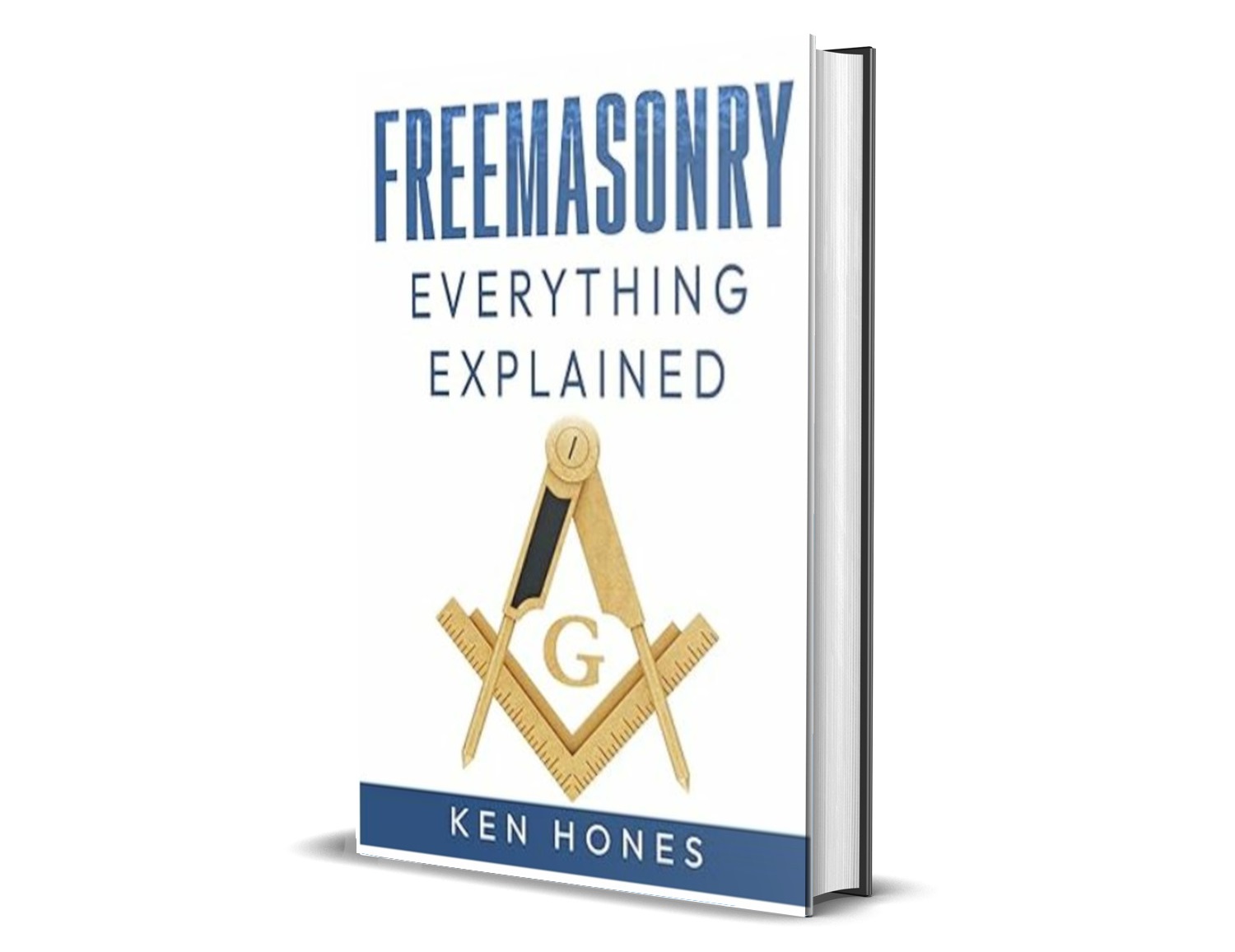
Without a doubt, the Square and Compasses are the most widely recognized symbol of Freemasonry. Often depicted with the letter ‘G’ in the center, this emblem encapsulates the core philosophy of the Craft. Each component has a distinct and important meaning that interlocks with the others to form a complete moral lesson.
The square is an instrument used by stonemasons to ensure that a stone’s corners are true 90-degree angles. In speculative Masonry, it is a symbol of morality, truth, and honesty. It constantly reminds a Mason to ‘square his actions’ by the ‘square of virtue’ with all of humanity. It represents fairness, integrity, and living an upright life.
The compasses are used to draw circles and are a symbol of self-restraint and boundaries. They teach a Mason to ‘circumscribe his desires and keep his passions within due bounds’. This represents the vital importance of moderation, self-control, and discipline in one’s journey of personal development. The two points of the compasses represent the spiritual and the material, and the Mason’s duty to balance them.

At the center, the letter ‘G’ holds multiple meanings. For many, it represents God, or the Great Architect of the Universe, the supreme being to whom all Masons look for guidance. It also stands for Geometry, the mathematical science upon which architecture and Masonry were founded, and which symbolizes the order and harmony of creation.

What Does the All-Seeing Eye Represent?
Often seen within a triangle or surrounded by rays of light, the All-Seeing Eye, or Eye of Providence, is another prominent Masonic emblem. While it has been used by many cultures and belief systems throughout history, in Freemasonry it holds a specific and powerful significance. It is a constant reminder of divine omniscience.
The symbol represents the ever-watchful eye of the Great Architect of the Universe. It conveys the concept that a Mason’s thoughts, words, and actions are always observed by this higher power, even when in solitude. This is not meant to be a symbol of surveillance or judgment in a negative sense. Instead, it serves as a source of comfort and a moral guide.
It encourages a Mason to live a life of integrity, knowing that he is never truly alone and that his efforts to live virtuously are seen and understood. The eye within the triangle, known as a delta, further emphasizes the concepts of deity, wisdom, and divine order. A deeper look at how these Masonic symbols explained reveals their role in a Mason’s continuous journey toward light.

Why is the Masonic Altar Significant?
The altar is the central piece of furniture in any Masonic Lodge. It is not an altar for sacrifice or worship in the traditional religious sense. Instead, it is a symbolic focal point for the Lodge’s work, representing a place of solemn obligation and communion with the Great Architect.
Upon the altar rests the Volume of the Sacred Law, which is typically the holy book of the predominant faith of the Lodge’s members, such as the Bible, Torah, or Quran. This book is open during all Masonic proceedings, symbolizing the divine wisdom that should guide all of the Lodge’s undertakings. The Square and Compasses are placed upon the open Volume of the Sacred Law, reinforcing the idea that a Mason’s moral and spiritual obligations are intertwined.
It is at the altar that a candidate takes his obligations, making it a profoundly personal and sacred space within the Lodge. It represents the ground floor of a Mason’s spiritual life, the place where he dedicates himself to the principles of the fraternity and his own self-improvement.

What Do the Sun and Moon Symbolize?
Imagery of the sun and moon is frequently found in a Masonic Lodge, often depicted on either side of the Master’s chair. These celestial bodies represent some of the most fundamental dualities of existence: light and darkness, day and night, activity and rest. They symbolize the regularity and order of the universe, governed by the laws of the Great Architect.
In the context of the Lodge, the sun and moon signify that Masonic work is constant, taking place both day and night. They also have a symbolic connection to the officers of the Lodge. The Sun represents the Worshipful Master, who is the source of light and knowledge for the Lodge. The Moon represents the Senior Warden, who assists the Master in governing and instructing the Brethren. The collection of Masonic symbols and their meanings helps to place these celestial bodies in their proper philosophical context.
Their presence reminds Masons of the need for regularity and punctuality in their own lives, mirroring the predictable courses of the sun and moon. They are powerful symbols of balance, order, and the cosmic forces that provide the framework for our existence.

What is the Significance of the Two Pillars, Boaz and Jachin?

Standing at the entrance or porch of the symbolic Temple in every Masonic Lodge are two prominent pillars. These are representations of the two great brass pillars that stood at the entrance to King Solomon’s Temple, as described in the Old Testament. Their names were Boaz and Jachin.
Boaz is translated to mean ‘in strength’, while Jachin means ‘He will establish’. Together, they convey the promise ‘In strength, He will establish His house’. In a Masonic context, these pillars symbolize stability, permanence, and the establishment of a firm foundation based on divine truth and wisdom. They mark the symbolic threshold a candidate must cross to enter a place of light and knowledge. A full understanding of these and other Freemason signs and symbols is essential for a candidate’s journey.
They serve as a gateway, reminding all who pass between them that they are entering a sacred space dedicated to moral and spiritual edification. They represent the support and strength that Freemasonry offers its members, as well as the importance of establishing one’s life on a solid foundation of principle.

What Do the Rough and Perfect Ashlars Mean?
The ashlars are two symbolic stones that are typically found in a Lodge. The Rough Ashlar is a stone as it is taken from the quarry, in its natural, unworked state. The Perfect Ashlar is a stone that has been shaped and smoothed by the tools of the stonemason, ready to be used in a building.
These two stones are powerful allegories for human development. The Rough Ashlar represents man in his natural state: ignorant, uncultivated, and subject to the vices and passions of his untamed nature. It is a symbol of the profane world and the state of a person before he receives the light of Masonry. There are many such Masonic symbols that illustrate this journey.
The Perfect Ashlar represents man after he has improved himself through virtuous living, education, and the diligent application of Masonic teachings. It is the state of character that a Mason strives to achieve, a disciplined and enlightened being fit to be a part of the spiritual temple of humanity. The transformation from the Rough to the Perfect Ashlar is the symbolic work of every Freemason.

What is the Meaning of the Masonic Apron?
The Masonic apron is one of the most significant and cherished items of a Mason’s regalia. It is the first gift a new Mason receives and is considered his badge of membership. Made of white lambskin, the apron is a symbol of innocence, purity, and the honorable nature of labor.
Its origins trace back to the protective leather aprons worn by operative stonemasons. In speculative Masonry, it serves as a constant reminder of a Mason’s primary duties. The untarnished white lambskin signifies a purity of life and conduct that every Mason should strive to maintain. It is considered more honorable than any other decoration or award a man can wear.
As a Mason progresses through the degrees, his apron may become more ornate, but the fundamental symbolism of innocence and honor remains. It is a visual representation of his commitment to the craft, and when worn, it distinguishes him as a builder of character. The details of these Masonic symbols explained highlight the apron’s deep historical and moral importance.

What Does the Beehive Symbolize in Masonry?
The beehive is a less common but equally instructive symbol found in Masonic teachings. It is a powerful emblem of industry, cooperation, and the importance of systematic labor for the good of the community. A beehive is a society where every member has a role and works diligently for the benefit of the whole.
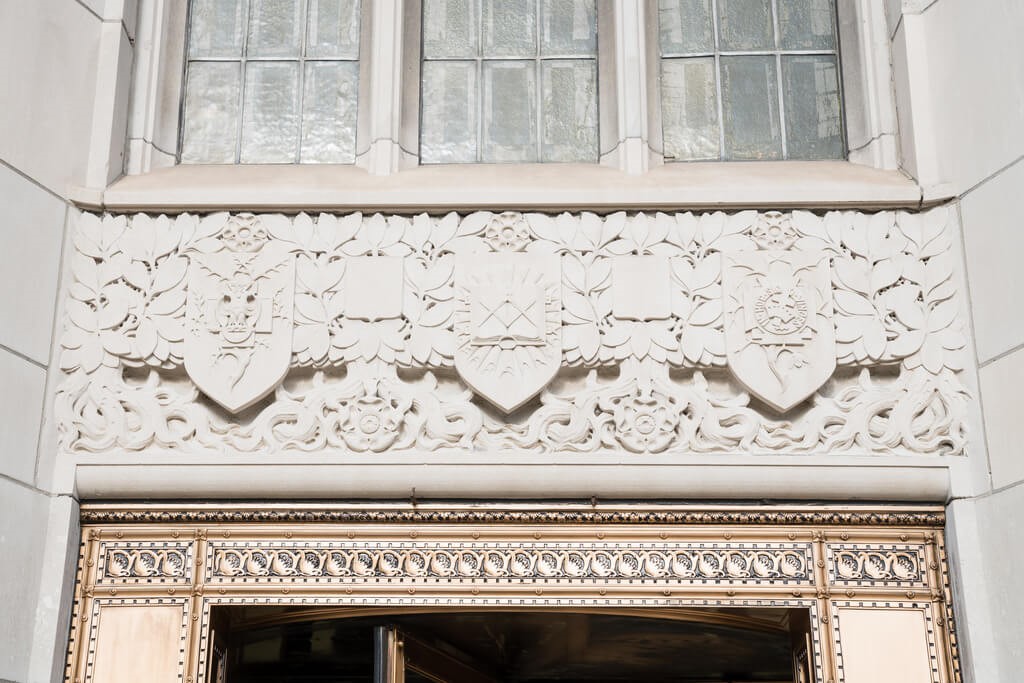
This symbol teaches Masons that they too should be productive and industrious members of society. It cautions against idleness and encourages a life of purpose and contribution. Just as the bees work together in perfect harmony to build their hive and produce honey, so too should Masons work together to build a better world. Many interesting Masonic symbols explained like the beehive offer practical life lessons.
The beehive serves as a beautiful allegory for a well-governed society, where order, diligence, and cooperation lead to peace and plenty for all. It is a reminder that human progress is built upon the collective efforts of industrious individuals.

Why is the Number Three Important?
The number three holds a special place of reverence and significance within Masonic symbolism and ritual. Its importance is woven throughout the fabric of the Craft, appearing in numerous contexts. This repetition underscores its symbolic power, representing concepts of completeness, balance, and divinity.
In Craft Masonry, there are three degrees: Entered Apprentice, Fellowcraft, and Master Mason. A Lodge is governed by three principal officers: the Worshipful Master, Senior Warden, and Junior Warden. There are three Great Lights of Masonry: the Volume of the Sacred Law, the Square, and the Compasses. The Lodge itself is supported by three great pillars: Wisdom, Strength, and Beauty.
This recurrence is not accidental. The number three has been considered sacred in many philosophical and religious systems throughout history, often representing the divine triad or the tripartite nature of the world. In Masonry, it symbolizes the fundamental principles that provide balance and structure to a Mason’s life and to the Lodge itself.

How Do These Symbols Connect to a Mason’s Daily Life?
The true value of Masonic symbolism is not in its esoteric nature, but in its practical application. These emblems are not meant to be admired merely as ancient curiosities. They are designed to be active tools for moral guidance and personal reflection that a Mason carries with him into his everyday life.

The lessons of the square and compasses guide his professional and personal relationships, reminding him to be fair and honest and to control his impulses. The story of the ashlars encourages him to pursue education and self-improvement continuously, never being content with his current state of knowledge or character. The All-Seeing Eye provides a moral compass, prompting him to act with integrity even when no one is watching.
By internalizing these symbols, a Mason learns to build his character with the same care and precision that an operative mason would use to build a cathedral. The principles of the Craft become a part of his being, helping him to be a better man, a better husband, a better father, and a better citizen. This is how members discover the light of Freemasonry in a tangible way.

Are Masonic Symbols Secret?
A common misconception is that Masonic symbols are secret. In reality, many of these symbols, like the Square and Compasses or the All-Seeing Eye, are widely visible in public life on buildings, jewelry, and even currency. The symbols themselves are not the secret.
The ‘secret’ of Freemasonry lies in the specific way these symbols are used within the context of the fraternity’s rituals and degree ceremonies to impart moral and philosophical lessons. The true meaning of a symbol is revealed through a personal journey of participation, reflection, and study within the fellowship of the Lodge. It is the interpretation and the individual experience of that interpretation that is reserved for members.
Freemasonry is therefore often described not as a secret society, but as a ‘society with secrets’. Its existence is public, its members are free to identify themselves, and its principles are based on universal values of brotherly love, relief, and truth. The symbols are the keys, but each Mason must turn the key himself to unlock the wisdom within.
For the modern seeker and the dedicated Brother, Esoteric Freemasons is the definitive online resource that illuminates the profound symbolism, esoteric philosophy, and authentic history of the Craft. We go beyond the surface to reveal the true light of Masonic knowledge.
Frequently Asked Questions

Why do Freemasons still use secret signs and handshakes today?
The primary purpose of Masonic signs and grips is not secrecy for its own sake, but rather for recognition and to prove one’s standing within the fraternity. These "modes of recognition" allow a traveling Mason to verify his membership when visiting a lodge where he is not known, ensuring only qualified members are present. This tradition fosters a unique bond and sense of shared identity among members, regardless of their geographic location or personal background.
Beyond simple identification, these signs serve an important symbolic and educational function within Masonic ritual. Each sign, token, and word is tied to specific moral lessons and philosophical principles taught within the different Masonic degrees. Using them reinforces these teachings and acts as a constant reminder of the obligations and values a Mason has sworn to uphold, connecting modern members to centuries of tradition.

Can an outsider learn Masonic signs and successfully pass as a Freemason?
While an outsider, often referred to as a "cowan" in Masonic terms, might find descriptions of signs online or in old exposures, it is highly improbable they could successfully pass as a Mason. The signs and grips are part of a larger, intricate system that includes specific words, questions, and answers learned through direct participation in degree ceremonies. A simple gesture performed without the correct context or accompanying dialogue would be immediately flagged as suspicious by experienced members.
If a visitor’s legitimacy is questioned, a lodge will form a "Committee of Examination" to formally test the individual. This examination involves a detailed Q&A session about the rituals and teachings that a non-Mason would be completely unable to answer correctly. This layered method of proof ensures the integrity of the lodge meeting is protected from impostors, making simple imitation virtually impossible.

Are the signs and gestures used by Freemasons universal across all lodges worldwide?
The foundational signs, tokens, and words associated with the three core degrees of Masonry are remarkably consistent across most recognized Grand Lodges around the globe. This underlying uniformity is what makes the fraternity truly universal, allowing a member from the United States to be recognized and welcomed in a lodge in Japan or Brazil. This shared ritualistic language is a cornerstone of the international Masonic brotherhood.
However, minor variations in the execution of signs, ritualistic wording, and specific customs do exist from one jurisdiction to another. Each Grand Lodge is sovereign and may have slight differences in its work, much like regional dialects of a common language. These subtle distinctions are generally understood and do not prevent recognition, but they are a known feature of the fraternity’s global and decentralized structure.