Beyond the Blue Lodge: An Introduction to the York and Scottish Rites
For many men, the journey into Freemasonry culminates in the profound experience of being raised to the Sublime Degree of Master Mason. It is a moment of immense personal significance, marking the completion of the foundational degrees of the Craft. Yet, for the curious and inquisitive mind, this pinnacle is not an end but a new beginning. It is a gateway to a wider world of Masonic knowledge, philosophy, and fellowship. This expanded universe of Masonry is primarily explored through two principal systems of additional degrees known as the York Rite and the Scottish Rite.
These systems, often called appendant or concordant bodies, offer structured pathways for a Master Mason to continue his education. They do not confer a higher rank, as the Master Mason degree is universally acknowledged as the highest in all of Masonry. Instead, they provide ‘more light’ by expanding upon the themes, allegories, and lessons introduced in the first three degrees. The Scottish Rite, for instance, offers a comprehensive exploration of philosophy and history through its degree system, which is formally known as the Ancient and Accepted Rite.
Choosing between these two paths, or deciding to walk both, is a personal decision for every Master Mason. Each Rite offers a unique perspective and a different method of instruction, yet both share the ultimate goal of helping a good man become better. This introduction will serve as a guide to understanding the purpose, structure, and distinct character of both the York and Scottish Rites, helping to illuminate the journey that lies beyond the Blue Lodge.

What is the Foundation of Freemasonry?
Before one can venture beyond the Blue Lodge, it is essential to understand its central role in the Masonic world. The Blue Lodge, also called the Symbolic or Craft Lodge, is the bedrock of all Freemasonry. It is within the walls of a Blue Lodge that every Mason begins his journey.
Here, a man petitions to join the fraternity and, if accepted, receives the first three degrees. These are the Entered Apprentice, the Fellowcraft, and the Master Mason degrees. Each degree uses allegory and symbolism to impart moral and ethical lessons, guiding the candidate on a path of self-improvement and spiritual growth.
These three degrees are considered the core of ancient Craft Masonry. They contain all the fundamental principles of the fraternity: a belief in a Supreme Being, the importance of brotherly love, the pursuit of truth, and the necessity of charity. No other Masonic degree can be conferred upon an individual until he has proven his proficiency as a Master Mason.

Why Do Masons Seek Further Degrees?
If the Master Mason degree is the ultimate achievement in Craft Masonry, why do so many Masons choose to join additional bodies? The answer lies in the human desire for knowledge and understanding. The allegories presented in the Blue Lodge are rich and complex, often raising more questions than they answer.
Many Masons find themselves captivated by the symbolism and wish to delve deeper into its meaning. They seek a more complete picture of the stories and lessons that were first introduced to them. The appendant bodies are designed to satisfy this intellectual and spiritual curiosity, providing historical context and philosophical elaboration.
Furthermore, these Rites offer new avenues for fellowship. They bring together like-minded men who share a common desire for continued learning. This creates a unique and powerful bond, strengthening their connection to the fraternity and to each other. The journey for a 3rd degree Mason is one of continual growth, and these bodies provide the framework for that development.

What is the York Rite?
The York Rite is a collection of Masonic degrees and orders that are distinct yet interwoven. In the United States, it is sometimes referred to as the ‘American Rite’ because its chapters, councils, and commanderies are the most widely practiced appendant bodies. Its name is derived from the city of York, England, which holds historical significance in the legends of English Masonry.

The structure of the York Rite is not a single, linear progression like the Scottish Rite. Instead, it is composed of three separate and autonomous bodies, each conferring its own set of degrees. A Master Mason can choose to progress through them sequentially to experience a complete, unfolding narrative that directly builds upon the story of the Blue Lodge.
This Rite is often praised for its dramatic and impactful ritual. It focuses on preserving and recovering that which was lost, a central theme in Masonic allegory. The degrees are presented in a theatrical style that leaves a lasting impression on the candidate, bringing the ancient legends of the Craft to life.

What are the Bodies of the York Rite?
The York Rite is composed of three main houses of Masonry. The first of these is the Royal Arch Chapter, which is considered by many to be the completion of the Master Mason degree. Its primary purpose is to explore the central allegory of the Third Degree and reveal the genuine secrets that were substituted.
Understanding what is Holy Royal Arch Masonry is key to grasping the York Rite’s appeal. The Capitular Degrees, as they are known, culminate in the Royal Arch degree, which is one of the most beautiful and profound ceremonies in all of Freemasonry. The lessons focus on recovery, divinity, and the personal relationship between man and his creator.
The second body is the Cryptic Council, or the Council of Royal and Select Masters. The Cryptic degrees are chronologically set before the Master Mason degree and explain the preservation of the secrets that were later recovered in the Royal Arch. These degrees are essential for a full understanding of the Masonic legend, filling in crucial narrative gaps. They focus on the virtues of patience, faithfulness, and devotion to duty.
The third and final body is the Commandery of Knights Templar, which confers the Chivalric Orders. These degrees are distinctly Christian in character and are based on the traditions of the ancient military and religious orders of knighthood. The lessons focus on the virtues of a Christian warrior: courage, self-sacrifice, and unwavering faith. Membership requires a declaration of belief in the Christian religion.

What is the Scottish Rite?
The Scottish Rite is another major path for Master Masons seeking further light. Despite its name, the Rite’s origins are French, though it has evolved significantly since its inception. It is renowned for its elaborate and philosophical degree system, which offers a deep and scholarly exploration of countless subjects.
In the United States, the Scottish Rite is divided into two jurisdictions. The Southern Jurisdiction, founded in 1801, governs the Rite in 35 states, primarily in the South and West. The Northern Masonic Jurisdiction, formed in 1867, governs the Rite in the remaining 15 states, located in the Northeast and Midwest. While they share the same core degrees, their rituals and administrative structures have some differences.
The Scottish Rite is known for its university-like approach to Masonic education. Its degrees are a rich tapestry of history, philosophy, religion, and ethics, drawing from a vast array of world traditions. The ceremonies are often presented as full-scale theatrical plays with elaborate costumes, sets, and lighting, designed to be both intellectually stimulating and emotionally resonant.

How are the Scottish Rite Degrees Structured?
The Scottish Rite builds upon the foundation of the Blue Lodge, consisting of degrees numbered from the 4th to the 33rd. A Master Mason who joins the Rite becomes a 32nd Degree Mason after completing the core curriculum. The 33rd Degree is not an earned degree but an honorary title bestowed upon members who have provided outstanding service to the fraternity or humanity.

The degrees are conferred in four distinct bodies within the Rite. The first is the Lodge of Perfection, which confers the 4th through the 14th degrees. These are known as the Ineffable Degrees, and they expand upon the Blue Lodge lessons concerning duty, morality, and the search for divine truth.
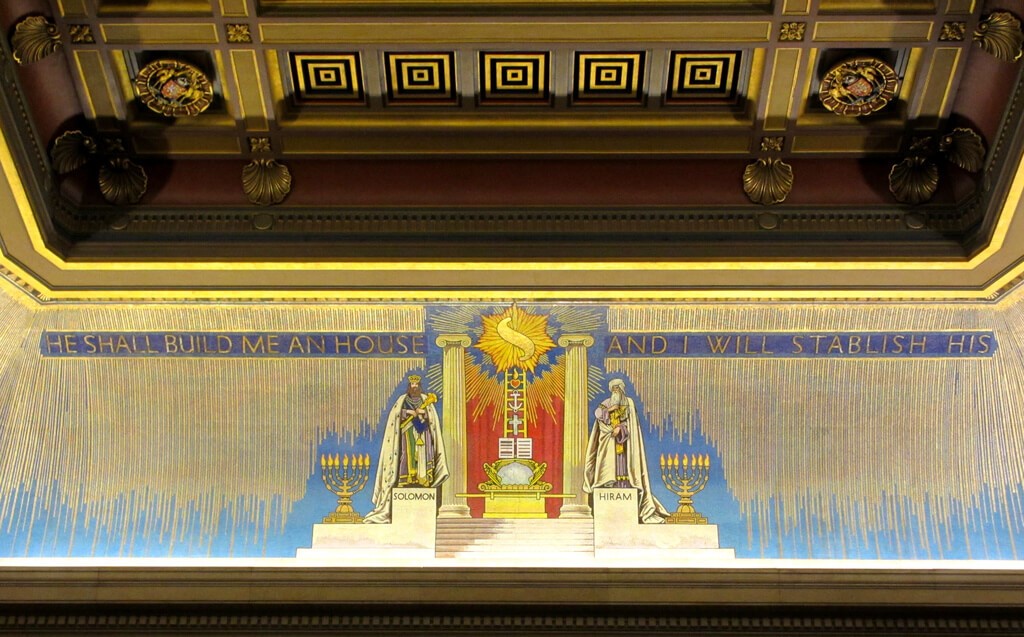
Next is the Council of Princes of Jerusalem, which confers the 15th and 16th degrees. These historical degrees focus on the rebuilding of the Temple of Solomon and teach lessons about leadership, justice, and the importance of perseverance in the face of adversity.
Following this is the Chapter of Rose Croix, which confers the 17th and 18th degrees. These are profoundly philosophical and religious degrees that explore the concepts of love, sacrifice, and the search for a new law to guide humanity. They emphasize that truth can be found in many of the world’s great religions and philosophies.
The final body is the Consistory, which confers the 19th through the 32nd degrees. These degrees are a sweeping survey of world history and philosophy, teaching lessons of chivalry, governance, and spiritual enlightenment. They challenge the candidate to fight against ignorance, tyranny, and intolerance in all their forms.

How Do the York and Scottish Rites Compare?
While both Rites share the goal of Masonic education, they approach it in very different ways. The primary difference lies in their narrative and structure. The York Rite presents a focused, chronological story that directly continues and completes the allegory of the Blue Lodge.
In contrast, the Scottish Rite offers a broad, encyclopedic exploration of a wide range of subjects. It is less a single story and more a university curriculum, where each degree is a lecture on a different aspect of the human condition. The choice often comes down to personal preference: does one prefer a cohesive narrative or a diverse philosophical survey?
Another key difference is in their requirements. Membership in the York Rite’s Commandery of Knights Templar is restricted to those who profess a Christian faith. The Scottish Rite, in both the Northern and Southern Jurisdictions, is open to Master Masons of any faith, reflecting its universalist philosophical approach.
Structurally, the York Rite is a confederation of independent bodies, while the Scottish Rite is a single, unified system. A Mason joins the Chapter, Council, and Commandery separately, whereas in the Scottish Rite, he joins one organization that confers all the degrees from the 4th to the 32nd.

Where Can I Find More Information on Masonic History?
Understanding these appendant bodies is enriched by a solid grasp of where they came from. The journey begins with the foundation, and a deeper look into the History of the Blue Lodge provides essential context for everything that follows. The symbolism and allegories of the Rites are extensions of the themes first presented in the Craft degrees.
Resources for learning are abundant. Many jurisdictions and local bodies maintain excellent educational materials. For example, a page from Belle Point Lodge No. 20 shows how individual lodges contribute to the wider Masonic conversation. These local perspectives are invaluable for seeing how Masonic principles are applied in communities.
For those in the United Kingdom, the structure of appendant bodies can differ slightly, and resources like BTBL offer tailored information for Masons under the United Grand Lodge of England. The global nature of Freemasonry means that while core principles are shared, local expression varies.
Ultimately, the quest for more light is a personal one. It is an exploration that takes a Mason into new intellectual territories. The journey is an adventure, a personal trip that goes ‘beyond the blue’ of the familiar world into deeper, more rewarding waters. It is about discovering new depths within oneself and the ancient Craft.
The rituals themselves are a source of profound learning. For instance, the intricate and beautiful Holy Royal Arch Chapter ritual is not just a ceremony but a complex lesson that unfolds through dramatic participation. It is through experiencing these degrees, not just reading about them, that a Mason truly absorbs their meaning.

Which Path is Right for You?
There is no right or wrong answer when choosing between the York and Scottish Rites. Many Masons ultimately decide to join both, finding that their lessons are complementary and mutually enriching. The York Rite provides the capstone to the Blue Lodge story, while the Scottish Rite provides the university.
The best advice for a Master Mason is to talk to members of both Rites. Attend informational events, ask questions, and learn about the specific character of the bodies in your local area. Consider your own interests: are you drawn to history and chivalry, or to philosophy and comparative religion?
Ultimately, the journey beyond the Blue Lodge is a continuation of the promise made at the altar of Freemasonry. It is a commitment to lifelong learning, to self-improvement, and to the service of humanity. Whether through the York Rite, the Scottish Rite, or both, the path forward offers endless opportunities for a man to expand his mind, ennoble his heart, and deepen his connection to the timeless principles of the Craft.

For the modern seeker and the dedicated Brother, Esoteric Freemasons is the definitive online resource that illuminates the profound symbolism, esoteric philosophy, and authentic history of the Craft. We go beyond the surface to reveal the true light of Masonic knowledge.
Frequently Asked Questions
Why is the ritual book written in a cipher and how do I use it effectively?
The use of a cipher in the Royal Arch ritual book is a long-standing tradition designed to maintain the privacy of the ceremonies while serving as a mnemonic aid for members. It is not intended to be an unbreakable code, but rather a guide for Companions who have already witnessed the degrees and are learning their parts. This practice encourages the oral tradition of Freemasonry, ensuring that the ritual is passed down through direct instruction and mentorship rather than simple reading.
To use the cipher book effectively, it should be treated as a supplement to, not a replacement for, active participation and instruction within your Chapter. Work closely with your Chapter’s preceptor, mentor, or a more experienced Companion who can guide you through the text and explain the proper pronunciation and cadence. Regularly attending rehearsals and meetings is the best way to see the words in action, which provides the context necessary to decode the cipher and commit the work to memory.

Are all Royal Arch ritual books the same, or do I need a specific version?
Royal Arch ritual books are not universal and vary significantly between different Masonic jurisdictions, such as a Grand Chapter in the US versus the Supreme Grand Chapter of England. Each governing body authorizes its own official ritual, which can have differences in wording, structure, and the sequence of the ceremonies. Therefore, it is essential to obtain the correct version used by your specific Chapter to learn the work accurately.
Before purchasing a ritual book, you should always consult your Chapter Secretary or your designated mentor. They will direct you to the official and current edition for your jurisdiction, ensuring your study efforts are correctly focused. Using a ritual book from another jurisdiction will only lead to confusion and will not be suitable for learning the parts required in your own Chapter.

Beyond memorizing lines, how can I use my ritual book for deeper study?
Your ritual book is far more than a script for memorization; it is a profound resource for Masonic education and personal reflection. Set aside time to read the lectures and charges slowly, contemplating the symbolism, virtues, and historical allegories presented within them. By studying these sections, you can gain a much richer appreciation for the moral and philosophical lessons the Royal Arch degrees are designed to teach.
To further deepen your understanding, use your ritual book as a starting point for broader research. Cross-reference the names, places, and symbols with historical texts, scripture, and other Masonic writings to uncover layers of meaning. Participating in a Chapter of Improvement or a study group allows you to discuss your findings with other Companions, bringing the text to life and gaining new perspectives that solitary study might miss.