On the Level: Unveiling the Universal Language of Freemasonry
Imagine a man from Tokyo sharing a profound, unspoken understanding with a man from Texas. Picture a craftsman from Cairo finding common ground with a programmer from Berlin. This is not a scene from a utopian novel but a tangible reality experienced daily within the global fellowship of Freemasonry. This principle, known as Masonic Universality, is the very bedrock of the Craft, allowing it to flourish across continents, cultures, and centuries.
At its heart, Masonic Universality is the idea that the core teachings, values, and symbols of Freemasonry are accessible and relevant to good men everywhere, regardless of their nationality, religion, or station in life. It is the invisible thread that connects millions of individuals into a single, cohesive whole. This concept transforms a collection of local lodges into a truly worldwide Mason fraternity, bound not by geography, but by a shared commitment to self-improvement and service to humanity.
This universal nature is not accidental; it is by design. The fraternity focuses on the fundamental questions of human existence: What is our duty to ourselves, our neighbors, and our creator? How can we become better men? By concentrating on these elemental truths, Freemasonry provides a framework that resonates with the human spirit in any language or culture.

What Binds Masons Together Across Cultures?
How can an organization with such a diverse, global membership maintain its coherence? The answer lies in a shared foundation built upon three unshakable pillars: Brotherly Love, Relief, and Truth. These are not just abstract ideals; they are active principles that every Mason is taught to practice.
Brotherly Love is the call to regard the entire human species as one family and to extend tolerance and respect to all. Relief refers to the duty of every Mason to help and support his Brothers and their families in times of need, as well as extending charity to the wider community. Truth is the highest aim, representing the pursuit of knowledge, both intellectual and spiritual, and the importance of living a life of integrity.
These tenets are universal. They are not confined to any single creed or country. They are the common heritage of humanity, and Freemasonry provides a unique system for cultivating them. This shared moral compass ensures that a Mason from one part of the world can instantly recognize a Brother in another, not just by a secret handshake, but by the content of his character and his commitment to these principles.
Furthermore, the allegorical journey of the Masonic degrees provides a common experience. While rituals may have slight variations from one jurisdiction to another, the central narrative remains the same. This shared experience creates a powerful bond, a collective memory that transcends individual differences and forges a unified identity.

Is Freemasonry a Religion?
This is perhaps one of the most persistent questions asked by those outside the Craft. The answer is a clear and simple no. Freemasonry is not a religion, nor is it a substitute for religion. It is a system of morality veiled in allegory and illustrated by symbols.
One of the key requirements for any man seeking to join is a belief in a Supreme Being. However, Freemasonry never dictates what form that belief must take. A Mason is free to be Christian, Jewish, Muslim, Hindu, or of any other faith that acknowledges a higher power. The term used in Masonic ritual is often the ‘Great Architect of the Universe’, a non-denominational concept that allows men of different faiths to meet in harmony.
This deliberate avoidance of religious dogma is a cornerstone of Masonic Universality. By leaving the specifics of a man’s faith to his own conscience and his house of worship, the lodge becomes a space where theological differences are set aside. The focus shifts from specific doctrines to the universal moral laws that are common to all great spiritual traditions.
In the lodge room, men are not asked to abandon their personal faith. Instead, they are encouraged to be more devout and sincere in whatever faith they profess. Freemasonry seeks to supplement and reinforce a man’s spiritual life, not to replace it. It provides ethical tools and a supportive community to help him live up to the highest principles of his own beliefs.

How Does Symbolism Create a Universal Language?
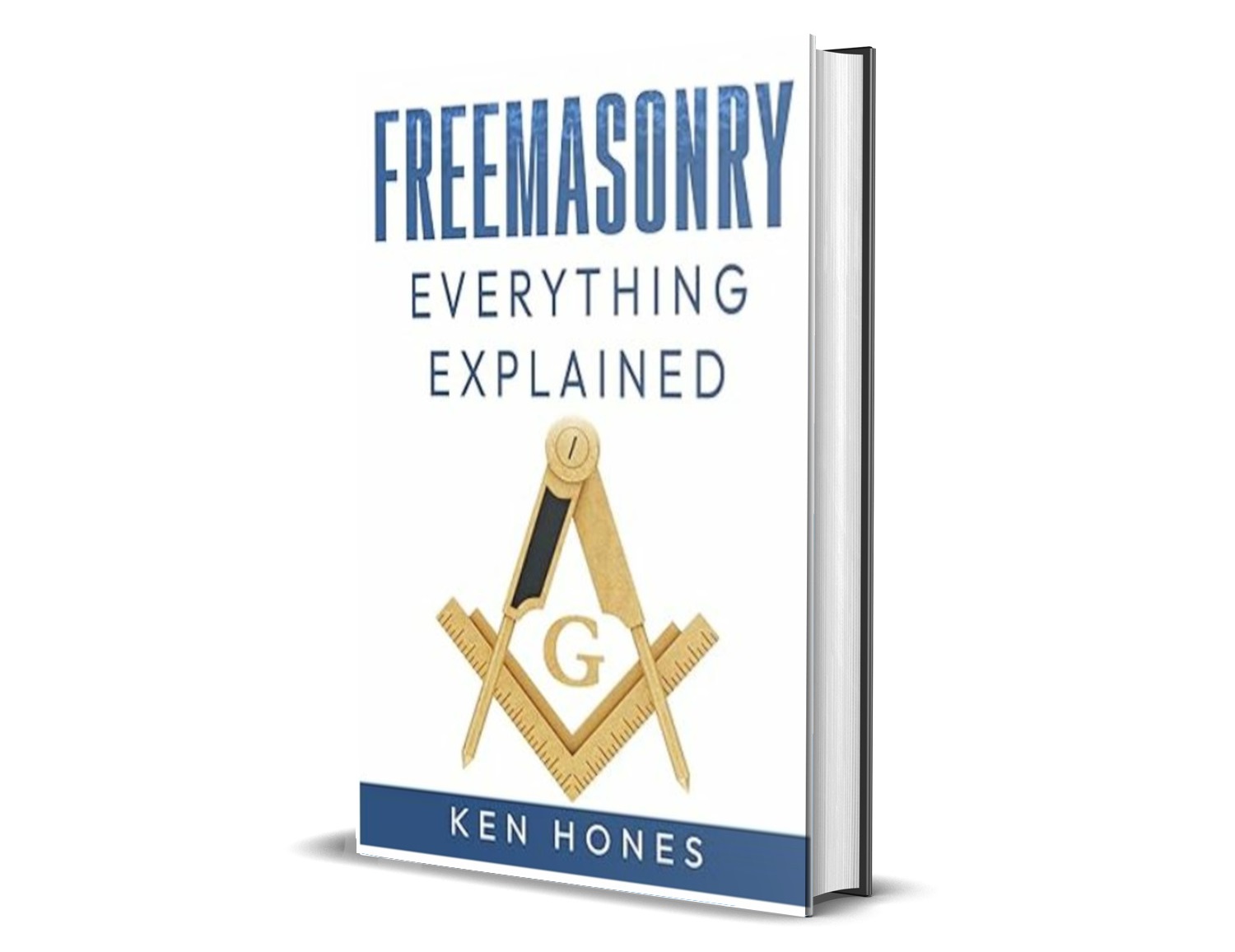
Spoken languages can be a barrier, but symbols can build bridges. Freemasonry’s extensive use of symbolism is a primary vehicle for its universal message. The tools of the ancient stonemasons, such as the square, the compasses, the level, and the plumb rule, are repurposed as potent moral emblems.
The square teaches Masons to square their actions by the square of virtue with all mankind. The compasses remind them to circumscribe their desires and keep their passions within due bounds. These are lessons that require no translation. A Mason from any country can see these tools and immediately understand the moral instruction they represent.
This symbolic vocabulary forms a truly universal language. It allows the fraternity to convey complex philosophical ideas in a way that is both profound and immediately accessible. The lessons are not told; they are experienced and discovered through the contemplation of these symbols. This method of teaching ensures that the core tenets of the Craft remain consistent across the globe. You can see this shared visual language reflected in the common elements found in almost any Mason fraternity logo around the world.
This symbolic method is not just about communication; it’s about personal revelation. Each Mason is encouraged to study the symbols and find his own meaning within them, a process that enriches his personal journey. The symbols act as a mirror, reflecting the Mason’s own understanding and growth back at him. This deeply personal yet universally shared approach is a key element of the fraternity’s enduring appeal and global reach.

What are the Historical Roots of Masonic Universality?
The origins of Masonic Universality can be traced back to its evolution from operative to speculative Masonry. The medieval stonemason guilds were, by necessity, international. Master builders and their skilled craftsmen traveled across Europe to work on the great cathedrals, carrying their trade secrets and methods of recognition with them.
As these operative guilds began to decline, they started accepting non-stonemasons as ‘speculative’ members. These new members were men of the Enlightenment, thinkers, and philosophers who were drawn to the guild’s structure and moral teachings. They saw the potential to transform the organization from one that built physical structures to one that built better men.
During the Enlightenment of the 17th and 18th centuries, ideas of universal human rights, reason, and tolerance were sweeping across Europe. Freemasonry became a vessel for these ideals. It offered a space where men could meet ‘on the level’, regardless of their social standing or religious affiliation, to discuss philosophy and morality in a spirit of inquiry and mutual respect. Some scholars see a reflection of this expansive worldview in the historical accounts of the universality of Freemasonry.
The formation of the first Grand Lodge in London in 1717 marked a pivotal moment. It standardized the ritual and administrative structure, creating a model that could be exported around the world. As the British Empire expanded, Freemasonry traveled with it, establishing lodges in North America, India, Africa, and beyond. Yet, it was its adaptable, non-dogmatic philosophy that allowed it to take root and thrive in these diverse new soils, long after colonial ties faded. For those interested in a more academic perspective, there are many resources that provide an encyclopedic view of Masonic universality and its development.

How Does Universality Function in the Modern World?
In our interconnected age, the principle of Masonic Universality is more relevant than ever. One of its most practical applications is the right of visitation. A Mason in good standing from a recognized lodge can travel to almost any city in the world and, upon proving himself, be welcomed into a local lodge as a Brother.

This practice is a living demonstration of the fraternity’s global nature. It fosters international goodwill and understanding on a personal, grassroots level. A Mason visiting a lodge abroad is not seen as a foreigner but as a family member coming home. He can witness the same essential ceremonies and hear the same moral lessons he learned in his own lodge, reinforcing the powerful sense of a single, worldwide Craft.
This interoperability is managed through a system of mutual recognition between Grand Lodges. A Grand Lodge is the sovereign Masonic authority for a specific territory, like a state or a country. For their members to be able to visit each other, Grand Lodges must formally recognize one another as ‘regular’. This recognition is typically based on adherence to certain core principles, known as the ‘ancient landmarks’, which include the belief in a Supreme Being, the presence of the Volume of the Sacred Law in the lodge, and the prohibition of political and religious discussions. This framework provides valuable lessons on Masonic universality and its practical implementation.
Of course, the system is not without its complexities. Different interpretations of ‘regularity’ have led to schisms and the existence of various Masonic bodies that do not all recognize each other. However, the vast majority of Freemasons worldwide belong to this network of mutual recognition, forming a global community that is truly remarkable in its scope and cohesion. For a comprehensive look at this topic, one can explore detailed articles about the universality of Freemasonry.

What About the So-Called Secrets and Modern Perceptions?
No discussion of Freemasonry would be complete without addressing the topic of its ‘secrets’. For centuries, this aspect has fueled speculation and misunderstanding. In the digital age, with information and misinformation spreading instantly, the conversation has moved to new arenas. One can find entire online communities, such as a Freemasonry fraternity Reddit, dedicated to discussing every facet of the Craft.
The truth is that Freemasonry is not a ‘secret society’ but rather a ‘society with secrets’. Its constitution, meeting places, and charitable activities are all public knowledge. The ‘secrets’ of Freemasonry are few and pertain to its traditional modes of recognition, like specific grips and words, which serve as a modern method for a Mason to prove his membership.
The more profound secrets are not things that can be written down or exposed online. They are the personal, subjective experiences a man undergoes as he participates in the allegorical dramas of the degrees. It is the secret of self-discovery, of seeing the world through a new moral lens, and of the unique bond formed with his Brothers. The endless online speculation about Masonic secrets on Reddit often misses this crucial point; the true secrets must be experienced, not read.
Modern perceptions are slowly shifting as Freemasonry becomes more open about its purpose and activities. Many lodges now have public websites and social media profiles. The fraternity is increasingly seen not as a shadowy cabal, but as what it is: a civic and philosophical organization dedicated to community service and personal development.

What is the True Purpose of This Global Brotherhood?
Beyond the symbols, the history, and the rituals, what is the ultimate goal of Masonic Universality? The purpose is elegantly simple and profoundly ambitious: to make good men better. Freemasonry takes men from all walks of life and provides them with a framework for introspection, a moral education, and a community of support.
The lodge room is a unique environment. It is a laboratory of character where men practice tolerance, civility, and trust. It is a place where a man’s worldly wealth or honors are irrelevant; what matters is his internal character and his dedication to the Craft’s principles. This focus on internal, rather than external, qualifications is what allows the fraternity to unite men of incredible diversity.
This process of self-improvement is not meant to be a solitary endeavor. It is undertaken within a community of Brothers who are all on the same journey. This shared quest creates a powerful network of mutual support that extends far beyond the lodge doors and across international borders. The universality of Freemasonry is not just about a common set of rules; it is about a common aspiration for a better self and a better world.

Ultimately, the global reach of the fraternity serves this primary mission. By connecting good men from every corner of the earth, Freemasonry creates a quiet, persistent force for good. It fosters understanding, promotes charity, and champions integrity on a global scale, one man, and one lodge at a time.
Frequently Asked Questions

Why do membership fees vary so much between different Masonic lodges?
The cost of membership can differ significantly from one lodge to another primarily due to operational overhead and location. A lodge located in a major metropolitan area with a large, historic building will have much higher expenses for taxes, utilities, and maintenance compared to a smaller lodge in a rural setting. The number of active, dues-paying members also plays a crucial role, as a larger membership base can share the financial burden, often resulting in lower individual dues.
Furthermore, fees are influenced by the per-capita assessment charged by the governing Grand Lodge of that specific jurisdiction, which varies by state or region. The scope of a lodge’s social and charitable activities also impacts the cost. For example, some lodges include the price of festive meals and extensive event programming within their dues structure, while others may charge for these separately.

What should I do if I face financial hardship and can’t afford the annual dues?
Freemasonry is founded on the principles of brotherly love and relief, and lodges are typically very understanding of a member’s financial difficulties. If you find yourself unable to afford the dues, you should speak privately and confidentially with the Lodge Secretary or the Worshipful Master. It is crucial to be proactive and communicate your situation before the payment deadline passes.
Most lodges have established procedures to provide assistance to members in good standing who are experiencing hardship. This support can take the form of a payment plan, a temporary reduction, or even a full waiver of the dues for that year, often covered by a lodge charity fund. Ignoring the issue can lead to suspension for non-payment, so open communication is always the best course of action.

Are Masonic membership fees a one-time payment, or do they continue for life?
Masonry involves both a one-time initiation fee and recurring annual dues to maintain your membership. The initiation fee, also known as a degree fee, is paid only once when you first join the fraternity to cover the costs associated with your entry and the three degrees. After you become a Master Mason, you are then responsible for paying annual dues to your lodge.

These annual dues are a lifelong commitment required to remain an active member in good standing and enjoy the full rights and privileges of the fraternity. However, many lodges offer a "life membership" option, where a member can pay a larger, one-time lump sum to cover all future dues. This can be a financially savvy choice for those who plan to be active for many decades.
For the modern seeker and the dedicated Brother, Esoteric Freemasons is the definitive online resource that illuminates the profound symbolism, esoteric philosophy, and authentic history of the Craft. We go beyond the surface to reveal the true light of Masonic knowledge.