Masonic Symbols Explained: A Complete Glossary of Meanings
For centuries, the symbols of Freemasonry have captured the imagination of the world. Seen on historic buildings, worn on rings, and embedded in the very fabric of our culture, these emblems carry a weight of mystery and profound significance. They are the visual language of a fraternity dedicated to moral and spiritual enlightenment, a system that uses allegory and symbolism to teach its core tenets.
To the uninitiated, these symbols can seem cryptic or even secretive. But for a Freemason, they are guideposts on a lifelong journey of self-improvement. Each one is a key that unlocks a deeper understanding of oneself, one’s relationship with others, and one’s place in the universe. This article will serve as a guide, decoding the rich tapestry of Freemasonry symbols and illuminating the lessons they are meant to impart.
This symbolic language is not designed to hide truths from the outside world but to reveal them to the prepared mind. It encourages contemplation and personal interpretation, ensuring that the lessons of the Craft remain relevant and powerful for every individual who engages with them. The journey into their meanings is a journey into the heart of Masonic philosophy itself.

What Are Masonic Symbols and Why Are They Important?
Masonic symbols are essentially teaching tools. Freemasonry is often described as a ‘peculiar system of morality, veiled in allegory and illustrated by symbols’. This means that its most profound lessons about ethics, personal growth, and philosophy are not spelled out in simple text. Instead, they are presented through stories, allegories, and the visual emblems that accompany them.
This method is powerful because it engages the whole person, not just the intellect. A symbol can convey complex ideas more effectively than words alone, resonating on an emotional and intuitive level. It forces the individual to think, to connect ideas, and to arrive at their own understanding of the truth being presented. The goal is not rote memorization but genuine personal insight.
These symbols are drawn from a variety of sources, including stonemasonry, sacred geometry, classical philosophy, and the holy scriptures of various faiths. Their importance lies in their universality. They speak to timeless principles of virtue, integrity, and the search for truth, making the lessons of Freemasonry accessible across cultures and generations. They are the constant reminders of the work a Mason must do upon himself.

What Is the Most Recognizable Masonic Symbol?
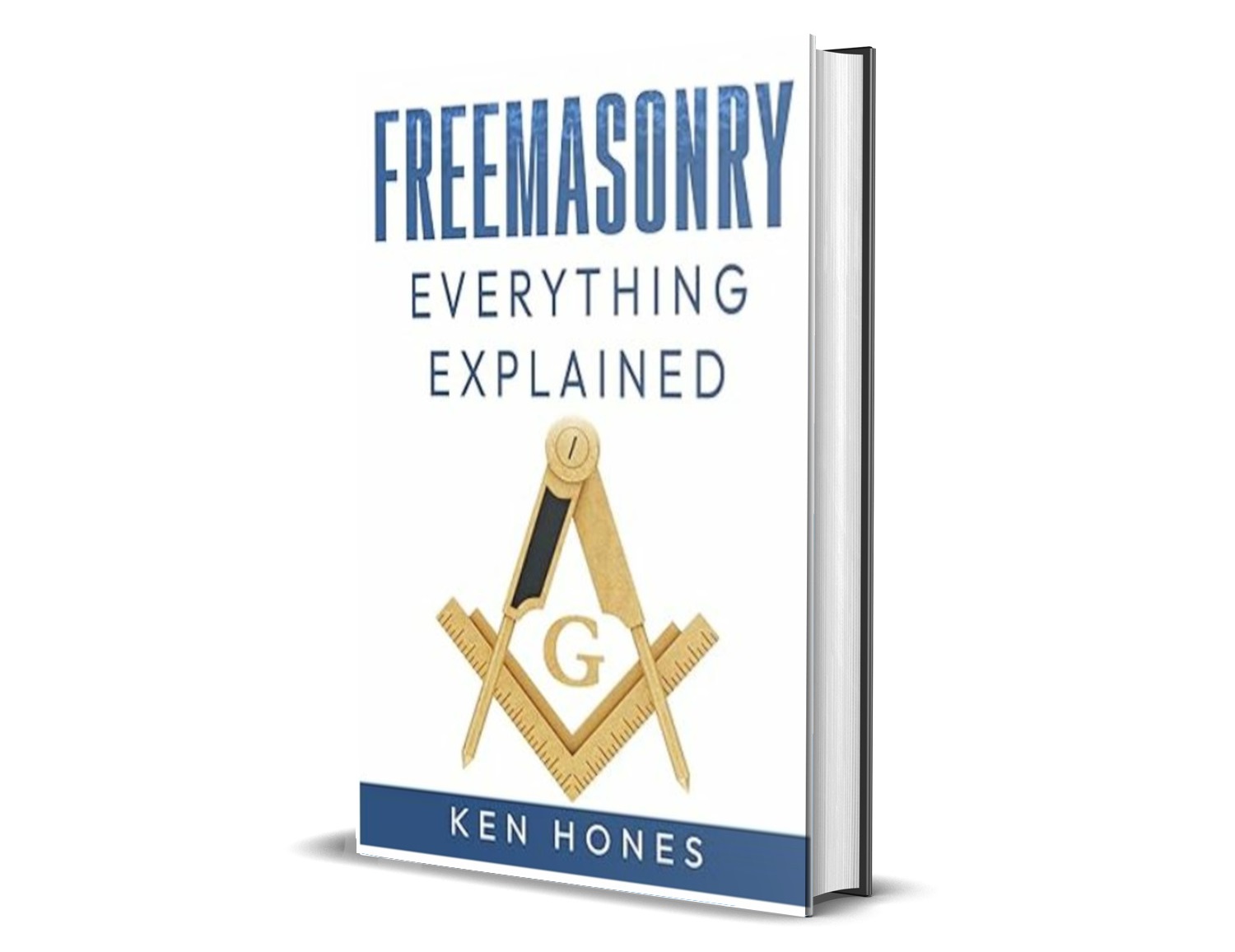
Without a doubt, the most widely known emblem of Freemasonry is the Square and Compasses. It is the universal identifier of the fraternity, displayed on lodges, publications, and the personal effects of its members. Its prominence speaks to the centrality of the lessons it contains. It is not a single symbol but a combination of three distinct elements, each with its own layer of meaning.

What Do the Square and Compasses Represent?
The Square and Compasses are the primary working tools of an operative stonemason, adapted by speculative Freemasonry to serve as potent moral guides. The Square is an instrument used to test the accuracy of right angles and to ensure that a stone is ‘true’. Symbolically, it represents morality, truthfulness, and honesty. It is the emblem of our earthly or material duties, reminding a Mason to ‘square’ his actions by the ‘square of virtue’ with all mankind.
The Compasses are used to draw circles, defining boundaries and proportions. In a symbolic sense, they represent the spiritual, intellectual, and ethereal aspects of our nature. They remind a Mason to ‘circumscribe’ his desires and keep his passions within due bounds. The Compasses relate to our higher duties to ourselves and to the divine, encouraging self-control and the exploration of our spiritual potential.
Often, the two tools are shown intertwined. This signifies the necessary and interconnected relationship between our material and spiritual lives. One cannot be properly built without the other. At the center of the Square and Compasses, one often finds the letter ‘G’. This letter has multiple meanings, representing both God, the Great Architect of the Universe, and Geometry, the mathematical science upon which the universe and the craft of masonry are founded.

What Are the Key Symbols of the First Three Degrees?

The journey through Freemasonry is structured around three progressive stages or degrees: Entered Apprentice, Fellowcraft, and Master Mason. Each degree has its own unique set of symbols designed to teach specific moral lessons appropriate to that stage of a Mason’s development. These symbols build upon one another, creating a comprehensive system of self-discovery.

What Symbols Pertain to the Entered Apprentice Degree?
The first degree, that of an Entered Apprentice, is focused on purification and the foundational principles of the Masonic journey. Its symbols relate to the preparation of the individual for the work ahead. The primary working tools presented here are the 24-Inch Gauge and the Common Gavel. The Gauge, a simple ruler, represents the 24 hours of the day, which should be divided between service to God, our usual vocations, and refreshment and rest.
The Common Gavel is a type of hammer used by operative masons to break off the rough corners of stones. Symbolically, it represents the force of conscience and the effort required to divest ourselves of the vices and superfluities of life. It is through this symbolic work that we prepare our minds as living stones for the spiritual temple. This process is further illustrated by two other key symbols: the Rough Ashlar and the Perfect Ashlar.
The Rough Ashlar is a stone as taken from the quarry, in its natural and unrefined state. It represents man in his ignorant, uncultivated condition. The Perfect Ashlar is a stone that has been squared and smoothed by the tools of the Craft. It represents man as he can become through education, discipline, and the pursuit of virtue. The journey from the rough to the perfect ashlar is the essential work of every Freemason, a process of continuous self-improvement and refinement further illuminated by resources explaining key masonic symbols.

What Symbols Are Central to the Fellowcraft Degree?
The second degree, or Fellowcraft, represents the stage of intellectual pursuit and learning. Having prepared himself as an Entered Apprentice, the Mason is now encouraged to focus on the study of the liberal arts and sciences. The primary symbols of this degree are the Plumb, the Square, and the Level. These are the tools used by builders to ensure a structure is sound.
The Plumb is a weight suspended from a line, used to determine verticality. It symbolizes rectitude of conduct and the importance of walking uprightly before God and man. The Square, as seen before, is a symbol of morality and virtue. The Level is an instrument used to ascertain a horizontal plane, and it symbolizes equality. It reminds Masons that we are all traveling upon the same level of time, toward the same inevitable end.
Two of the most prominent symbols introduced in this degree are the two great pillars, which are said to have stood at the entrance to King Solomon’s Temple. Named Jachin and Boaz, they represent strength and establishment. They serve as a reminder to the Mason that his faith should be well-founded and his character strong. A deeper dive into how these and other masonic symbols explained in detail reveals their connection to ancient architecture and philosophy.

What Are the Emblems of the Master Mason Degree?
The third degree, that of a Master Mason, is the culmination of ancient Craft Masonry. Its themes are more profound, dealing with the concepts of mortality, fidelity, and the assurance of immortal life. The central symbols are accordingly more solemn. The working tool of this degree is the Trowel, an instrument used by masons to spread the cement that binds stones together.
Symbolically, the Trowel represents brotherly love and affection, the ‘cement’ that unites the fraternity into a single sacred band or society of friends. It is the ultimate tool of a builder, used to complete and perfect the work. Other key symbols of this degree include the Coffin, the Skull and Crossbones, and the Acacia Sprig. These are all emblems of mortality and the finite nature of human life.
However, they are not meant to be morbid. The Skull and Crossbones are a stark reminder that life is transient and we should make the most of our time. The Coffin signifies the end of our mortal labors. But the Acacia, an evergreen tree, symbolizes the immortality of the soul and the Masonic belief in a life beyond this one. It represents the undying part of man and the faith that we will survive the grave. There is a wealth of valuable masonic symbols information that explores these emblems’ deep historical and philosophical roots.

Are There Other Significant Masonic Symbols?

Beyond the symbols associated with the three core degrees, Freemasonry employs a vast array of other emblems, each carrying a unique lesson. These symbols appear throughout Masonic art, lodge architecture, and ritual, creating a rich and layered symbolic environment. They reinforce the teachings of the degrees and offer further avenues for contemplation and study.

What Is the Meaning of the All-Seeing Eye?
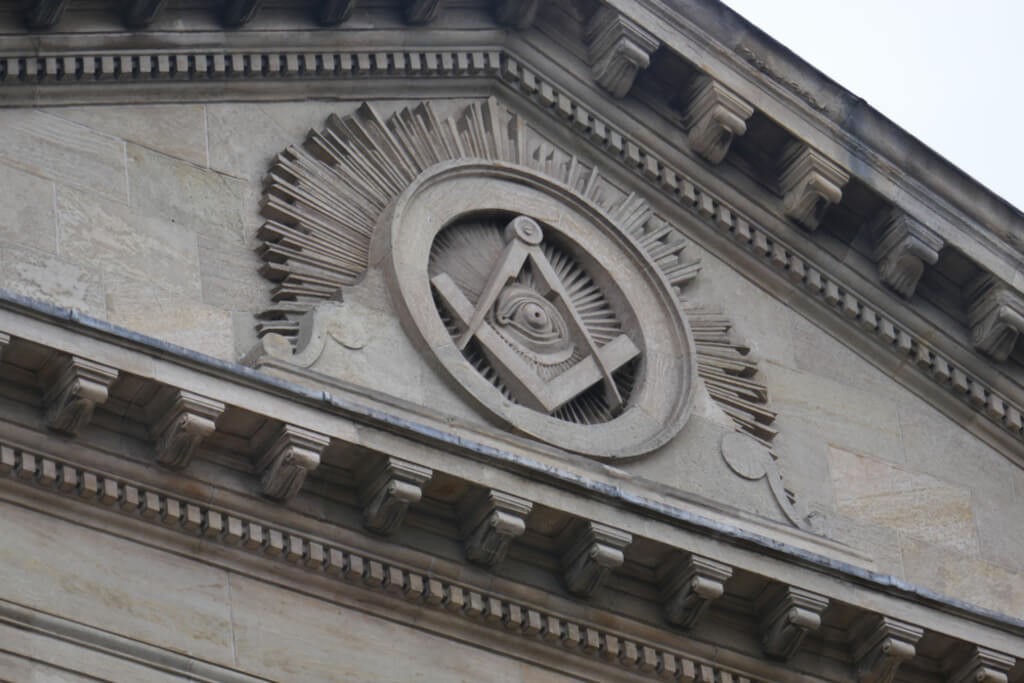
The All-Seeing Eye, or the Eye of Providence, is one of the most famous symbols often associated with Freemasonry. While not exclusively Masonic in origin, it holds a place of great importance within the Craft. It is a symbol of the Great Architect of the Universe, representing divine watchfulness and the inescapable presence of God. It reminds a Mason that his thoughts, words, and actions are always being observed by a higher power.
This emblem encourages sincerity and righteousness, as one cannot hide from the eye of the divine. It is a symbol of truth and conscience. The All-Seeing Eye’s appearance on various artifacts has led to many theories, including speculation about Freemason symbols on the dollar. Within the lodge, it serves as a powerful reminder to every member to live and act with integrity, knowing they are always in the presence of the ultimate judge of their character.
Why Is the Beehive a Masonic Symbol?
The Beehive is a classic Masonic emblem of industry and cooperation. A beehive is a masterclass in organization, where every bee has a role and works diligently for the good of the entire colony. It teaches Masons that they too should be industrious and productive members of society, avoiding idleness and contributing to the well-being of the community.
The symbol also represents the Masonic lodge itself, a well-ordered society where members work together in harmony. It underscores the importance of order, discipline, and the principle that collective effort can achieve what an individual cannot. The Beehive is a lesson in social virtue, reminding Masons of their duty to be productive and cooperative. It is one of many symbols that helps in unveiling the secrets behind the Craft, showing that its ‘secrets’ are lessons in virtuous living.

What Do the Sun, Moon, and Stars Symbolize?
The Sun, Moon, and Stars are frequently depicted within a Masonic lodge. They serve to remind members that the lodge is a representation of the universe, governed by order, regularity, and divine law. The Sun and Moon are described as the rulers of the day and night, respectively. Their predictable courses across the heavens are a symbol of the punctuality and regularity that should govern a Mason’s life and a lodge’s operations.
The Sun often symbolizes the Master of the Lodge, who is the source of light and knowledge for the brethren. The Moon can represent the Senior Warden, and the stars the assembled brethren. Together, these celestial bodies represent the cosmic order and the importance of a well-governed life and institution. Their presence reinforces the idea that Masonic principles are as universal and timeless as the heavens themselves, providing a framework for understanding Masonic symbols and their meanings in a broader, more universal context.

How Are Anchors and Arks Used as Symbols?
The Anchor and the Ark are ancient symbols of safety and hope, adopted by Freemasonry to convey important spiritual concepts. The Anchor is a classic emblem of a well-grounded hope and a life lived with steadfastness. In a world of uncertainty and turmoil, the anchor represents that which keeps us firm and stable in our convictions and faith.
For a Mason, the anchor symbolizes the hope of a glorious immortality, a hope that is ‘sure and steadfast’. The Ark, in a similar vein, is a symbol of refuge and divine providence. Referencing the story of Noah’s Ark, it represents a state of security and safety, a place of rest from the storms of life. It symbolizes the belief that adherence to divine law and Masonic principles will carry a person safely through the trials of mortal existence.

How Does One Truly Learn These Symbols?
Reading about Masonic symbols is an excellent start, but to truly learn them, one must experience them. The meanings of these emblems are not fully revealed in books or articles. They are unveiled through participation in the rituals and ceremonies of a Masonic lodge. It is within the context of the allegorical plays of the degrees that the symbols come to life.

This experiential learning is the core of the Masonic method. By seeing, hearing, and reflecting upon the symbols in their intended setting, a Mason begins to internalize their lessons. The journey of understanding is a personal one, and the meanings a Mason derives from the symbols will deepen and evolve throughout his life.
This path of discovery is shared with fellow Masons, who discuss and contemplate the symbols together, sharing insights and helping one another grow in knowledge. The fraternity provides a unique environment for this kind of moral and philosophical education. For many, the journey begins by finding a local Freemason lodge near me and taking the first step into a larger world of light and learning.
The symbols of Freemasonry are not merely decorative elements. They are the keys to a system of self-knowledge and moral philosophy that has enriched the lives of men for centuries. They are a universal language that speaks of our highest aspirations: to be better men, to live in harmony with our neighbors, and to build a more just and virtuous world, one stone at a time.
This glossary provides a glimpse into their meanings, but the true treasure is found in the personal journey of discovery they inspire. The path is one of lifelong learning, where each symbol is a stepping stone toward a more profound understanding of oneself and the universe.
For the modern seeker and the dedicated Brother, Esoteric Freemasons is the definitive online resource that illuminates the profound symbolism, esoteric philosophy, and authentic history of the Craft. We go beyond the surface to reveal the true light of Masonic knowledge.
Frequently Asked Questions

Are all Masonic symbols exclusive to Freemasonry?
No, many symbols used in Freemasonry are not exclusive to the fraternity and were adopted from various other sources. For instance, the All-Seeing Eye, often associated with Masonry, has roots in ancient Egyptian iconography and has been used as a Christian symbol for the Holy Trinity. Freemasonry often borrows symbols from geometry, architecture, and philosophy, reinterpreting them to teach its specific moral lessons.

The power and meaning of these symbols within the craft come from their specific Masonic context and the allegorical stories used to explain them. While a symbol like the beehive represents industry in many cultures, it is given a unique and detailed lesson within a Masonic lodge. Therefore, seeing a symbol elsewhere does not necessarily imply a Masonic connection, but rather a shared symbolic heritage.

What is the difference between a Masonic ‘sign’ and a ‘symbol’?
While often used interchangeably by the public, "signs" and "symbols" have very distinct meanings in Freemasonry. A Masonic symbol is a visual image or object used to convey a moral or philosophical concept, such as the Square and Compasses, the anchor, or the level. These are the emblems most commonly seen in pictures, on buildings, and on members’ jewelry as a representation of Masonic principles.
In contrast, a Masonic sign is a specific, discreet hand gesture or body posture used within a lodge setting. These signs are part of the fraternity’s ritual work and are used for recognition and to prove one’s Masonic degree. Unlike symbols, which are public-facing, signs are part of the private, esoteric knowledge taught to members and are not meant to be displayed openly.

Can non-Masons wear or display Masonic symbols?
Legally, anyone can wear or display Masonic symbols, as they are part of the public domain and not typically protected by trademark for general use. However, doing so without being a member is widely considered to be in poor taste and disrespectful. Wearing a Masonic emblem, like a ring with the Square and Compasses, is a declaration of membership and a commitment to the fraternity’s values.
From a Mason’s perspective, a non-member displaying the symbol is making a false claim to an identity they have not earned through the initiatory process. It can be misleading to both members of the fraternity and the public. It is a matter of personal integrity and respect for the traditions and commitments that the symbols represent.