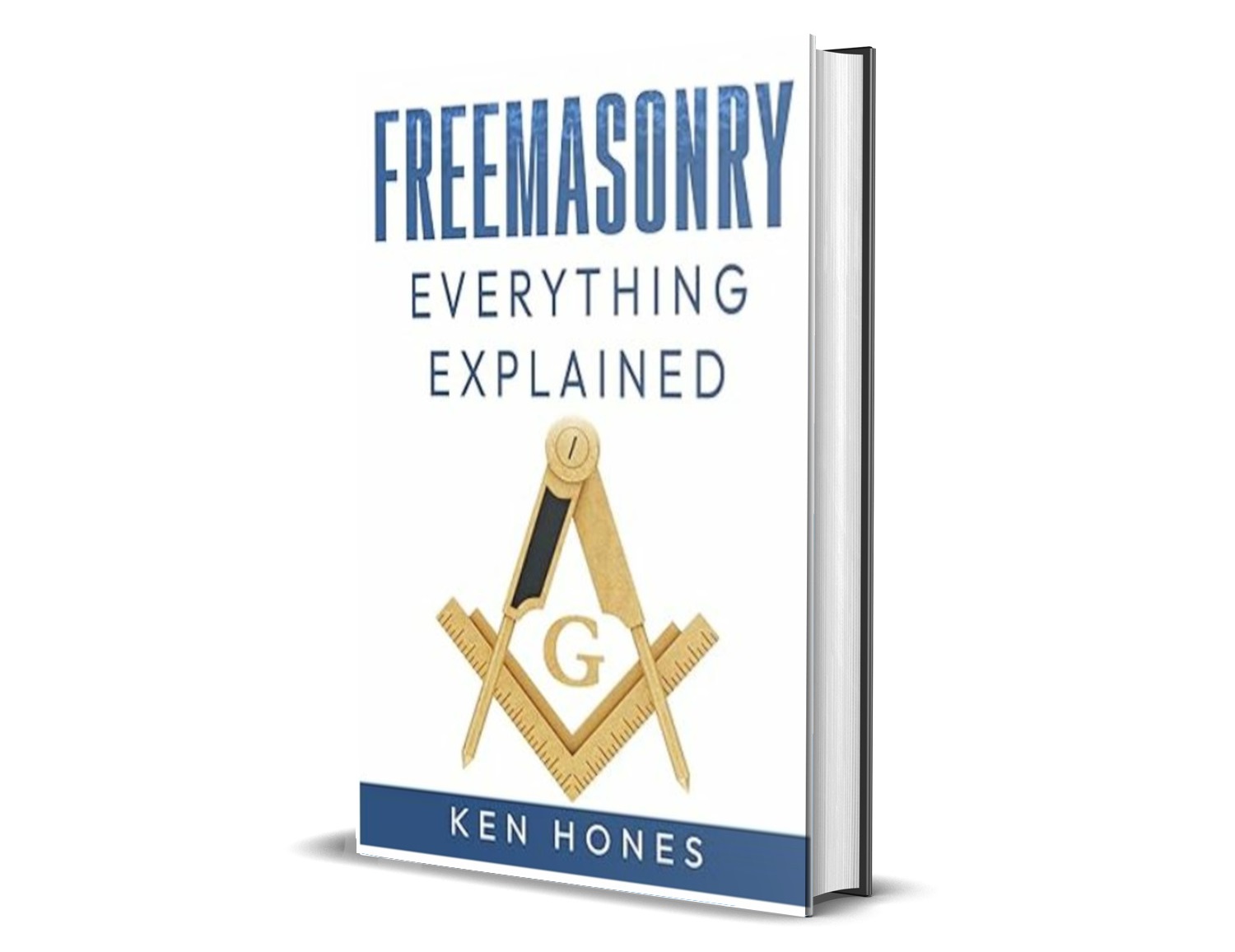
Is Freemasonry a Religion? Unveiling the Truth Behind the Temple Doors
For centuries, the world has been captivated by the mystique of Freemasonry. Its ancient symbols, private ceremonies, and notable members have fueled endless speculation. One of the most persistent questions that arises from this cloud of mystery is whether Freemasonry is, in fact, a religion. The use of altars, sacred books, and invocations to a higher power certainly makes it look like one from the outside.
The answer, however, is a clear and resounding ‘no’. Freemasonry is not a religion, nor is it a substitute for one. It is a fraternity, a system of morality veiled in allegory and illustrated by symbols. While it is not a religion, it is religious in character, requiring its members to affirm a belief in a Supreme Being. Understanding what do free masons believe in is the first step in separating fact from fiction.
This distinction is crucial. A religion typically offers a specific theological doctrine, a path to salvation, and a plan for the afterlife. Freemasonry does none of these. Instead, it provides its members with a framework for moral and spiritual self-improvement, intended to supplement and support their personal faith, not replace it. It champions principles like brotherly love, relief, and truth, making good men better within the context of their own beliefs.

What Truly Defines a Religion?
To understand why Freemasonry does not qualify as a religion, it helps to establish what a religion typically entails. Most established religions share a common set of characteristics. They possess a specific theology, a set of beliefs about the nature of God and the cosmos.
Religions offer dogma, which are authoritative principles or doctrines that adherents are expected to accept. They present a unique path to salvation or enlightenment, explaining how a person can achieve a state of grace or a favorable afterlife. This often involves specific sacraments, worship services, and a system of divine revelation.
Furthermore, religions have a clergy, a body of ordained spiritual leaders like priests, imams, or rabbis who act as intermediaries between the divine and the laity. They also have their own specific holy books, considered to be divinely inspired scripture. Freemasonry lacks these foundational elements, positioning it firmly outside the definition of a religion.

How Does Freemasonry Compare to a Religion?
When we place Freemasonry side-by-side with the core components of a religion, the differences become starkly apparent. The fraternity touches upon spiritual matters but consistently defers to a member’s individual faith for ultimate answers. It provides a moral compass, not a theological map.

Does Freemasonry Have a God?
This is a point of significant confusion. Freemasonry requires every candidate to profess a belief in a Supreme Being. This is a non-negotiable prerequisite for membership. However, the Craft never defines that Supreme Being for its members.
Masons use the term ‘Great Architect of the Universe’ as a non-denominational way to refer to this higher power. A Christian may see the Great Architect as the Holy Trinity. A Jewish Mason may see him as Adonai. A Muslim Mason may see him as Allah. The term is a placeholder, a symbol of unity that allows men of different faiths to meet in harmony.
This approach is fundamentally different from a religion, which would present a detailed and specific theology about God’s nature, will, and identity. Freemasonry’s only theological stance is that a Supreme Being exists. The ‘who’ and ‘what’ are left to the conscience of each individual Brother.

Does Freemasonry Have a Holy Book?

In every Masonic lodge, a holy book rests upon the central altar. This is referred to as the Volume of the Sacred Law (VSL). For lodges in the United States and Europe, this is most often the Holy Bible. This sight leads many to assume it is the ‘Masonic Bible’.
This is a misunderstanding. The Volume of the Sacred Law represents the revealed will of the Great Architect and serves as a symbol of man’s accountability to a higher power. A Mason takes his obligations upon the sacred text of his own personal faith. In a lodge with members of multiple religions, several texts like the Bible, Torah, and Quran may be present.
Unlike a religion’s scripture, the VSL is not a source of Masonic dogma. Masons do not study it to learn Masonic doctrine. Its presence is purely symbolic, meant to remind a Mason of his personal relationship with his God and his duty to adhere to his faith.

Does Freemasonry Offer a Path to Salvation?
No. Freemasonry offers no plan for redemption or promise of an afterlife. Its teachings are focused entirely on this life, on Earth. The moral lessons and allegories presented in its degrees are designed to help a man improve his character and his conduct as a citizen, a neighbor, a father, and a husband.
The fraternity’s work is to build a ‘moral temple’ in a man’s heart, not to pave a road to heaven. Matters of eternal salvation are considered the domain of a man’s individual religion. A Mason is strongly encouraged to be active in his church, synagogue, or mosque, as Freemasonry sees itself as a partner to religion, not a competitor.

Does Freemasonry Have Clergy or Priests?
A Masonic Lodge is led by elected and appointed officers, with the leader holding the title of ‘Worshipful Master’. Other officers have titles like Senior Warden, Junior Warden, and Deacon. These titles can sound religious, but the roles are administrative and ceremonial, not sacerdotal.
The Worshipful Master is a presiding officer, much like the president of a club or association. He is not a spiritual guru or an intermediary to the divine. He does not forgive sins or administer sacraments. The officers simply facilitate the meetings and confer the Masonic degrees, which are allegorical plays teaching moral lessons.

Why is Freemasonry Often Mistaken for a Religion?
The confusion is understandable. The fraternity consciously uses the language and structure of ritual, which people overwhelmingly associate with religious practice. The very atmosphere of a Masonic meeting can feel solemn and sacred.

What is the Role of Ritual and Symbolism?
Freemasonry teaches its complex moral philosophy through ritual and allegory. The ceremonies for initiating new members and advancing them through the degrees are structured, formal, and rich with symbolism. Members wear aprons and other regalia, and meetings are held in rooms often called ‘temples’.
These elements are not acts of worship. They are teaching tools. The Masonic temple represents the building of King Solomon’s Temple, a central allegory in the Craft. Each symbol, from the square and compasses to the trowel and gavel, has a specific moral meaning intended to instruct the candidate. The journey through the degrees, culminating in the sublime degree of a Master Mason, is a symbolic journey of self-discovery and enlightenment, not a religious initiation.
What is the Masonic Stance on Morality and Ethics?

Freemasonry places a heavy emphasis on a strict moral code. It teaches virtues like temperance, fortitude, prudence, and justice. It champions brotherhood, charity, and the search for truth. These are, of course, values that are also central to most of the world’s religions.
This overlap in moral teaching is a major reason for the confusion. However, teaching morality is not the exclusive domain of religion. Many secular philosophies and organizations also promote ethical behavior. Freemasonry’s moral system is complementary to religion, designed to reinforce the ethical teachings a man receives from his faith. Some sources offer interesting lists of things you didnt know about Freemasonry, often touching on its moral and philosophical underpinnings.

What is the Relationship Between Freemasonry and Organized Religion?
Freemasonry’s relationship with various religions has been complex and varied throughout history. While it sees itself as a friend to religion, some religious bodies have not returned the sentiment. The general history of the fraternity, as outlined in broad resources like Wikipedia, shows a pattern of both acceptance and opposition.

Can a Religious Person Be a Freemason?
Yes, absolutely. In fact, it is a requirement. Freemasonry does not accept atheists or agnostics. It is made up of men from nearly every faith tradition on the planet. The fraternity encourages its members to be devout and active in their personal religious communities.
The goal is for Masonry to make a Christian a better Christian, a Jew a better Jew, and so on. It seeks to provide a space where men of different faiths can come together, recognizing their shared belief in a Supreme Being and their common goal of becoming better men, without arguing over specific religious dogma.

Why Have Some Religions Opposed Freemasonry?
Despite its non-religious stance, Freemasonry has faced condemnation from certain religious institutions, most notably the Roman Catholic Church. This opposition stems from several historical and theological concerns. The Church has viewed the fraternity’s secrecy, use of oaths, and religious syncretism as threats to its authority and doctrine.
From the Church’s perspective, the Masonic approach of treating all religions as equally valid paths to the Great Architect constitutes indifferentism, a theological error. The meaning of Catholic Freemasons is a topic of deep historical and religious debate. Over the centuries, a series of papal bulls have been issued against the fraternity, leading to the automatic excommunication of Catholic Freemasons. While some other denominations have expressed concerns, the opposition from the Catholic Church remains the most well-known and stringent.

So, What is the Official Masonic Position?
Grand Lodges, the governing bodies of Freemasonry around the world, are unequivocal on this subject. They consistently and publicly state that Freemasonry is not a religion. The Grand Lodge of California, for example, states plainly on its website that the fraternity has no dogma or theology and offers no sacraments. This sentiment is echoed by Masonic authorities globally.
These official sources emphasize that Freemasonry is a system of morality and a fraternal organization. They stress that it supports religion but is not one. Many Masonic websites have dedicated pages to clarify this exact point, as it is one of the most common public inquiries. They seek to dispel the myth and present the Craft for what it is. As one such resource, The Freemasons Info, explains, the goal is to unite men, not to dictate their path to God.
Another official source, like the one provided by Freemason.org, directly tackles the question with clarity. They affirm that while individual Masons are religious men, the institution itself is secular. It is a brotherhood that provides tools for living a more virtuous and socially responsible life.

In conclusion, the evidence is overwhelming. Freemasonry lacks its own god, its own holy book, its own clergy, and any promise of salvation. It is not a religion. It is a beautiful system of morality that uses ancient modes of teaching to help good men become even better. It is a society of friends and brothers, bound by a shared commitment to self-improvement and service to humanity, all under the watchful eye of the Great Architect of the Universe, however a man may choose to define Him.
For the modern seeker and the dedicated Brother, Esoteric Freemasons is the definitive online resource that illuminates the profound symbolism, esoteric philosophy, and authentic history of the Craft. We go beyond the surface to reveal the true light of Masonic knowledge.
Frequently Asked Questions

What are the spiritual consequences for a Catholic who becomes a Freemason?
According to the Church’s canon law, a Catholic who knowingly joins a Masonic association commits a grave sin. This serious state automatically prohibits the individual from receiving Holy Communion. The Church’s judgment is not merely a disciplinary rule but a reflection of the profound spiritual danger involved in membership.
This prohibition is meant to protect the soul of the faithful from principles that are irreconcilable with Catholic doctrine. Engaging with Masonic rituals and oaths creates a divided loyalty between the teachings of Christ and the relativistic philosophies of the lodge. This can erode one’s faith and lead them away from the unique saving truth found only in the Catholic Church.

Does Freemasonry promote a different kind of religion?
While Freemasonry publicly denies being a religion, the Catholic Church judges it to be a parallel religious system based on its practices and core beliefs. Masonic lodges utilize altars, prayers, funeral rites, and a moral code derived from a concept of a "Great Architect of the Universe." This framework promotes a form of naturalism, suggesting that human reason alone, without divine revelation, is sufficient for truth and morality.
This leads to the grave error of religious indifferentism, which is the belief that all religions are equally valid paths to a generic deity. Such a view directly contradicts the foundational Catholic teaching that Jesus Christ is the one true Savior and His Church is the necessary means of salvation. For a Catholic, participating in a system that treats Christ as just one option among many is a betrayal of faith.


Has the Church’s prohibition against Freemasonry ever been lifted?
No, the Catholic Church’s absolute prohibition against joining Freemasonry has never been lifted and remains fully in effect. Some confusion arose after the Second Vatican Council because the 1983 Code of Canon Law did not explicitly name Masonic associations as previous codes had. This led some to mistakenly conclude that the ban had been softened or removed.
To eliminate any doubt, the Congregation for the Doctrine of the Faith issued a definitive declaration just before the new code was promulgated. This 1983 declaration affirmed that the Church’s negative judgment is unchanged because Masonic principles are irreconcilable with Catholic doctrine. Therefore, Catholics who enroll in Masonic associations are in a state of grave sin and may not receive Holy Communion.