Is Freemasonry a Religion? Separating Fact from Fiction
For centuries, the enigmatic world of Freemasonry has been shrouded in mystery, sparking curiosity and speculation. Among the most persistent questions that swirl around the ancient fraternity is a fundamental one: Is Freemasonry a religion? The presence of altars, sacred books, and references to a Supreme Being leads many to assume it must be a system of worship. However, the answer, affirmed by Masons and scholars alike, is a clear and unequivocal no.
Freemasonry is not a religion, nor is it a substitute for one. Instead, it is a fraternity, a system of morality, and a journey of self-discovery. It is a society of men concerned with moral and spiritual values, seeking to make good men even better. While it is a spiritual pursuit in the broadest sense, it does not possess the core tenets of a religion, such as a specific theology, a path to salvation, or its own set of clergy.
Understanding this distinction is crucial to grasping the Craft’s true purpose. Freemasonry requires each of its members to profess a belief in a higher power, but it intentionally refrains from defining that power. This prerequisite ensures that all members share a common foundation for moral accountability and solemn promises. Exploring what do free masons believe in reveals a commitment to universal principles like brotherly love, relief, and truth, rather than religious dogma specific to one faith.

What is Freemasonry, if Not a Religion?
So, if it is not a faith, what exactly is Freemasonry? At its core, Freemasonry is one of the world’s oldest and largest secular fraternal organizations. Its central aim is to provide a framework for men to improve themselves morally and intellectually. It uses the traditions, tools, and language of the ancient stonemasons as allegorical guides for building a better life.
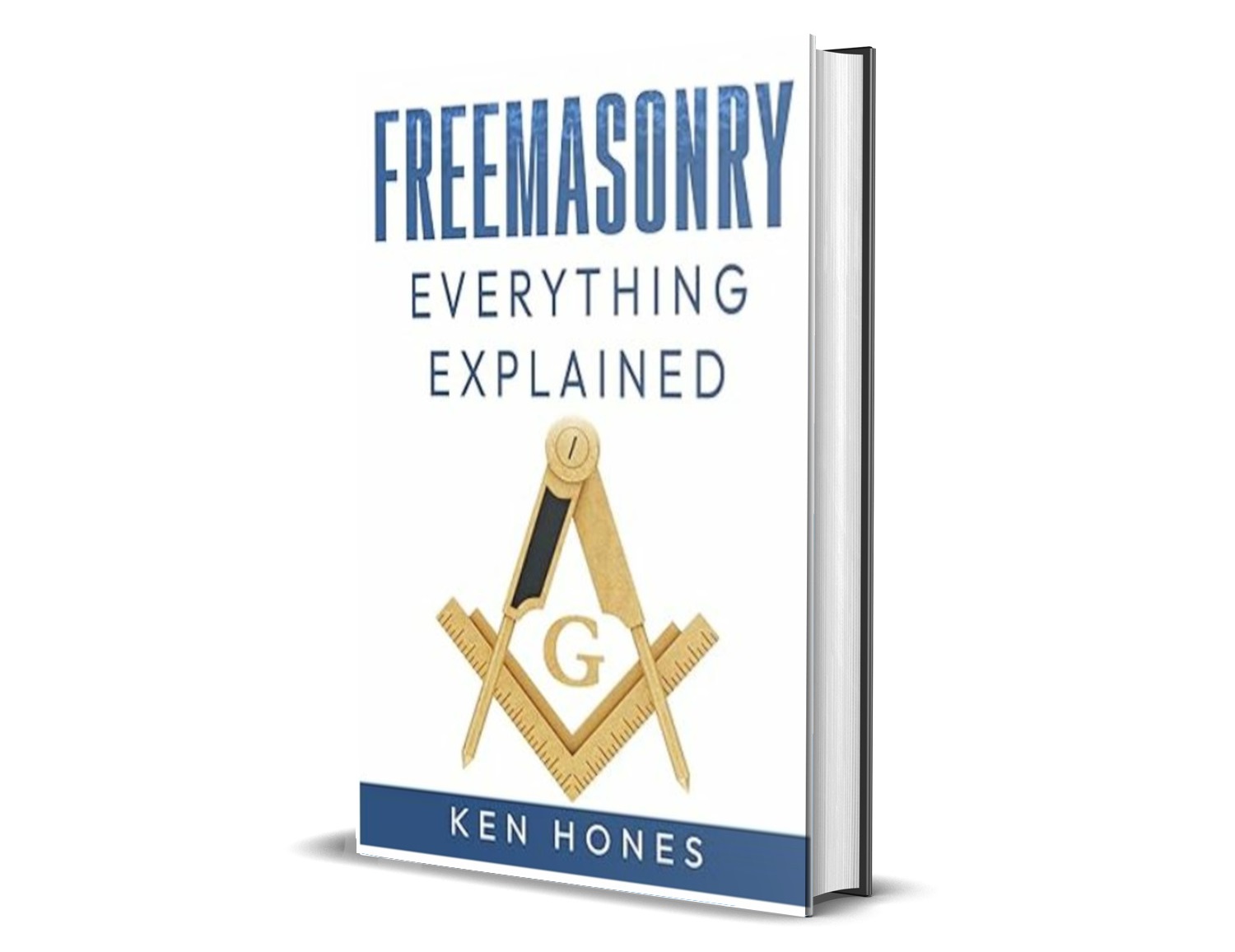
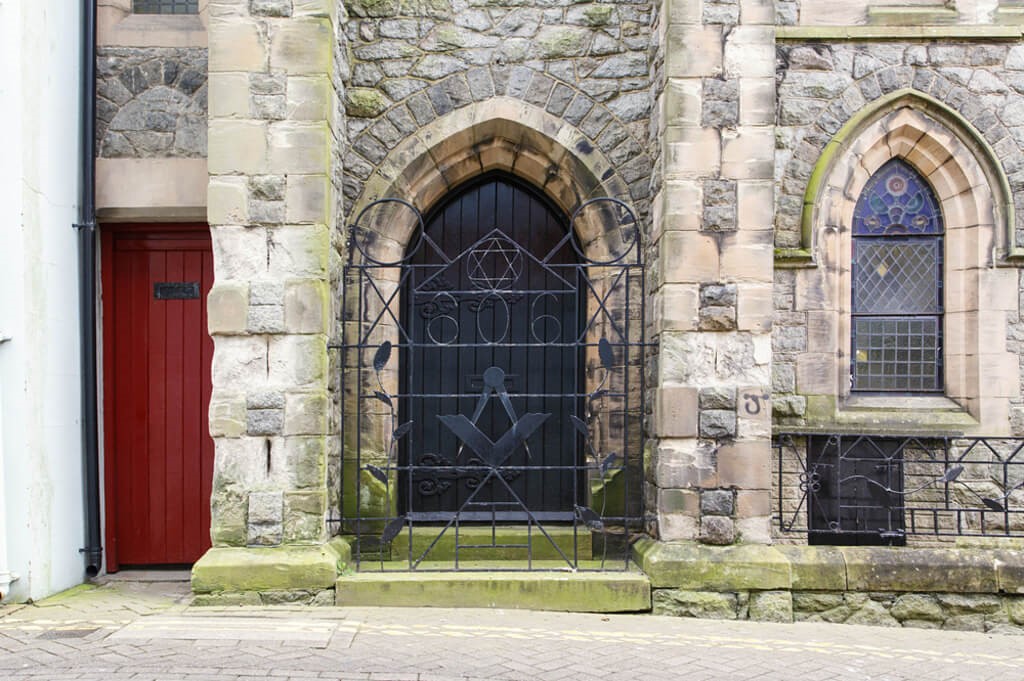
Think of it as a personal development system. The ‘work’ of a Freemason is on himself. He uses symbolic tools like the square, compasses, and level not to shape stone, but to shape his own character. The square teaches him to be ‘square’ in his dealings with others, the compasses to circumscribe his desires, and the level to remember that all men are equal.
This system of morality is taught through a series of allegorical plays or degrees. In these ceremonies, a candidate is presented with profound moral lessons. The stories and symbols are designed to provoke thought and encourage each man to explore his own understanding of his relationship with his Creator and his fellow man. It is a shared experience, but a deeply personal journey.
Freemasonry offers no plan of salvation or specific path to the afterlife. Those profound questions are left to the individual and his personal faith. The Craft simply provides a supportive environment where men of all different religious backgrounds can come together, united by a belief in a Supreme Being and a shared desire for self-improvement.

Why Do People Think It’s a Religion?
The confusion surrounding Freemasonry and religion is understandable. The organization incorporates many elements that, on the surface, appear religious. Its meetings are held in rooms often called ‘temples’, its ceremonies involve prayer, and a holy book is always present. A closer look at these components, however, reveals their true, non-religious purpose.
These elements are not meant to create a new religion but to provide a universally respectful and solemn atmosphere for men of all faiths. Freemasonry borrows the architecture of spirituality to build its framework for moral instruction, without imposing a specific religious blueprint.

Does Freemasonry Have a Holy Book?
Every Masonic Lodge has an altar at its center, and upon it rests a Volume of the Sacred Law (VSL). For most Lodges in the English-speaking world, this is the Holy Bible. This is a primary source of the misconception. However, the VSL is not exclusively the Bible. In a Lodge with members of diverse faiths, other texts like the Quran, the Torah, the Vedas, or other sacred writings can be present as well.

The purpose of the VSL is not to be a source of Masonic dogma. Instead, it serves as a symbol of the divine will and a reminder to each Mason of his personal spiritual duties. When a Mason takes an obligation, he does so upon the sacred text of his own faith, making his promise sacred and binding according to his own conscience and beliefs. It represents the supreme source of truth and morality for each individual brother, whatever that source may be.

Does Freemasonry Have Prayers and Rituals?
Yes, Masonic meetings do open and close with prayer, and the rituals are solemn, structured ceremonies. However, these prayers are non-denominational. They are addressed to a ‘Grand Architect of the Universe’ or ‘Supreme Being’, allowing every member to pray in a way that is consistent with his own faith. The prayers are for guidance, wisdom, and harmony within the Lodge, not acts of worship in a religious sense.
The rituals themselves are not religious services. They are allegorical plays that convey moral and ethical lessons. The dramatic presentation is designed to make these lessons memorable and impactful, encouraging a man to reflect on his own life and character. The solemnity of the proceedings is meant to instill a sense of reverence for the serious work of self-improvement, not to worship Freemasonry itself.

Does Freemasonry Have Temples?
The term ‘Masonic Temple’ is another common point of confusion. These buildings are not places of public worship. A Masonic Temple or Lodge Hall is simply the private meeting place for the members of the fraternity. The word ‘temple’ is used in a symbolic sense, drawing inspiration from the biblical account of King Solomon’s Temple.
In Masonic allegory, King Solomon’s Temple is a symbol of a perfected humanity, a spiritual structure built with virtue and knowledge. Masons, as symbolic builders, are said to be constructing a spiritual temple in their own hearts. The physical Lodge room, therefore, is a symbolic representation of that inner, spiritual workspace. It is where the tools of moral architecture are taught and applied.

What Are the Core Religious Requirements of Freemasonry?
While Freemasonry is not a religion, it is not a secular-humanist or atheistic organization either. It has one simple but profound religious prerequisite: a candidate must profess a belief in a Supreme Being. This is a foundational landmark of the fraternity and is non-negotiable. An atheist or agnostic who cannot in good conscience profess such a belief cannot become a Freemason.
Beyond this single requirement, Freemasonry does not venture. It does not ask a man to describe his concept of God, nor does it promote any specific religious viewpoint. This principle of non-sectarianism is central to its identity. It ensures that men of Christian, Jewish, Muslim, Hindu, Buddhist, or any other faith that includes a Supreme Being can meet in harmony. The goal is to unite men, and delving into specific religious dogmas would only divide them. Official sources often reiterate that Freemasonry is not a religion but a fraternity that values this shared spiritual foundation.
The question of what religion is masonry is therefore answered with: all and none. It embraces men of any religion without becoming a religion itself. The focus remains steadfastly on the universal moral truths that are common to nearly all faiths, such as integrity, compassion, and justice.

Why Is Belief in a Supreme Being Necessary?
This prerequisite serves several vital functions within the Masonic framework. First and foremost, it is the basis for a Mason’s obligations. The solemn promises made during Masonic ceremonies are taken in the presence of God. For these promises to be meaningful and binding, a man must believe in the higher power to whom he is making his pledge.
Second, this belief establishes a common moral ground. It ensures that every member acknowledges a power greater than himself, a universal source of moral law. This shared understanding creates a foundation of trust and accountability, which is essential for a brotherhood that seeks to build character.

Finally, it gives depth and meaning to the fraternity’s symbols and allegories. Much of Masonic philosophy is about building a spiritual temple within oneself, a concept that is empty without a belief in a spiritual dimension to life. The ‘Grand Architect of the Universe’ is the ultimate model of a creator and builder, inspiring Masons in their own creative and constructive work on themselves.

How Does Freemasonry Interact with Organized Religion?
Freemasonry’s official position is that it does not interfere with a man’s religious duties. In fact, it encourages its members to be active and devout in their own faith communities. A man’s obligations to his family, his God, and his country are always considered to come before his obligations to the fraternity. Masonry seeks to be an ally to religion, not a competitor.
It provides a space where discussions of specific religious doctrines are prohibited to maintain harmony. This rule, known as ‘no religion or politics in Lodge’, ensures that the Lodge remains a neutral ground where men can focus on their shared values rather than their theological differences. It is not based on any one faith, which answers the question of what religion is freemasonry based on by clarifying it is based on universal principles, not a single creed.
Despite this, some religious bodies have historically viewed Freemasonry with suspicion or outright hostility. They have sometimes seen its non-denominational character, private nature, and use of oaths as being incompatible with their specific doctrines. However, for millions of Masons throughout history, their involvement in the fraternity has deepened and enriched their personal faith, providing a practical method for living out the moral virtues taught by their religion. The history of Freemasonry is filled with facts and myths that often intertwine with its relationship to the church and state.

Can a Man Be Religious and a Freemason?
Yes, absolutely. The vast majority of Freemasons are deeply religious men who find no conflict between their faith and their fraternity. They see Masonry not as a replacement for their church, synagogue, or mosque, but as a powerful supplement to it.
Religion provides the ‘what’ and the ‘why’ of a moral life: what to believe and why it is important. Freemasonry, in turn, offers a ‘how’: a practical method and supportive environment for applying those moral principles in daily life. It is a laboratory for character development, where the virtues taught in a man’s house of worship can be practiced and strengthened in the company of like-minded brothers.
Many men find that the lessons of the Lodge—lessons about truth, honor, charity, and fidelity—make them better fathers, husbands, citizens, and members of their own faith. The fraternity provides a unique form of fellowship and a structured path for introspection that complements, rather than contradicts, a devout religious life.

What is the True Purpose of Masonic Symbolism and Philosophy?
To truly understand Freemasonry, one must look beyond the religious parallels and see its core as an educational and philosophical system. It is defined as a ‘peculiar system of morality, veiled in allegory and illustrated by symbols’. This is the key to unlocking its purpose. The definition of Freemasonry often highlights its charitable and fraternal nature, but its philosophical heart is what sustains it.
The symbols of Freemasonry are its primary teaching tools. The square and compasses, the level and plumb, the rough and perfect ashlars—these are not objects of worship. They are emblems, each carrying a moral lesson intended to guide a Mason’s conduct and thoughts. The ultimate goal is self-knowledge and self-improvement.
This philosophical journey is what gives Masonry its enduring appeal. It invites a man to contemplate the big questions of life: What is my purpose? How can I be a better person? What is my duty to others? It does not provide answers but rather a method and a set of tools to help him find his own. The profound depth of Masonic meaning is found in this personal journey of discovery, not in any prescribed doctrine.

Are Masonic Secrets Religious Dogma?
No. The legendary ‘secrets’ of Freemasonry are another source of public fascination and misunderstanding. These secrets are not hidden religious truths or a secret doctrine of salvation. They are primarily the traditional modes of recognition—the grips and words—that allow one Mason to recognize another. They serve as a test of membership and a historical link to the traditions of the ancient craft guilds.
The true secrets of Masonry cannot be told; they must be experienced. They are the personal insights a man gains as he participates in the ceremonies and reflects on the symbols. It is the ‘aha’ moment when a piece of allegory clicks into place and illuminates some aspect of his own life. The fraternity’s structure is designed to facilitate these personal discoveries. While there are some things you might not know about Freemasonry, they are more about tradition and practice than hidden theology.
In conclusion, Freemasonry is not a religion. It is a fraternity that stands as a steadfast supporter of religion, requiring that its members believe in a Supreme Being but offering no theology of its own. Its temples are meeting halls, its sacred books are symbols of a member’s personal faith, and its rituals are moral lessons, not acts of worship.
It is a path of ethical and philosophical education, designed to take a good man and provide him with the tools, fellowship, and inspiration to become a better man. By focusing on the universal principles of morality and brotherhood, Freemasonry unites men of different faiths in the common and noble pursuit of building a better world, starting with themselves.
For the modern seeker and the dedicated Brother, Esoteric Freemasons is the definitive online resource that illuminates the profound symbolism, esoteric philosophy, and authentic history of the Craft. We go beyond the surface to reveal the true light of Masonic knowledge.
Frequently Asked Questions
If Freemasonry isn’t a religion, why does the Catholic Church have a problem with it?
The Catholic Church’s primary objection is not that Freemasonry is a competing religion, but that it promotes a philosophy of religious indifferentism, which is irreconcilable with Catholic doctrine. This viewpoint suggests that all religions and belief systems are equally valid paths to a generic creator, referred to as the "Grand Architect of the Universe." This directly contradicts the core Catholic teaching that Jesus Christ is the one true and necessary savior for all humanity.

Furthermore, the Church objects to the nature of Masonic oaths, which are sworn in secret and bind members under grave penalties, a practice deemed morally illicit. The Masonic worldview is also rooted in naturalism, a philosophy that elevates human reason and natural virtue above divine revelation and supernatural grace. This fundamental conflict in worldview, combined with a history of anti-clericalism from some Masonic lodges, forms the basis of the Church’s condemnation.

Has the Catholic Church’s ban on Freemasonry ever changed or been relaxed?
While the Church’s negative judgment on Freemasonry has been consistent for centuries, a period of confusion arose after the Second Vatican Council. The 1983 Code of Canon Law did not explicitly name Masonic societies in its text as the previous 1917 Code had done. This omission led some Catholics to incorrectly believe that the long-standing prohibition had been softened or even lifted entirely.
To resolve this ambiguity, the Vatican’s Congregation for the Doctrine of the Faith issued the "Declaration on Masonic Associations" in 1983, shortly before the new Code took effect. This declaration affirmed that the Church’s negative judgment remains unchanged because Masonic principles are incompatible with the faith. It clarified that Catholics who enroll in Masonic associations are in a state of grave sin and are barred from receiving Holy Communion.

Are the core beliefs of Freemasonry and Catholicism really that different?
Yes, the foundational beliefs of Freemasonry and Catholicism are fundamentally incompatible on several key points. Catholicism is a revealed religion centered on the Holy Trinity and the unique divinity of Jesus Christ as God incarnate. In contrast, Freemasonry promotes deism, acknowledging a distant, non-denominational creator but rejecting the concept of divine revelation and personal relationship found in Christianity.
This leads to a different understanding of salvation and moral truth. For Catholics, salvation is a free gift of grace received through faith in Christ and the sacraments of the Church. Freemasonry proposes that moral perfection and enlightenment are achieved through a system of degrees, secret knowledge, and personal works, which reflects a form of Gnosticism. This focus on human-centered self-improvement is directly opposed to the Catholic understanding of redemption through divine grace.