Masonic Symbols Explained: A Complete Glossary of Meanings
Freemasonry, often called the Craft, speaks a unique and profound language. It is not a language of spoken words but one of ancient symbols, allegories, and emblems. For those outside the fraternity, these images can seem mysterious or even cryptic, sparking curiosity and speculation. Yet for a Mason, they are the very tools used to build a better self, representing a system of morality veiled in allegory and illustrated by symbols.
These visual lessons are designed to impart timeless principles of integrity, truth, and self-improvement. Each symbol serves as a constant reminder of a particular virtue or a philosophical concept, guiding a Mason on his journey through life. Understanding this rich visual vocabulary is the first step to appreciating the deep philosophical traditions of the fraternity. This glossary is designed to illuminate the most significant Freemasonry symbols and their meanings for a general audience.
The journey into Masonic symbolism is a journey into the self. It asks members to reflect on their own character, their relationship with their creator, and their duties to their fellow human beings. The symbols are not secrets to be hoarded but lessons to be lived. They are a universal language that connects Masons across centuries and continents, all united in the shared pursuit of knowledge and virtue.

What is the Purpose of Masonic Symbolism?
Why does Freemasonry rely so heavily on symbols instead of just writing down its lessons in a book? The answer lies in the power of symbolism itself. A symbol can convey a complex idea more effectively and memorably than pages of text. It engages the mind on a deeper level, encouraging personal interpretation and contemplation. This method of teaching is as old as humanity, used in ancient mystery schools, philosophical traditions, and religions worldwide.
In Freemasonry, symbols act as mnemonic devices, or memory aids, for moral and ethical teachings. When a Mason sees the Square and Compasses, he is instantly reminded of the principles of fairness, balance, and spiritual aspiration he has sworn to uphold. This constant, silent reinforcement helps to integrate these lessons into his daily life, transforming abstract concepts into tangible actions. The goal is not intellectual knowledge alone but the practical application of virtue.
Furthermore, the symbolic language of the Craft is universal. It transcends cultural and linguistic barriers, allowing men from different backgrounds to meet on a common ground of shared values. The symbols provide a framework for self-discovery, prompting each Mason to look inward and find his own understanding of the great truths they represent. It is a deeply personal journey of enlightenment, guided by a shared set of powerful and enduring emblems.

What are the Most Common Masonic Symbols?
The landscape of Masonic symbolism is vast and intricate, with each emblem adding another layer of meaning to the fraternity’s teachings. While there are countless minor symbols, a core group appears consistently across lodges and jurisdictions. These are the foundational pillars of Masonic education, each one a key to unlocking a different aspect of the Craft’s philosophy. Exploring these primary emblems provides a solid foundation for understanding the Masonic worldview.
From the iconic Square and Compasses to the humble gavel, each object holds a lesson. They are drawn from the tools of ancient stonemasons, from sacred geometry, and from the pages of history. Learning about these central symbols is the beginning of a fascinating exploration into a system designed for personal and moral growth. A deeper look at some of these has been well documented, and many masonic symbols explained in detail can offer further insight.

What Do the Square and Compasses Represent?
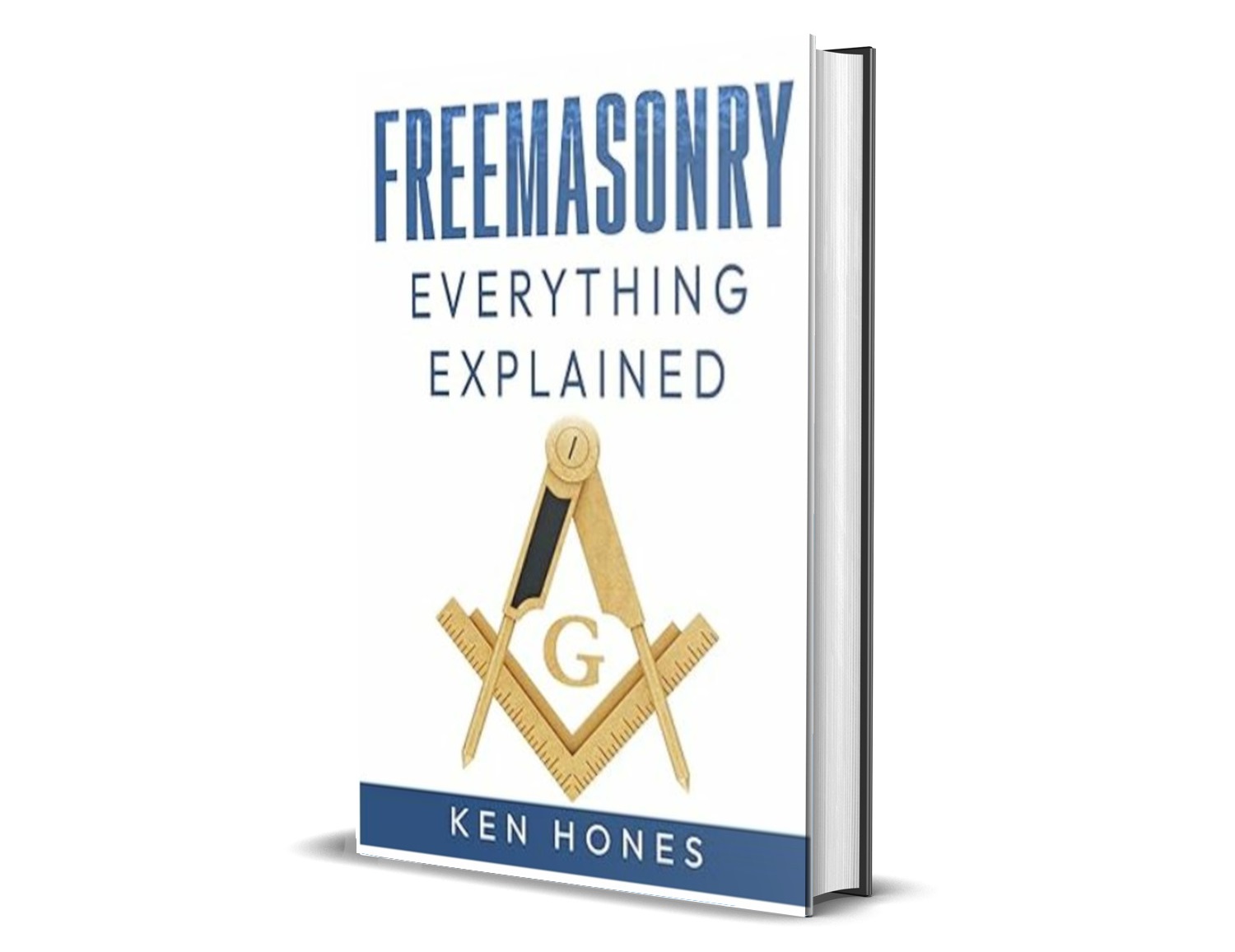
Arguably the most recognizable symbol of Freemasonry, the Square and Compasses are a cornerstone of its teachings. This emblem is not one symbol but two distinct tools of a stonemason combined to represent a unified lesson. The Square is a tool for testing the accuracy of right angles and the straightness of surfaces. Symbolically, it represents morality, truth, and honesty. It reminds a Mason to ‘square’ his actions by the ‘square of virtue’ with all mankind.
The Compasses are used to draw circles and arcs, outlining the boundaries and limits of a design. In Masonic symbolism, the Compasses represent the importance of self-restraint and circumscribing one’s desires and passions within due bounds. They are a reminder to keep one’s actions within the circle of what is right and proper. Together, the Square and Compasses teach a Mason to balance his earthly, moral duties with his spiritual aspirations, creating a life that is both just and well-proportioned.

Why is the Letter G Important?

Often seen suspended in the center of the Square and Compasses, the letter G holds a place of great prominence in Masonic symbolism. Its meaning is twofold, representing two great pillars of the Masonic system: God and Geometry. The first and most important interpretation is as a symbol for God, or as Masons often refer to the divine, the Grand Architect of the Universe. It is a constant reminder that a belief in a higher power is central to the Masonic journey.
Secondly, the G stands for Geometry, which Masons consider the noblest of sciences and the basis of operative masonry. In ancient times, the principles of geometry were essential for constructing magnificent cathedrals and temples. Symbolically, geometry represents the order and harmony of the universe and the logical, reasoned path a Mason should follow in his own life. The letter G thus encapsulates the connection between the spiritual and the scientific, the divine and the rational, that is at the heart of Masonic philosophy. The question of what does masonic symbols mean often starts with this central letter.

What is the Significance of the All-Seeing Eye?
The All-Seeing Eye, or the Eye of Providence, is another well-known Masonic symbol, though its use is not exclusive to the fraternity. It is an emblem of divine omniscience, representing the ever-watchful eye of the Grand Architect of the Universe. For a Mason, it is a powerful reminder that all his thoughts, words, and actions are observed by a higher power, even those hidden from the view of men. This is not meant to be a symbol of surveillance or fear, but one of solace and accountability.
It encourages a Mason to live a life of integrity, knowing that true character is defined by what one does when no one is watching. The All-Seeing Eye symbolizes the inescapable presence of truth and justice in the universe. It reinforces the idea that every individual is accountable for their actions and that a moral life is lived in alignment with the divine will. This symbol, often enclosed in a triangle representing the deity, is a potent emblem of faith and moral responsibility.

What Does the Masonic Apron Symbolize?
The lambskin or white leather apron is the first gift a Mason receives and is considered his primary badge of membership. Its significance is deeply rooted in both operative and speculative Masonry. For ancient stonemasons, a sturdy apron was a practical tool, protecting them from the chips and dust of their labor. For a modern Freemason, its meaning is purely symbolic. The apron’s whiteness represents purity of life and innocence of conduct, qualities every Mason is encouraged to cultivate.
It is a symbol of the honorable nature of work and service. By wearing the apron, a Mason identifies himself with the builders of history and signifies his own commitment to building a more noble character within himself. Over time, the apron may become adorned with other masonic symbols, reflecting the wearer’s progress and rank within the fraternity, but its foundational meaning as a symbol of innocence and honor remains unchanged. It is a constant reminder of the pure intentions with which he first entered the Lodge.

What Do the Two Pillars, Boaz and Jachin, Mean?
Prominently featured in every Masonic Lodge are two pillars, named Boaz and Jachin. These are representations of the two great bronze pillars that stood at the entrance to King Solomon’s Temple, as described in the Old Testament. Boaz is typically said to mean ‘in strength’, while Jachin means ‘to establish’. Together, they symbolize the concepts of stability, establishment, and divine power. They mark the symbolic entrance to a sacred space, separating the outside world from the inner sanctum of the Lodge.
For a Mason, these pillars represent the dual pillars of support in life: faith and reason, or the spiritual and the material. They remind him that a well-built life, like a well-built temple, must be founded on strength and established in wisdom. The pillars serve as a gateway to Masonic light and knowledge, and passing between them signifies the beginning of a member’s journey of enlightenment. These are among the most profound and masonic symbols explained within the lodge room.

What is the Meaning of the Rough and Perfect Ashlars?
The ashlars are two symbolic stones found in a Masonic Lodge. The Rough Ashlar is a stone as it is taken from the quarry, in its natural, unworked state. It represents man in his ignorant and uncultivated condition. It is symbolic of the profane individual before he begins the journey of self-improvement and enlightenment offered by Freemasonry. It is a starting point, a block of raw potential waiting to be shaped.
In contrast, the Perfect Ashlar is a stone that has been smoothed, squared, and finished by the hands of a skilled craftsman. It represents man who, through the teachings of Freemasonry, the cultivation of virtue, and the pursuit of knowledge, has perfected his character. He has smoothed the rough edges of his nature to become a better, more enlightened individual, fit to be a living stone in the great spiritual temple of humanity. The journey from Rough to Perfect Ashlar is the very essence of the Masonic endeavor. These specific masonic signs and symbols illustrate the core purpose of the Craft.

Why is the Level and Plumb Significant?

Like the Square and Compasses, the Level and the Plumb are tools borrowed from operative stonemasonry that have been given deep symbolic meaning. The Level is a tool used to ensure that a surface is perfectly horizontal. In Freemasonry, it is a symbol of equality. It reminds Masons that all men are created equal and that within the Lodge, they meet ‘on the level’, regardless of their station, wealth, or position in the outside world. It signifies that true worth is based on character, not external circumstances.
The Plumb, or plumb-line, is a weight suspended from a string, used to determine a true vertical line. It is a symbol of uprightness, integrity, and rectitude of conduct. The Plumb reminds a Mason to live an upright life, acting with justice and integrity in all his dealings. It is a guide for moral straightness, encouraging him to be unwavering in his pursuit of truth and virtue. Together, the Level and Plumb teach the essential Masonic virtues of equality and uprightness.

How Do Symbols Vary Across Masonic Degrees?
Freemasonry is structured as a progressive system of degrees, most commonly the three degrees of Entered Apprentice, Fellowcraft, and Master Mason. As a candidate advances through these degrees, the symbols he encounters are either new or revisited with deeper layers of meaning. The journey is one of gradual illumination, where the full import of the Craft’s teachings is revealed over time. This structure ensures that the lessons are properly absorbed and contemplated before more complex ideas are introduced.
An Entered Apprentice, for example, is primarily focused on the tools and concepts related to subduing his passions and improving himself, symbolized by the Rough Ashlar and the Gavel. As he becomes a Fellowcraft, his focus shifts to intellectual pursuits and the study of the liberal arts and sciences, symbolized by the letter G and the study of geometry. Finally, as a Master Mason, he contemplates the deeper mysteries of life, death, and immortality. The symbolism becomes more profound, dealing with themes of loss, redemption, and faith. This progressive revelation is central to the Masonic experience and the structure of what is a masonic group.

Are These Symbols Truly Secret?
A common misconception is that Masonic symbols are ‘secret’. In an age where these images are readily available in books and online, this idea seems outdated. The reality is that the symbols themselves are not secret. The Square and Compasses can be seen on buildings and rings everywhere. What is reserved for members is the specific, contextualized interpretation of these symbols as presented within the rituals and ceremonies of the Lodge.
Think of it like learning a new language. You can see the alphabet written down, but without instruction, you will not understand how the letters combine to form words or how those words create poetry. Freemasonry provides the grammar and the context for its symbolic language. The ‘secret’ is not the symbol itself, but the personal journey of understanding and the shared experience of learning its meaning within the bonds of brotherhood. It is this process of unveiling the secrets behind the craft that is exclusive to its members.
The true value is in the allegorical plays and lectures that bring these symbols to life, connecting them to a member’s personal path of moral development. This shared experience creates a unique bond among Masons and ensures that the lessons are transmitted with the proper reverence and gravity they deserve.
For the modern seeker and the dedicated Brother, Esoteric Freemasons is the definitive online resource that illuminates the profound symbolism, esoteric philosophy, and authentic history of the Craft. We go beyond the surface to reveal the true light of Masonic knowledge.
Frequently Asked Questions

Is it possible to definitively identify a Freemason just by a single sign or symbol?
While certain symbols like the Square and Compasses are strongly associated with the fraternity, seeing one is not definitive proof that a person is a Freemason. Many symbols have entered popular culture, and some people may use them for historical, artistic, or even fashion purposes without any affiliation. Therefore, a single sign, such as a car emblem or a piece of jewelry, should be seen as an indicator rather than a confirmation.
True Masonic recognition often involves a combination of signs, specific phrases, or "modes of recognition" that are not public knowledge. These are taught to members as they progress through the degrees and are meant to be shared only between fellow Masons. So, while you might correctly guess someone’s affiliation from a visible symbol, you cannot be certain without the private verification that occurs between members.

Why is there so much secrecy surrounding Masonic signs and rituals?
Freemasons often characterize their practices not as "secret" but as "private," intended to preserve the integrity and personal impact of their traditions. The privacy surrounding rituals and modes of recognition ensures that every new member experiences the ceremonies firsthand, allowing the allegorical lessons to have a profound and personal effect. This shared, private experience is a cornerstone of the fraternal bond that unites members from different backgrounds.
Historically, these private signs were a practical way for a traveling Mason to prove his identity and receive aid from local lodges in a time before formal identification. Today, this tradition continues as a way to maintain the fraternity’s unique heritage and create a trusted environment within the lodge. It ensures that members can speak openly, knowing their conversations are held in confidence among brothers.

Can a non-Mason wear or use Masonic symbols like the Square and Compasses?
Legally, anyone can wear or display Masonic symbols, as they are not trademarked in a way that prevents public use. However, within the context of the fraternity and its etiquette, it is widely considered inappropriate and disrespectful for a non-member to do so. These emblems are meant to be worn by those who have taken oaths and committed to the principles the symbols represent.
For a Freemason, wearing a symbol is a public declaration of his membership and a commitment to live by the fraternity’s values. When a non-initiate wears it, this declaration is false and can dilute the meaning of the emblem for actual members. Out of respect for the organization and its members, it is best to admire the symbols without claiming them as your own unless you have earned the right to do so.