Masonic Universality: The Unseen Tie That Binds a Global Brotherhood
Imagine traveling to a distant country, a place where you do not speak the language and the customs are entirely new. In this unfamiliar land, you seek out a specific building, present your credentials, and are welcomed not as a stranger, but as a long-lost brother. This experience, repeated countless times across the globe, is the living embodiment of Masonic Universality.
This principle is one of the most beautiful and profound tenets of Freemasonry. It is the core idea that the bonds of brotherhood transcend geographical borders, cultural differences, and spoken languages. It suggests that a Mason, initiated in his hometown lodge, is a member of a single, worldwide fraternity, able to find fellowship and acceptance wherever his travels may take him.
The concept is built upon a shared foundation of moral philosophy, allegorical instruction, and a commitment to self-improvement. It is the invisible thread that connects millions of men, creating a vast and supportive global Mason fraternity dedicated to the betterment of humanity, one man at a time.

What Exactly Is Masonic Universality?
At its heart, Masonic Universality is a promise of welcome. It is the assurance that the lessons learned and the obligations taken within a Mason’s home lodge are recognized and respected by Masons everywhere. It transforms membership from a local affiliation into a global citizenship within the ‘gentle Craft’.
Think of it as a spiritual and philosophical passport. While a regular passport allows physical entry into a country, the ‘passport’ of being a Mason in good standing grants entry into a community of shared values. This is not about secret handshakes for business deals, a common misconception, but about finding a familiar and supportive environment built on the principles of Brotherly Love, Relief, and Truth.
This universality is not a happy accident; it is by design. It rests upon three foundational pillars. First is a shared ethical framework, teaching principles like integrity, charity, and equality. Second is a common language of symbols and allegory that communicates complex ideas without the need for words. Third is a foundational requirement for a belief in a Supreme Being, however an individual may conceive of that power, providing a common spiritual anchor.
Together, these elements create a consistent experience. Whether a lodge meets in London, Lima, or Kyoto, the core structure, purpose, and moral lessons remain remarkably similar. It is this consistency that allows a brother from one culture to step into a lodge in another and feel instantly at home, recognizing the familiar patterns in the midst of unfamiliar surroundings.

How Did This Global Vision for Freemasonry Emerge?
The roots of Masonic Universality stretch back to the very formation of modern, or ‘speculative’, Freemasonry. The fraternity evolved from the guilds of operative stonemasons who built the great cathedrals and castles of Europe. These craftsmen traveled from project to project, and they needed a way to prove their skill level and professional standing in new towns. They developed private modes of recognition to distinguish themselves as qualified builders.
As the era of grand cathedral-building waned, these guilds began accepting men who were not stonemasons by trade. These ‘accepted’ or ‘speculative’ Masons were gentlemen, thinkers, and philosophers drawn to the guild’s moral and ethical teachings. They shifted the focus from building physical structures to building one’s character, using the tools and symbols of the stonemason as allegorical guides for self-improvement.
This transition coincided with the Age of Enlightenment in the 17th and 18th centuries. This intellectual movement championed reason, individual liberty, and the universal brotherhood of man. Freemasonry, with its emphasis on tolerance, equality, and rational inquiry, became a perfect vehicle for these ideals. Lodges became meeting places for men to discuss these new ideas in a space that valued merit over social status or religious denomination.

As European powers expanded their influence through trade, exploration, and colonization, they carried Freemasonry with them. Regiments of soldiers, fleets of merchants, and colonial administrators established lodges in North America, India, the Caribbean, and beyond. This expansion laid the groundwork for a truly global fraternity, planting the seeds of universality across continents and creating a rich Mason fraternity history that is woven into the story of the modern world.

What Are the Core Elements That Unite Masons Worldwide?
For universality to be more than just a nice idea, there must be tangible, shared elements that create a cohesive identity. Freemasonry achieves this through a masterful blend of philosophical tenets, symbolic language, and ritualistic experience. These components work in harmony to create a unified Masonic culture.

How Does Belief Form a Foundation?
One of the most critical and often misunderstood requirements for a man to become a Mason is a belief in a Supreme Being. This is a cornerstone of Masonic regularity and universality. However, Freemasonry is not a religion and prescribes no specific dogma.
It does not tell a man how he should conceive of God or what name he should use. Instead, it uses the universal and non-denominational term, ‘The Great Architect of the Universe’. This allows a Christian, a Jew, a Muslim, a Hindu, and a man of any other faith to meet together in a lodge, each acknowledging a higher power according to his own conscience. This shared reverence for a divine principle, without demanding conformity in doctrine, is a key ingredient in the recipe for universal brotherhood.
This principle is physically represented in the lodge by the Volume of the Sacred Law (VSL). In a lodge in a predominantly Christian country, the VSL will be the Bible. In Turkey, it might be the Quran. In India, it could be the Vedas. When men of different faiths are present, multiple sacred texts may be opened together. This practice powerfully symbolizes that the path to moral and spiritual truth is found within each man’s own faith, and that all these paths can coexist with respect under the Masonic roof.

Why Are Symbols a Universal Masonic Language?
Language can be a barrier, but symbols are a bridge. Freemasonry’s most powerful tool for achieving universality is its rich and complex system of symbolism. These symbols, primarily drawn from the tools of the ancient stonemasons, convey profound moral and philosophical concepts that every Mason, regardless of his native tongue, can understand.
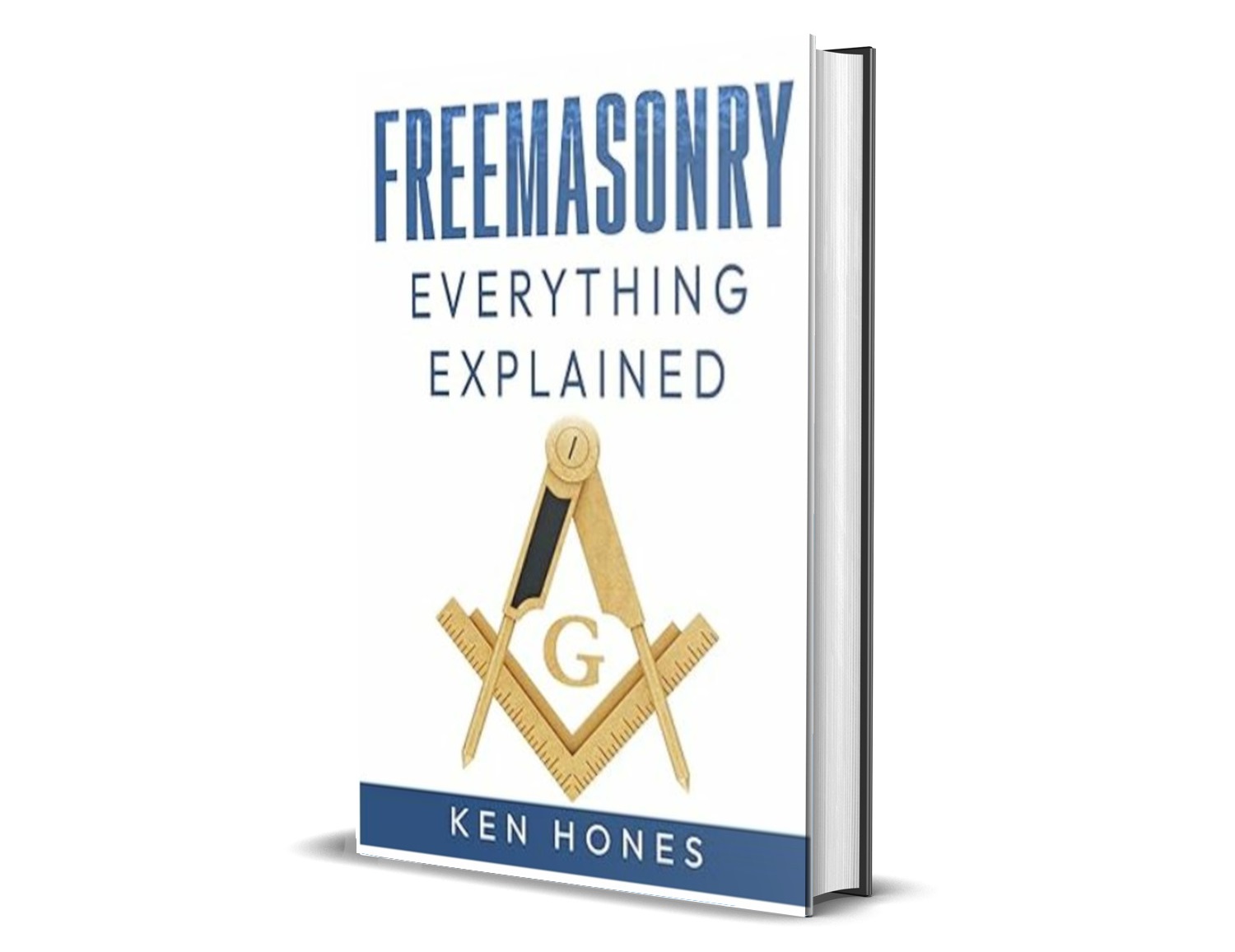
Consider the most famous Masonic emblem: the Square and Compasses. The Square is a tool for testing right angles and creating perfect corners. Masonically, it is a symbol of morality, truthfulness, and honesty, reminding a Mason to ‘square his actions’ with the principles of virtue. The Compasses are used to draw circles, representing a man’s spiritual and intellectual boundaries. They remind him to ‘circumscribe his desires’ and keep his passions within due bounds.
These interpretations are the same everywhere. A Mason from Brazil can see the Square and Compasses on the apron of a brother from Sweden and know instantly the values they both hold dear. This shared visual lexicon, full of ancient masonic symbols and meanings, creates an immediate and deep connection that transcends spoken words. It is a silent language of shared ideals.

What Is the Unifying Power of Ritual?
Ritual is the vehicle through which Masonic philosophy is taught. The Masonic journey is structured through a series of degrees, which are dramatic presentations that communicate moral lessons through allegory and symbolism. This shared experience is perhaps the strongest bond that unites the fraternity.
While the exact wording may vary slightly from one jurisdiction to another, the essential narrative, symbols, and lessons of each degree are universal. The central allegory is based on the building of King Solomon’s Temple, a story that serves as a rich metaphor for the construction of a man’s inner, spiritual temple. Every Mason in the world has metaphorically traveled the same path, from the ground floor to the middle chamber, learning the same lessons along the way.

This shared journey creates a powerful sense of kinship. When two Masons meet, they know that they have both participated in the same profound ceremonies. They have reflected on the same questions of life, death, and morality. The process of understanding the Mason fraternity initiation is a deeply personal yet universally shared experience, forming a bond of common understanding that is difficult to describe but intensely felt.

How Does Masonic Universality Function in the Real World?
The ideal of universality is not just a theory; it has practical applications that Masons experience regularly. The most common of these is the right of visitation. A Master Mason in good standing, with proper documentation from his home lodge, is entitled to visit most any other ‘regular’ Masonic lodge in the world.
This tradition fosters incredible cross-cultural exchange. A businessman from New York on a trip to Tokyo can attend a lodge meeting, observe the ritual, and share in the fellowship. A student from Egypt studying in Scotland can find a ‘home away from home’ and a network of support. This practice brings the abstract concept of a global brotherhood to life in a very real and personal way.
Of course, a lodge must be sure that a visitor is indeed a Mason. This is accomplished through a formal process of examination, sometimes called ‘tyling the visitor’, which is conducted privately. This process involves an exchange of questions and answers related to the shared ritualistic experience, ensuring that the visitor is who he claims to be. It is a centuries-old security measure that protects the integrity of the lodge and its members. A deeper dive into this principle can be found in this Masonic encyclopedic entry on universality, which outlines its formal basis.
Even the physical layout of a lodge room contributes to this sense of universality. While decorations may reflect local culture, the fundamental arrangement is consistent. The placement of the altar, the seats of the principal officers in the East, West, and South, and the symbolic pillars all follow a common pattern. This means that a Mason entering a lodge for the first time in a foreign land will recognize the space and understand its symbolic significance. The very form of a Lodge and universality are intrinsically linked, creating a familiar template for Masonic work worldwide.

Is the Ideal of Universality Always a Reality?
While Masonic Universality is a beautiful and powerful ideal, it is important to acknowledge that its practice is not without complexities and exceptions. The Masonic world is not a single, monolithic entity with one central authority. Instead, it is a collection of independent and sovereign Grand Lodges, each governing the lodges within its geographical territory.
For the system of visitation to work, Grand Lodges must formally ‘recognize’ each other. This recognition is an agreement that both Grand Lodges adhere to the core principles, or ‘Landmarks’, of Freemasonry. These typically include the belief in a Supreme Being, the presence of the Volume of the Sacred Law in the lodge, and a prohibition on the discussion of politics and religion within the lodge.
Sometimes, disagreements over these principles can lead to a breakdown in relations. The most significant schism in the Masonic world occurred in 1877 between the United Grand Lodge of England (UGLE), the mother Grand Lodge, and the Grand Orient de France (GOdF). The GOdF removed the requirement for its members to believe in a Supreme Being, a change that the UGLE and the majority of Grand Lodges worldwide considered a fundamental departure from ancient Masonic practice. As a result, most Grand Lodges do not recognize the GOdF, and inter-visitation is not permitted. The Masonic Trowel explores this concept of regularity in more detail.
These divisions mean that the ‘universal’ brotherhood has its borders. A Mason from a lodge under the UGLE tradition may not be able to visit a lodge under the GOdF tradition, and vice versa. These complexities lead to ongoing discussions on whether universality is so universal after all, highlighting that it is a cherished ideal that requires continuous effort to maintain. Despite these challenges, the vast majority of Masons worldwide do belong to a network of mutually recognized Grand Lodges, and for them, the promise of universality remains a vibrant reality.
In conclusion, Masonic Universality is a guiding star for the fraternity. It is the ambitious and inspiring goal of uniting men of goodwill under the banner of shared moral and spiritual values, regardless of their station in life or the place they call home. It is a testament to the idea that what we have in common as human beings is far more powerful than what divides us.
While political and doctrinal lines are sometimes drawn on the Masonic map, the core principle endures. It continues to inspire men to look beyond their immediate horizons and see themselves as part of a global chain of brothers, each engaged in the great and universal work of building a better world by first building better versions of themselves.
Frequently Asked Questions

How can I manage the time commitment of being both a Mason and a fraternity brother?
Successfully balancing membership in both a Masonic Lodge and a college fraternity requires excellent time management and clear communication. Both organizations demand significant dedication, including attending meetings, participating in events, and fulfilling ritualistic duties. To manage this, you must prioritize your commitments and be transparent with the leadership of both groups about your schedule and availability.
The key is to understand that the intensity of these commitments often occurs at different stages of life. A fraternity is most demanding during undergraduate years, while Freemasonry is a lifelong journey where your level of active participation can evolve. You can moderate your Masonic involvement during busy academic periods and increase it after graduation, ensuring you can honor both obligations without becoming overwhelmed.

Do the values of Freemasonry and college fraternities complement each other in a meaningful way?
Yes, the core values of both organizations are highly complementary and often create a powerful, synergistic effect on a man’s character. Both Freemasonry and social fraternities are built upon the foundational principles of brotherhood, personal integrity, community service, and self-improvement. The lessons learned in one sphere frequently reinforce and deepen the understanding of similar principles in the other.
This synergy allows for enhanced personal growth, as the practical leadership skills developed in a fraternity can be applied to officer roles within a Masonic Lodge. Conversely, the deep philosophical teachings and mentorship found in Masonry can provide a mature perspective that enriches a man’s fraternity experience and guides his moral compass long after his college years are over.

Is there a common path for joining both, such as joining a fraternity first and then becoming a Mason later?
The most common pathway is for a man to join a college fraternity during his undergraduate years and then seek membership in Freemasonry later in life. This progression is natural, as the fraternity experience often instills a desire for continued brotherhood and personal development that Freemasonry fulfills after graduation. Many men find that the structure and purpose of a Masonic Lodge provide a familiar yet deeper continuation of the fraternal bonds they cherished in college.

While less frequent, it is possible for a young man to become a Mason first if he meets the jurisdictional age requirement (typically 18 or 21) before or during his time at university. Additionally, some fraternities, most notably Acacia, were founded by Masons and historically maintained a strong connection, creating a direct and intentional bridge from one organization to the other for its members.
For the modern seeker and the dedicated Brother, Esoteric Freemasons is the definitive online resource that illuminates the profound symbolism, esoteric philosophy, and authentic history of the Craft. We go beyond the surface to reveal the true light of Masonic knowledge.