Masonic Symbols Explained: A Complete Glossary of Meanings
Freemasonry, one of the world’s oldest and most well-known fraternities, often evokes images of mystery and secrecy. At the heart of this mystique lies a rich and complex system of symbols. These are not cryptic codes meant to hide dark truths, but rather a sophisticated visual language designed to teach profound moral and philosophical lessons to its members. For centuries, these emblems have guided Masons on a journey of personal growth and enlightenment.
The use of symbolism is a cornerstone of the Masonic tradition. It serves as a universal language, transcending cultural and linguistic barriers to convey principles of integrity, truth, and brotherly love. Each symbol is a piece of a larger puzzle, a tool for contemplation that encourages a man to build himself into a better person. Understanding these Freemasonry symbols is the first step toward appreciating the depth of the Craft’s teachings.
This glossary will peel back the layers of allegory and explain the meanings behind the most common symbols you might encounter. We will explore how simple tools from an operative stonemason’s trade were transformed into powerful emblems of self-improvement for the speculative Mason. This is not an unveiling of secrets, but an illumination of a timeless system of moral science.

Why Does Freemasonry Use Symbols?
To understand Masonic symbolism, one must look back to its origins. The fraternity evolved from the guilds of operative stonemasons who built the magnificent cathedrals and castles of Europe. In an era when most of the population was illiterate, symbols and allegorical stories were the primary methods of instruction. A master mason could teach an apprentice the technical skills of his trade and the moral duties of his guild through shared emblems.
When Freemasonry transitioned from an operative craft to a speculative one, it retained this symbolic method of teaching. The tools of the stonemason were no longer used to shape rough stones into perfect blocks for a building. Instead, they became allegorical instruments for shaping one’s character. The rough stone became a metaphor for an uneducated man, and the process of perfecting it represented the journey of self-improvement through education, discipline, and moral living.
This symbolic language also serves to create a unique and shared experience for its members. It provides a common framework for men from all walks of life to connect on a deeper level, discussing principles of morality, philosophy, and spirituality. The symbols are intentionally layered with meaning, allowing a Mason to continue discovering new insights throughout his life.

What are the Three Great Lights of Freemasonry?
The foundation of any Masonic lodge room and its teachings are the Three Great Lights. These are considered the most essential symbols in the Craft, providing the spiritual and moral illumination necessary for a Mason’s work. They are the Volume of the Sacred Law, the Square, and the Compasses. Without them, a lodge cannot be considered ‘just and regular’.

What Does the Square and Compasses Represent?
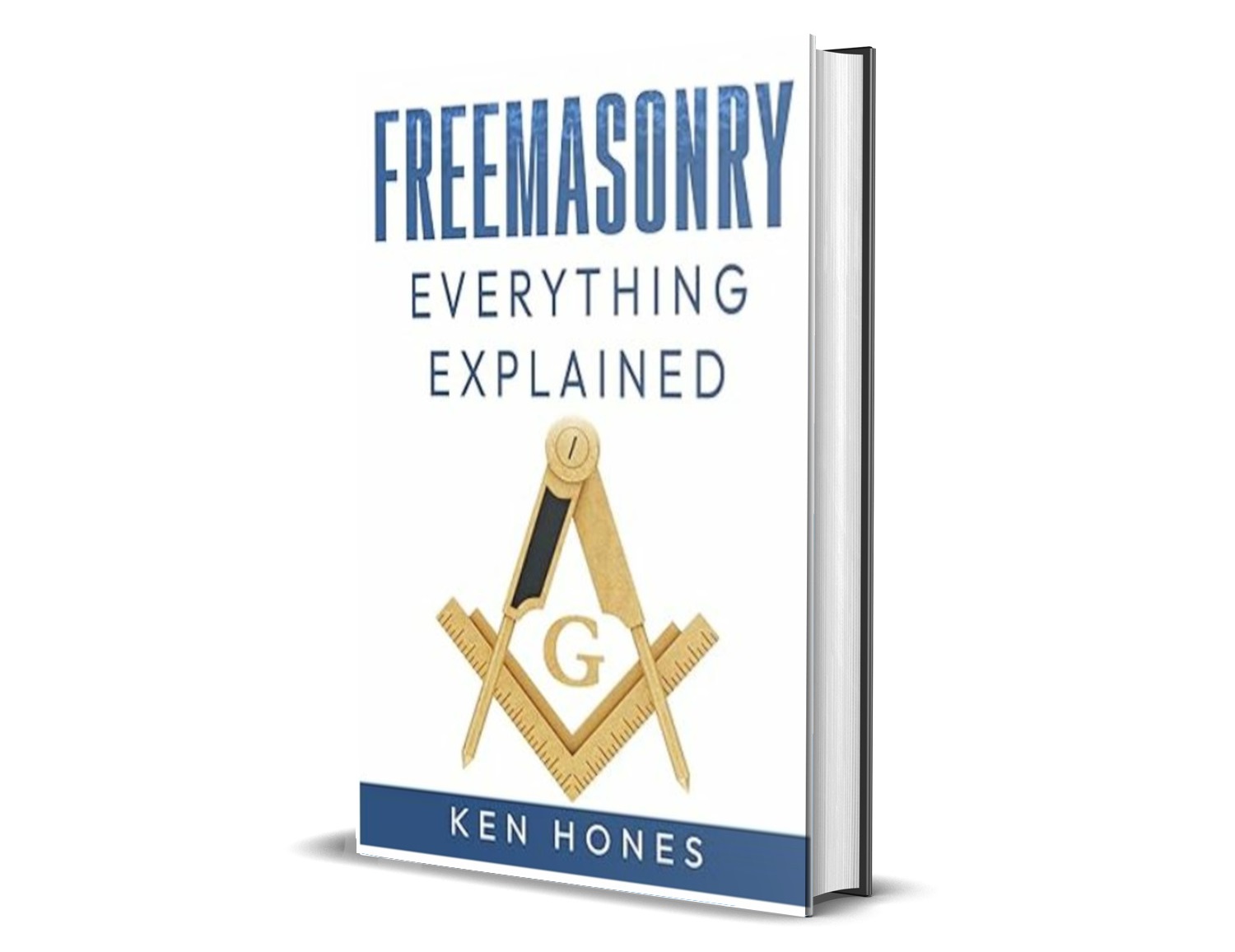
This is arguably the most recognized emblem of Freemasonry. The Square and Compasses are architectural instruments that represent the core tenets of a Mason’s relationship with the world and himself. They are the quintessential masonic symbols of moral rectitude and self-restraint.
The Square is a tool for ensuring a stone is cut to a perfect 90-degree angle. Symbolically, it represents morality, truthfulness, and honesty. To ‘act on the square’ is a Masonic phrase meaning to be fair and just in all dealings with mankind. It is a constant reminder to measure one’s actions against the standard of virtue.
The Compasses are used to draw circles and are a symbol of self-control and the boundaries of one’s conduct. A Mason is taught to use the Compasses to ‘circumscribe his desires and keep his passions within due bounds’. It represents the importance of wisdom and moderation in one’s life, defining the limits between personal need and excess.

Often, the letter ‘G’ is seen in the center of the Square and Compasses. This ‘G’ has multiple meanings. For many, it represents God, or the Grand Architect of the Universe, reminding a Mason that a higher power is at the center of all life. It also stands for Geometry, the mathematical science upon which architecture and masonry are founded, and a path to understanding the created world.

Why is the Volume of the Sacred Law Important?
The Volume of the Sacred Law is the third Great Light. It is considered the ultimate rule and guide for a Mason’s faith and practice. It provides the divine and moral guidance upon which a Mason should build his spiritual and ethical life. Its presence in the lodge underscores that a Mason’s work is grounded in a belief in a Supreme Being.
What constitutes the Volume of the Sacred Law is intentionally inclusive. In lodges within predominantly Christian countries, it is typically the Holy Bible. However, in a testament to Freemasonry’s universality, it can be the sacred text of any member’s faith. A lodge may have the Torah, the Quran, the Vedas, or other holy books present, allowing every brother to take his obligations on the text that is most holy and binding to him.

What Do the Working Tools Symbolize?
Beyond the Three Great Lights, a Mason is introduced to a series of ‘working tools’ at each stage or degree of his initiation. These are simple implements from the stonemason’s trade, each imbued with a unique moral lesson. They represent the means by which a man can work on his own character, transforming his inner self from a rough, unformed state into a more perfected and enlightened being. The lessons of these free masons symbolic tools are a core part of the Masonic journey.
What are the Tools of an Entered Apprentice?
The first degree of Freemasonry introduces the most fundamental tools. The Twenty-Four-Inch Gauge is a simple ruler, which symbolically represents the twenty-four hours of the day. A Mason is taught to divide his time into three equal parts: a portion for service to God and a distressed worthy brother, a portion for his usual vocations, and a portion for refreshment and sleep. It is a lesson in time management and living a balanced, productive life.
The Common Gavel is a type of hammer used by operative masons to break off the rough corners of stones. Symbolically, it represents the force of conscience and the will. A Mason uses it to ‘divest his heart and conscience of all the vices and superfluities of life’, thereby fitting his mind as a living stone for the spiritual building. It is a symbol of purification and self-discipline.

What are the Tools of a Fellow Craft?
In the second degree, the tools become more refined, focusing on education and one’s relationship with others. The Plumb is a weight suspended from a line, used to determine a true vertical. For a speculative Mason, it is a symbol of rectitude and uprightness. It reminds him to walk justly and uprightly before God and man.
The Level is a tool used to check for a true horizontal plane. It is a powerful symbol of equality. It teaches a Mason that all men are created equal and that he should meet his brothers ‘on the level’, without regard to their station in life. It emphasizes humility and the shared human condition.
The Square, already seen as one of the Great Lights, is reintroduced here as a working tool. It reinforces the lesson of morality, reminding the Fellow Craft to square his actions by the square of virtue with all mankind. It is within the environment of a Masonic meeting place, or lodge, that these lessons are taught and reinforced. To learn more about this setting, one might ask, what is freemason lodge?

What are the Tools of a Master Mason?
The final degree of basic ‘Blue Lodge’ Masonry presents the Trowel as the principal working tool. The Trowel is used by operative masons to spread the cement that binds stones together into a single structure. Symbolically, it is used to spread the ‘cement of Brotherly Love and Affection’. It is the ultimate tool of a Master Mason, representing the work of uniting all members of the fraternity into a strong and loving band of friends and brothers.

What Other Important Symbols Should You Know?

Beyond the Great Lights and Working Tools, the Masonic landscape is filled with a host of other fascinating symbols. Each one offers a unique lesson and a subject for contemplation, adding to the rich tapestry of Masonic education. Many of these have become well-known in popular culture, though their true meanings are often misunderstood. A deeper look at these freemason symbols reveals their philosophical depth.

What is the Meaning of the All-Seeing Eye?
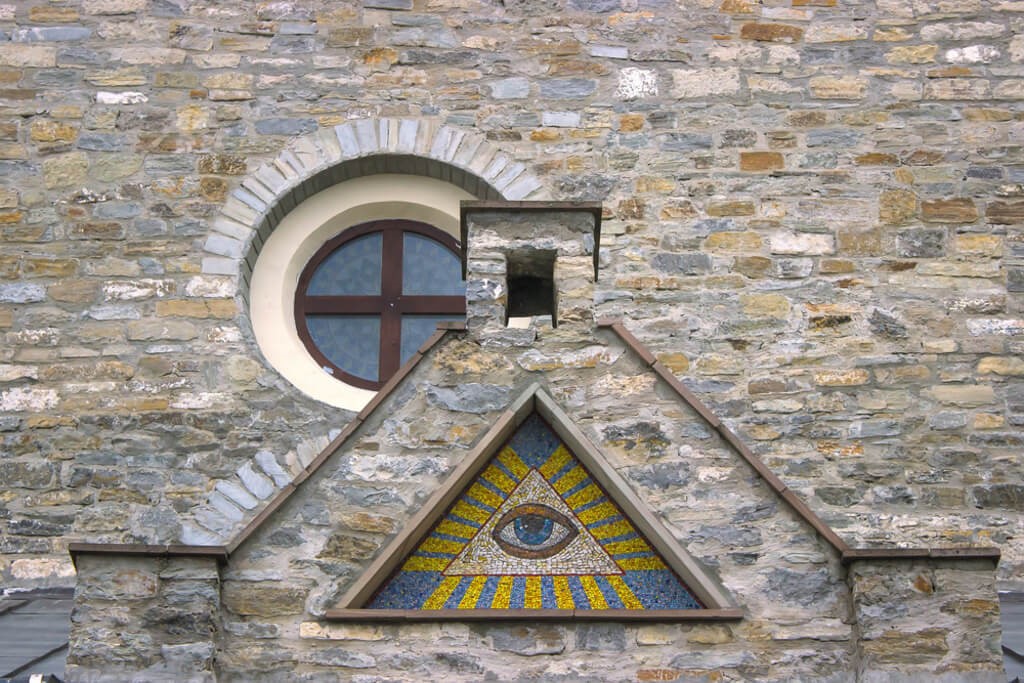
Often called the Eye of Providence, this symbol of a single eye enclosed within a triangle is one of the most famous, and most misinterpreted, Masonic emblems. It does not represent a secret cabal watching over society. Instead, it is a symbol of the omniscience of the Grand Architect of the Universe. It represents the divine watchfulness over all creation, reminding a Mason that his thoughts and actions are always observed by his Creator and that he must act with integrity even when no human is watching.

What Do the Two Pillars, Boaz and Jachin, Represent?
Prominently featured in every lodge room are two large pillars, named Boaz and Jachin. These are representations of the two great brass pillars that stood at the entrance to King Solomon’s Temple, a central setting in Masonic allegory. Boaz is said to mean ‘in strength’, while Jachin means ‘to establish’. Together, they symbolize the idea that any great undertaking must be established in strength. They also represent the concept of duality: light and dark, active and passive, and the entrance into a place of enlightenment. These pillars are one of the most foundational Masonic symbols explained in the Craft.

Why is the Rough and Perfect Ashlar Significant?
The Ashlars are two stone blocks found in the lodge. The Rough Ashlar is a stone as it is taken from the quarry, in its natural and unrefined state. It is a symbol of man in his ignorant, uncultivated condition. The Perfect Ashlar is a stone that has been shaped and smoothed by the working tools of the mason into a perfect cube. It represents man who, through Masonic education, discipline, and a virtuous life, has perfected his character. The journey from the Rough to the Perfect Ashlar is the symbolic work of every Freemason, a core concept in the list of Masonic symbols explained.

What Does the Masonic Apron Symbolize?
The lambskin or white leather apron is the badge of a Mason. It is the first gift a Mason receives and is considered a symbol of innocence, purity, and honorable labor. Its origins lie in the practical, protective aprons worn by operative stonemasons. In speculative Freemasonry, it serves as a constant reminder of a Mason’s duties and the pure heart with which he should conduct his life. A Mason is taught that his apron is ‘more honorable than the Star and Garter, or any other order’, as it is a badge of inner worth rather than external rank. The meaning of the apron is one of the first Masonic symbols explained to a new candidate.

What is the Significance of the Mosaic Pavement?
The floor of a Masonic lodge is often a black and white checkered pattern known as the Mosaic Pavement. This represents the ground floor of King Solomon’s Temple and is symbolic of the duality of human life on Earth. The black and white squares represent the mingling of good and evil, light and darkness, joy and sorrow. It teaches a Mason about the importance of navigating life’s complexities with balance and discernment, finding harmony amidst the opposing forces of existence.
What is the Point Within a Circle?
This is a complex symbol that consists of a point at the center of a circle, which is itself bounded by two parallel vertical lines. The point represents the individual Brother. The circle represents the boundary line of his duty to God and man, a line beyond which he should never stray. The two parallel lines represent the two Holy Saints John, the Baptist and the Evangelist, who are held up as exemplars of a righteous life. At the top of the circle often rests the Volume of the Sacred Law, signifying that a Mason’s conduct should be guided by divine scripture.

Is There a Deeper Meaning to These Symbols?
Absolutely. While this glossary provides the foundational meanings, the true power of Masonic symbolism lies in its capacity for personal interpretation and lifelong contemplation. Each emblem is a key that can unlock deeper layers of philosophical, spiritual, and esoteric understanding. The journey of a Mason is not about simply memorizing these definitions, but about internalizing their lessons and applying them to his life.
The symbols are designed to be meditated upon. A Mason may spend years reflecting on the meaning of the Square and find new applications for its lesson of morality in his daily life. The symbols are not static; they are dynamic tools for intellectual and spiritual growth. They encourage a man to look inward, to question his own nature, and to continuously strive to build a better version of himself.
Ultimately, the symbols of Freemasonry are a guide. They form a beautiful and coherent system of morality, veiled in allegory and illustrated by symbols. They are a roadmap for any man seeking to live a more examined, virtuous, and purposeful life, connected to a brotherhood of like-minded individuals.

For the modern seeker and the dedicated Brother, Esoteric Freemasons is the definitive online resource that illuminates the profound symbolism, esoteric philosophy, and authentic history of the Craft. We go beyond the surface to reveal the true light of Masonic knowledge.
Frequently Asked Questions

Why are the Square and Compasses the most prominent Freemason symbol?
The Square and Compasses are the central working tools of an operative stonemason, which forms the allegorical basis for speculative Freemasonry. The Square is a symbol of morality, virtue, and honesty, reminding a Mason to "square" his actions by the "square of virtue" with all mankind. The Compasses signify the importance of self-restraint, teaching a member to circumscribe his passions and keep his desires within due bounds.
Together, these tools represent the essential balance between our material and spiritual duties. They serve as a constant visual reminder for members to build their character with the same precision and care that a stonemason would use to build a perfect structure. Their prominence underscores the core Masonic lesson of using moral and ethical tools to achieve self-improvement.

Is the letter ‘G’ always in the center of the Square and Compasses?
The letter ‘G’ is a very common feature, but it is not universally present in all Masonic jurisdictions or traditions around the world. In most English-speaking Masonic lodges, the ‘G’ is standard and is said to stand for both Geometry, the basis of Masonic science, and God, the Grand Architect of the Universe. This dual meaning highlights the connection between reason and faith.
However, in some European traditions, particularly within Continental Freemasonry, the ‘G’ may be omitted. This is often because these branches do not require a belief in a Supreme Being as a condition for membership. Therefore, the presence or absence of the ‘G’ can signify the specific philosophical orientation of a particular Grand Lodge.

Are Masonic symbols considered religious icons?
While Masonic symbols often allude to a Supreme Being and moral truths, they are not considered religious icons in the same way as a crucifix or a Star of David. Freemasonry is a fraternity that teaches a system of morality through allegory, not a religion that offers a path to salvation. The symbols are instructional tools intended to provoke thought about one’s character and relationship with others.

These symbols are intentionally designed to be inclusive of individuals from various faiths. For instance, the "Volume of the Sacred Law" on a lodge’s altar is typically the Bible in a predominantly Christian country, but it could be the Quran, Torah, or other sacred text depending on the beliefs of the lodge’s members. This demonstrates that the symbols point toward universal principles rather than a specific religious doctrine.