Freemasonry Around the World: A Guide to Global Grand Lodges and Rites
Freemasonry, often shrouded in mystery and speculation, is one of the world’s oldest and largest secular fraternal organizations. Its presence spans continents, cultures, and centuries, yet its fundamental structure can seem opaque to the outside observer. The key to understanding this global brotherhood lies in its organizing principle: the Grand Lodge.
These governing bodies are the heart of Masonic authority and administration, each one a sovereign entity that shapes the character of Freemasonry within its jurisdiction. From London to Lisbon, Tokyo to Toronto, the story of the Craft is written in the history and evolution of these unique institutions. Understanding the role of a Freemason Grand Lodge is the first and most crucial step in comprehending the fraternity’s vast and varied landscape.
This guide will illuminate the intricate tapestry of global Freemasonry. We will explore the function of Grand Lodges, trace the spread of the Craft across the world, and examine the diverse Rites and traditions that make Freemasonry a truly global phenomenon. For the curious seeker or the seasoned Brother, this journey reveals a system that is both deeply rooted in history and dynamically alive today.

What Exactly is a Grand Lodge?
A Grand Lodge is the supreme governing body of Freemasonry within a defined geographical area, such as a country, state, or province. It operates as an independent and sovereign authority. No higher human power in Freemasonry exists above it within its own territory. Think of it as the national or regional headquarters that provides leadership and sets the rules for all the individual lodges under its purview.
Its primary function is to grant charters or warrants to new lodges, which are known as constituent or subordinate lodges. Without a charter from a recognized Grand Lodge, a new lodge cannot be considered legitimate or ‘regular’. The Grand Lodge also establishes the constitution, laws, and rituals that its subordinate lodges must follow, ensuring consistency and adherence to the core principles of the Craft.
Furthermore, Grand Lodges are responsible for the critical process of ‘recognition’. This is the formal agreement by which one Grand Lodge acknowledges another as being legitimate. This system of mutual recognition creates a web of alliances, allowing members from recognized jurisdictions to visit each other’s lodges and be welcomed as Brothers.

How Did Freemasonry Spread Across the Globe?
The story of modern Freemasonry begins in London. On June 24, 1717, four existing lodges gathered at the Goose and Gridiron Ale House to establish the first Grand Lodge of England. This pivotal event marked the transition of Freemasonry from a collection of independent operative and speculative lodges into a structured, governed fraternity.
As the British Empire expanded throughout the 18th and 19th centuries, Freemasonry traveled with it. Soldiers, colonists, and administrators established Masonic lodges in distant lands, from India to the Americas and Australia. These new lodges initially operated under the authority of the Grand Lodges of England, Scotland, or Ireland.
Over time, as these territories developed their own identities, their local lodges came together to form their own independent Grand Lodges. The United States, for example, does not have a single national Grand Lodge. Instead, each state has its own sovereign Grand Lodge, a tradition born from the original colonies declaring their Masonic independence just as they declared their political independence.
This pattern of expansion and subsequent Masonic independence was repeated across the world. It led to the rich and diverse network of Grand Lodges that exists today, each with its own unique history and cultural flavor, yet all sharing a common philosophical heritage. You can explore a more detailed history of this expansion in resources like the New World Encyclopedia entry on Freemasonry.

Are All Grand Lodges the Same?

While they share a common origin, not all Grand Lodges are the same. The global Masonic family is broadly divided into two major philosophical branches, a division that occurred in the 19th century. The distinction primarily hinges on a few key principles that define a Grand Lodge’s ‘regularity’.
This split means that a Mason from a lodge in one tradition may not be recognized or permitted to visit a lodge in the other. Understanding this fundamental difference is essential to grasping the complexities of international Masonic relations.

What is the ‘Regular’ or ‘Mainstream’ Tradition?
The majority of Grand Lodges worldwide belong to the ‘regular’ tradition. This branch generally traces its lineage and standards of recognition back to the United Grand Lodge of England (UGLE). For a Grand Lodge to be considered regular by this standard, it must adhere to several core principles, often called ‘ancient landmarks’.
Key among these is an essential belief in a Supreme Being. The specific nature of this belief is left to the individual Brother’s conscience, but the belief itself is non-negotiable. A Volume of the Sacred Law, such as the Bible, Quran, or Torah, must be open in the lodge during all proceedings. Additionally, regular Freemasonry forbids the discussion of sectarian religion and partisan politics within the lodge, and its membership is exclusively male.

What is the ‘Continental’ or ‘Liberal’ Tradition?
This branch of Freemasonry is most prominently associated with the Grand Orient de France (GOdF). The major schism between the regular and continental traditions occurred in 1877. In that year, the GOdF removed the requirement for its members to have a belief in a Supreme Being, instead championing the principle of absolute freedom of conscience.
This change was seen by the UGLE and other regular Grand Lodges as a departure from a fundamental landmark of the Craft, leading them to withdraw recognition. Continental or liberal Freemasonry often permits discussions of politics and religion in the lodge. Many jurisdictions within this tradition also welcome women, either in their own right or through co-masonic lodges that admit both men and women.

What Are Some of the Most Influential Grand Lodges in the World?
Across the globe, certain Grand Lodges hold significant historical and influential weight. Their practices and decisions often have ripple effects throughout the international Masonic community. A comprehensive list of Masonic Grand Lodges can give a sense of the sheer number and geographic spread of these bodies.

What is the Role of the United Grand Lodge of England (UGLE)?
Formed in 1813 from a union of two rival English Grand Lodges, the UGLE is often called the ‘mother Grand Lodge’. While it holds no direct authority over any other Grand Lodge, its standards for recognition are the benchmark used by most of the regular Masonic world. Its history is deeply intertwined with the development of modern Freemasonry itself.
For many Grand Lodges, being in amity or mutual recognition with the UGLE is a primary goal, as it signifies their adherence to the established landmarks of regular Freemasonry. Its influence is more historical and fraternal than administrative, but it remains a central figure in the mainstream global tradition.

How Does American Freemasonry Differ?
Freemasonry in the United States is unique due to its decentralized structure. There is no national Grand Lodge. Instead, there are 51 regular Grand Lodges, one for each state and the District of Columbia, that operate independently. There is also the parallel and historically significant system of Prince Hall Freemasonry, an established and recognized branch of the Craft that was founded by African Americans in the 18th century.
This state-by-state system means that the specific rules and culture of Freemasonry can vary slightly depending on where you are in the country. This structure is a direct reflection of the nation’s federalist principles. The vastness of the American Masonic landscape is well-documented, and tools like The Masonic Map can help visualize the thousands of lodges across the continent.

What About Freemasonry in Europe and Beyond?
Europe presents a highly complex Masonic picture. In addition to the UGLE, the Grand Lodge of Scotland and the Grand Lodge of Ireland are also ‘home’ Grand Lodges with extensive global influence. The continent is also home to the heart of the liberal tradition, the Grand Orient de France.
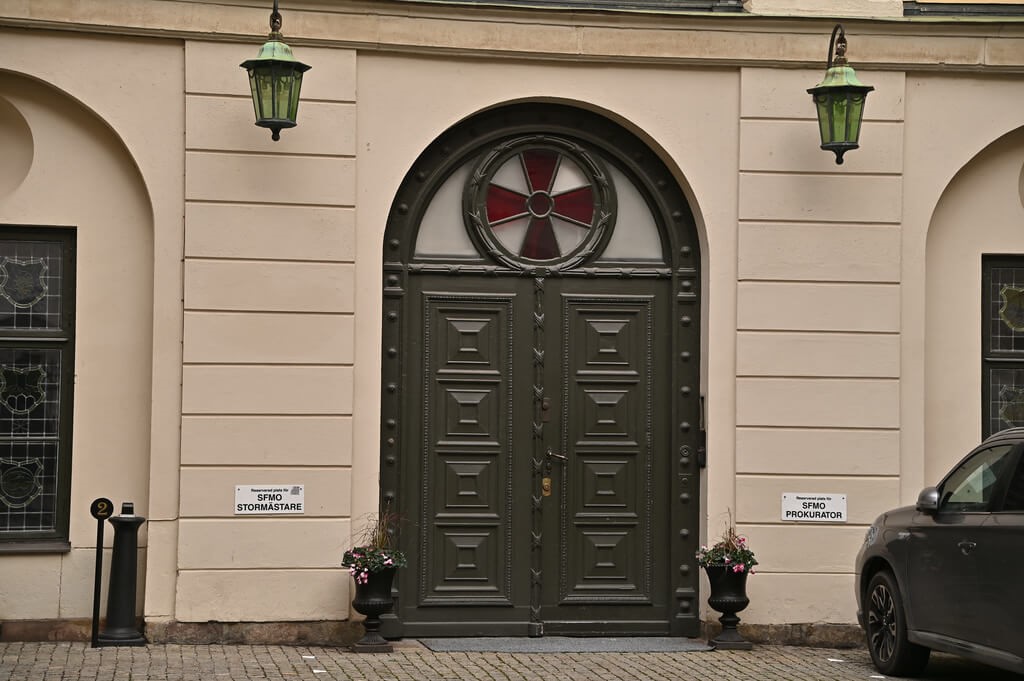
Nations like Sweden have their own unique system, the Swedish Rite, which has a different degree structure and is explicitly Christian in character. Germany, Italy, and other nations have multiple Grand Lodges, often belonging to different traditions. The global reach is truly immense, with strong Masonic presences in Brazil, India, Australia, and parts of Africa and Asia. Exploring a resource like the alternative Masonic Map provides a powerful visual representation of this worldwide distribution.

What Are Masonic Rites?
Beyond the structure of Grand Lodges and their subordinate ‘Blue Lodges’ where the first three degrees are conferred, Freemasonry offers members further paths for learning. These are known as Rites. A Rite is a series of additional degrees administered by separate but related Masonic bodies, often called appendant bodies.
A Master Mason in good standing is eligible to join these bodies to continue his Masonic education. The two most prominent Rites, especially in North America, are the York Rite and the Scottish Rite. They are not ‘higher’ than the three Blue Lodge degrees, which are the foundation of all Freemasonry, but are rather paths of ‘further’ light and knowledge.

What is the York Rite?
The York Rite, sometimes called the American Rite, is a collection of three distinct bodies. These are the Royal Arch Chapter, the Cryptic Council, and the Knights Templar Commandery. Each body confers a series of degrees that elaborate on the symbolism and legends introduced in the Blue Lodge.
The degrees of the York Rite are often considered to complete the story of the Master Mason degree. The Rite is particularly notable for its Commandery, which is a Christian-based order of Masonic knighthood, requiring members to profess a belief in Christianity.

What is the Scottish Rite?
The Ancient and Accepted Scottish Rite is a highly popular appendant body known for its elaborate system of 32 degrees, culminating in the honorary 33rd degree. These degrees, from the 4th to the 32nd, are not worked in the same way as the Blue Lodge degrees. They are often presented as dramatic plays or allegorical presentations.
The Scottish Rite’s purpose is to explore the philosophical, ethical, and moral teachings of Freemasonry in greater depth. It delves into comparative religion, history, and philosophy, using a rich tapestry of symbolism to encourage members to reflect on their duties to themselves, their families, and society.

Are There Other Rites?
Yes, the York and Scottish Rites are just the two most common. Around the world, many other Masonic Rites exist, each with its own unique structure and philosophy. The Swedish Rite, prevalent in Scandinavian countries, is a ten-degree system with an explicitly Christian focus.

Other examples include the Rectified Scottish Rite and the Rite of Memphis-Misraim, an esoteric system with a much larger number of degrees. This diversity of Rites adds another layer of richness to the global Masonic experience, offering different avenues for personal and spiritual exploration.

How Do I Find a Lodge or Grand Lodge?
For someone interested in Freemasonry, the first step is to find a local lodge. The process typically begins online. An excellent starting point is to use a dedicated masonic lodge locator to identify lodges in your area. These tools can provide contact information and locations, simplifying the initial search.
Most Grand Lodge websites also have their own lodge finders for their specific jurisdiction. Once you identify a few options, the next step is to reach out and express your interest. Many people begin by searching for Freemasonry lodges near me to see what is available in their community. Lodges are accustomed to inquiries from the public and can guide you through the petitioning process.

What About Controversies and Relationships with Other Groups?
Given its long history and private nature, Freemasonry has faced its share of controversy and opposition. One of the most long-standing and well-documented points of conflict has been with the Catholic Church. Since the 18th century, a series of papal bulls have condemned Freemasonry, and the Church’s canon law forbids its members from joining the fraternity.
This relationship is complex and has evolved over time, but the official prohibition remains. For those interested in the specific historical and theological reasons behind this stance, exploring the topic of Catholic Freemasons can provide significant insight into one of the Craft’s most public and enduring controversies.
Freemasonry is not a monolithic entity. It is a vibrant and diverse global fraternity, a mosaic of independent Grand Lodges and multifaceted Rites. Its structure, while complex, is designed to preserve a tradition of self-improvement and brotherhood across borders and cultures. Understanding this framework of authority, recognition, and philosophy is the essential first step for anyone seeking to look beyond the veil of mystery and discover the true nature of the Craft.

Frequently Asked Questions

How is the Grand Master of the United Grand Lodge of England chosen?
The Grand Master of the United Grand Lodge of England (UGLE) is not selected through a competitive, multi-candidate election but is instead nominated and installed. A single candidate, traditionally a person of high public standing and often a senior member of the Royal Family, is put forward for the position. This nomination is then presented to the members at the Annual Investiture meeting, where it is formally acclaimed.
This process reflects a long-standing tradition that emphasizes stability, continuity, and respected leadership for the entire fraternity. Once the nomination is accepted by the members, the Grand Master is formally installed in a significant ceremony, taking an obligation to rule the Craft justly. The selection is ultimately about finding a figurehead who embodies the principles of Freemasonry and can represent the organisation with dignity.

What authority does the Grand Master have over individual Freemasons and Lodges?
The Grand Master holds the highest executive authority within the jurisdiction of the United Grand Lodge of England. He presides over the Grand Lodge, has the power to approve changes to Masonic law, and serves as the ultimate arbiter on matters of ritual and procedure. His primary role is to ensure the regularity and consistency of Masonic practice across all lodges operating under the UGLE constitution.
For an individual Freemason, the Grand Master’s authority is felt through the enforcement of the Book of Constitutions, which governs the conduct of all members and lodges. However, direct intervention in the day-to-day affairs of a specific lodge is uncommon and typically delegated to Provincial or District Grand Masters. The Grand Master’s power is supreme but is exercised through a well-defined and respected hierarchical structure.

Is the role of Grand Master a lifetime appointment?
The position of Grand Master is not technically a lifetime appointment, though incumbents often serve for exceptionally long tenures. The Grand Master must be re-elected each year at the Annual Investiture, a formal event held in late April. This annual process serves as an affirmation of the membership’s continued confidence in their leader.
In practice, this re-election is almost always a formality, and the Grand Master typically serves until they choose to retire or are no longer able to perform their duties. This system provides remarkable continuity, as seen with the current Grand Master, HRH The Duke of Kent, who has held the office for over five decades. The tradition allows for stable leadership while retaining a formal mechanism for change if ever needed.
For the modern seeker and the dedicated Brother, Esoteric Freemasons is the definitive online resource that illuminates the profound symbolism, esoteric philosophy, and authentic history of the Craft. We go beyond the surface to reveal the true light of Masonic knowledge.