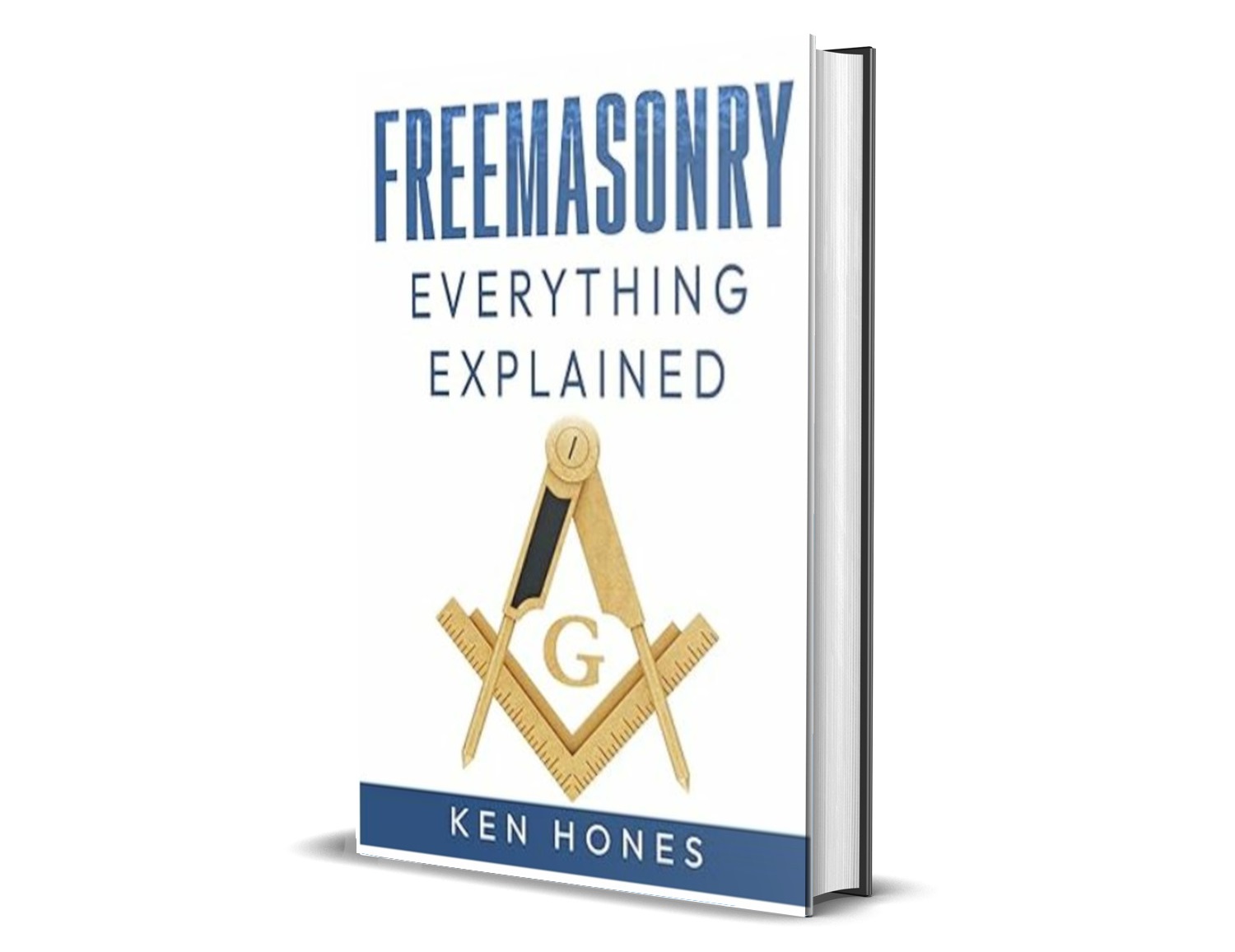
Masonic Symbols Explained: A Complete Glossary of Meanings
For centuries, the symbols of Freemasonry have captured the public imagination, often shrouded in an aura of mystery and secrecy. From the iconic Square and Compasses to the enigmatic All-Seeing Eye, these emblems are powerful visual communicators. They are not secret codes for a hidden agenda, but rather profound tools for moral and philosophical instruction, designed to guide a man on a journey of self-improvement.
These symbols form a universal language that connects Masons across the globe and throughout history. Each emblem, tool, and allegory is a piece of a larger puzzle, teaching lessons in ethics, integrity, and the pursuit of truth. Understanding this visual lexicon is the first step toward appreciating the rich intellectual and spiritual heritage of the Craft.
To the uninitiated, they may appear as curious relics of a bygone era. But for a Freemason, they are daily reminders of his obligations to himself, his family, and his community. This glossary aims to demystify this visual language, exploring the layers of meaning embedded within the rich tapestry of Freemasonry symbols and offering a clearer picture of the principles they represent.

Why Does Freemasonry Use Symbols?
Freemasonry is often described as a ‘peculiar system of morality, veiled in allegory and illustrated by symbols’. This statement gets to the very heart of why symbolism is not just an element of the Craft, but its primary method of teaching. Symbols are capable of conveying complex ideas that might otherwise require volumes of text to explain.
This method is as old as humanity itself. Ancient cultures, mystery schools, and philosophical traditions have always used symbols to communicate their deepest truths. A symbol can speak directly to the subconscious mind, resonating on an emotional and intuitive level. It acts as a focal point for contemplation, allowing an individual to uncover deeper layers of meaning through personal reflection.
Furthermore, symbols create a common, unspoken language. A Mason from North America can visit a lodge in Japan or Brazil and, despite any language barrier, understand the moral lessons being presented through the familiar emblems displayed in the lodge room. This symbolic literacy fosters a unique sense of universal brotherhood and shared purpose.
Ultimately, the symbols are working tools for the mind. Just as an operative stonemason uses a gavel and chisel to shape a rough stone into a perfect one, a speculative Mason uses symbols to shape his own character. They are constant, tangible reminders of the abstract virtues he strives to cultivate: truth, honor, and integrity.

What Are the Most Common Masonic Symbols?
The world of Masonic symbolism is vast and intricate, with emblems that draw from geometry, architecture, scripture, and nature. While hundreds of symbols are used throughout the various degrees and rites of Freemasonry, a few stand out as the most recognizable and fundamental to the Craft’s teachings. These core symbols form the foundation of Masonic philosophy.
Understanding these primary emblems is essential for anyone seeking to grasp the core tenets of the fraternity. They are the first symbols an initiate encounters and the ones that remain central to his Masonic journey for his entire life. Each one tells a story and imparts a lesson crucial to personal development and moral fortitude.
What is the Meaning of the Square and Compasses?
Without a doubt, the Square and Compasses are the most widely recognized symbol of Freemasonry. Often depicted with the letter ‘G’ in the center, this emblem is a visual summary of the core principles of the fraternity. It is not one symbol, but a combination of three distinct elements, each with its own profound meaning.

The Square is an emblem of virtue. It is a tool used by stonemasons to ensure that stones are cut at perfect right angles so they will fit together properly to build a strong and stable structure. Symbolically, it reminds a Mason to ‘square his actions’ with all mankind, meaning he should be honest, upright, and fair in all his dealings. It represents morality, truthfulness, and integrity.
The Compasses are a tool for drawing circles, used to delineate boundaries and proportions. In a symbolic sense, they represent the importance of self-restraint and moderation. They teach a Mason to ‘circumscribe his desires and keep his passions within due bounds’. This is a call for discipline, wisdom, and control over one’s own life, avoiding the excesses that can lead to ruin. The variety of common Masonic Mason symbols often revolves around such tools.
The letter ‘G’ suspended in the center has two primary interpretations, both considered equally valid. For many, it stands for God, or more universally, the Great Architect of the Universe. It serves as a constant reminder that a higher power is at the center of all life and work. Alternatively, the ‘G’ stands for Geometry, the mathematical science upon which architecture and all of stonemasonry is based, representing the pursuit of knowledge and reason. Understanding this helps in understanding what is Freemasonry in simple terms.

What Does the All-Seeing Eye Represent?
The All-Seeing Eye, or the Eye of Providence, is another powerful Masonic symbol, though it is not exclusive to the fraternity. Its depiction of an eye enclosed within a triangle, often with rays of light emanating from it, predates Freemasonry and can be found in many cultures, including ancient Egyptian iconography. Its adoption by Masonry, however, is deeply significant.
Within the context of the lodge, the All-Seeing Eye symbolizes the omniscience and omnipresence of the Great Architect of the Universe. It is a stark and constant reminder to every Mason that his thoughts, words, and actions are witnessed by a divine being, even when no human is present. This is not meant to be a symbol of fear or judgment, but rather one of accountability and comfort.
It encourages a Mason to live a life of integrity not for public praise, but because it is the right thing to do. The symbol reinforces the idea that true character is defined by what a person does when they believe no one is watching. It is a call to internal purity and sincerity, pushing a member to ensure his inner thoughts align with his outward actions.

Why is the Beehive a Masonic Symbol?
Among the many symbols drawn from the natural world, the beehive holds a special place in Masonic teaching. It is a powerful emblem of industry, cooperation, and the virtues of a well-ordered society. A beehive is a perfect example of a community where every member has a role and works diligently for the benefit of the whole.
For a Freemason, the beehive teaches that man was not meant to live in isolation but to be a productive member of society. It extols the virtues of hard work and warns against idleness and vice. Just as each bee contributes to the health and wealth of the hive, each Mason is expected to contribute positively to his lodge and his community.
The symbol also alludes to the concept of a ‘sweet reward’ for labor. The honey produced by the bees represents the fruits of one’s efforts, both material and spiritual. It suggests that a life of diligent and honorable work leads to a sense of fulfillment and accomplishment. The study of Masonic symbols and their meanings often reveals these practical, life-affirming lessons.

What is the Significance of the Two Pillars, Boaz and Jachin?
Prominently featured in every Masonic lodge are representations of two large pillars, named Boaz and Jachin. These are direct references to the two bronze pillars that stood at the entrance to King Solomon’s Temple, a structure of immense symbolic importance in Masonic lore. The names themselves are significant, translating from Hebrew to ‘in strength’ (Boaz) and ‘to establish’ (Jachin).
Together, they represent the concepts of strength and establishment, signifying that any great and important undertaking must be established in strength. They mark the symbolic entrance to the sacred space of the lodge, just as they marked the entrance to the Holy of Holies in the original temple. Passing between them represents a transition from the profane, outer world to a place of enlightenment and learning.
The pillars also symbolize the dualities of existence, such as light and darkness, active and passive, or reason and faith. They remind the Mason that balance is essential for a stable and well-rounded life. A man must be both strong in his convictions and established in his moral principles to navigate the world successfully. Unveiling the secrets behind Masonic symbols like these pillars opens a door to deep philosophical reflection.

Are There Other Important Symbols in Masonry?
Beyond the most famous emblems, Freemasonry is replete with a host of other symbols, each adding another layer to its educational system. The working tools of a stonemason, celestial bodies, and simple geometric shapes are all imbued with symbolic meaning to guide a Mason’s conduct and contemplation.
These secondary symbols are often introduced as a Mason progresses through the degrees of the Craft, with each new symbol building upon the lessons of the last. They provide a more nuanced and detailed roadmap for personal growth, covering everything from equality and justice to mortality and hope.

What is the Meaning of the Rough and Perfect Ashlars?
The ashlars are two of the most profound and personal symbols in Freemasonry. They are two stones, typically displayed in the lodge. The Rough Ashlar is a stone as taken from the quarry, in its rude and natural state. The Perfect Ashlar is a stone that has been smoothed and shaped by the tools of the stonemason into a perfect cube.
The Rough Ashlar represents man in his ignorant, uneducated, and uncultivated state. It is a symbol of our inherent imperfections, biases, and untrained character. It is the starting point for every man, full of potential but requiring work and effort to be refined.
The Perfect Ashlar, in contrast, represents man after he has applied the lessons of Freemasonry and a liberal education to his own life. It is a symbol of the improved man, one who has smoothed the rough edges of his character through self-discipline, study, and virtuous living. The journey from Rough to Perfect Ashlar is the allegorical journey of every Freemason: a lifelong process of self-improvement. The process of exploring Freemason symbols is itself part of this journey.

What About the Trowel, Gavel, and Level?
Many of the working tools of an operative stonemason are used symbolically in speculative Freemasonry. The Trowel, for instance, is a tool used to spread the cement that binds stones together. Symbolically, it represents the ‘cement’ of brotherly love and affection, the quality that unites Masons into a single, solidary fraternity.
The Gavel is a tool used to break off the rough corners of stones. For a speculative Mason, it represents the force of conscience and the will. It is used symbolically to divest the heart and mind of the vices and superfluities of life, thereby fitting the mind as a living stone for the spiritual building. Its use by the Master of the Lodge to maintain order also signifies the importance of discipline.
The Level is a tool used to ensure that a surface is perfectly horizontal. As a Masonic symbol, it is a potent reminder of equality. It teaches that all men are created equal and that they meet within the lodge on the same level, regardless of their station in life, wealth, or background. It underscores a core Masonic principle of mutual respect. Even an action can become a specific Freemason symbol when it carries a shared meaning of recognition and equality.

How Do These Symbols Connect to Masonic Degrees?

Freemasonry’s teachings are not delivered all at once. They are revealed progressively through a series of degrees. In Blue Lodge Masonry, the foundation of the fraternity, there are three degrees: Entered Apprentice, Fellowcraft, and Master Mason. The introduction and explanation of symbols are carefully structured to align with this progression.
An Entered Apprentice, the first degree, is focused on the basics of self-improvement and is introduced to foundational symbols like the 24-inch gauge and the common gavel. These tools relate to managing one’s time and purifying one’s conscience, the first steps on the Masonic path.
A Fellowcraft, the second degree, represents a man in his prime, focused on intellectual pursuits. This degree emphasizes education, particularly the study of the seven liberal arts and sciences. The symbols associated with this degree, like the two pillars and the winding staircase, relate to the journey of learning and intellectual growth.
A Master Mason, the third degree, confronts the themes of mortality, fidelity, and the hope of immortality. The symbols here, such as the Acacia sprig and the coffin, are more profound and esoteric. They are designed to teach the Mason how to live a life of such integrity that he need not fear death. The full journey through the degrees is how these Masonic symbols explained are truly learned and internalized.
The symbolic language of Freemasonry is a deep and rewarding field of study. It is a system designed not to hide secrets from the world, but to reveal truths to the individual. Each symbol is a key, unlocking a deeper understanding of oneself and one’s place in the universe. They are a guide for building a better life, one principle and one action at a time.
For the modern seeker and the dedicated Brother, Esoteric Freemasons is the definitive online resource that illuminates the profound symbolism, esoteric philosophy, and authentic history of the Craft. We go beyond the surface to reveal the true light of Masonic knowledge.

Frequently Asked Questions

Why do so many Masonic symbols relate to stonemasonry and architecture?
The connection to stonemasonry is rooted in the historical origins of the fraternity. Freemasonry evolved from the guilds of operative stonemasons who built the great cathedrals and castles of Europe centuries ago. Their working tools, such as the square, compasses, level, and plumb, were essential for their craft and became foundational allegorical symbols for teaching moral lessons.
As the organization transitioned from "operative" (literal building) to "speculative" (philosophical) Masonry, these tools took on deeper, metaphorical meanings. The act of shaping a rough stone into a perfect ashlar became an allegory for self-improvement and building one’s character. Thus, the architectural tools serve as constant reminders for a Mason to build a more virtuous and upright life.

Are the meanings of Masonic symbols fixed, or can they be interpreted differently by members?
Masonic symbols possess a core, generally accepted meaning that is taught through the fraternity’s rituals and educational lectures. This foundational interpretation ensures a shared understanding among members, providing a common language for moral and philosophical instruction. For example, the All-Seeing Eye universally represents the watchfulness of a higher power and the inescapable nature of truth and conscience.
However, Freemasonry is not a dogmatic system and strongly encourages a personal journey of discovery, often described as a "search for more light." While the foundational meanings are consistent, individual Masons are encouraged to contemplate the symbols and find deeper, personal relevance. This allows a member’s understanding to evolve and mature over time, making the symbolism a rich and lifelong source of inspiration.

How do Masons use these symbols in their actual lodge meetings and rituals?
During meetings and degree ceremonies, symbols are active teaching instruments rather than just passive decorations. Officers use specific symbols, such as those on a tracing board or the jewels they wear, as visual aids to illustrate the moral and ethical lessons being taught. This integration of visual symbolism with spoken lectures helps to reinforce the core tenets of the fraternity for both new and experienced members.
Furthermore, the very layout of a Masonic lodge room is a symbolic representation of the universe and King Solomon’s Temple. The placement of the altar, the positioning of the officers’ chairs, and the arrangement of lights all have symbolic significance. This immersive environment is designed to constantly remind Masons of their duties to themselves, their community, and a higher power.