What is Freemasonry? A Simple Guide for the Curious
Have you ever seen a car with a strange symbol, the square and compasses, and wondered what it meant? Perhaps you’ve heard whispers of a secret society, a brotherhood of powerful men who have quietly shaped history. For centuries, Freemasonry has been a subject of intense curiosity, speculation, and mystery. It exists in a space between a private club and a public legend, often misunderstood and easily misrepresented.
This is not an organization that advertises. It doesn’t recruit in the open or publish its membership lists. This very privacy fuels the imagination, leading to wild theories and endless questions. What really is this ancient and honorable fraternity? Is it a religion? A path to power? Or something else entirely?
The truth is both simpler and more profound than most people imagine. This article will pull back the curtain, not to expose sacred secrets, but to explain the purpose, structure, and philosophy of Freemasonry in plain, simple terms. We will explore what it means to be a Mason, what happens inside their lodges, and why this centuries-old tradition continues to attract men seeking to better themselves and the world around them.

What is Freemasonry at its Core?
At its heart, Freemasonry is the world’s oldest and largest fraternity. It is a system of morality, veiled in allegory and illustrated by symbols, designed to take good men and help them become better men, not for their own sake, but for the benefit of their families, communities, and society as a whole.
Think of it as a personal development journey. It uses the tools and traditions of ancient stonemasons as a symbolic blueprint for building a more virtuous and meaningful life. It is not a religion, but it is deeply spiritual. It is not a charity, though its members are committed to charitable work. It is, above all, a brotherhood of men bound by a shared commitment to self-improvement, integrity, and service.

Is Freemasonry a secret society?
No, Freemasonry is more accurately described as a society with secrets, not a secret society. A truly secret society is one whose very existence is unknown to the public. Freemasonry, by contrast, is openly acknowledged, with its lodge buildings often clearly marked and its members free to identify themselves if they so choose.
The "secrets" of Freemasonry pertain to its traditional modes of recognition, like specific handshakes and passwords, and the symbolic details of its private degree ceremonies. These traditions serve to bind the members together and have been passed down for centuries. They are not, as some conspiracies suggest, nefarious plans for world domination, but rather historical customs that protect the privacy of the lodge and its ceremonies.

What is the main purpose of Freemasonry?
The primary purpose of Freemasonry is to make good men better. This is its foundational principle and its ultimate goal. It provides its members with a structured system of moral and ethical instruction, encouraging them to be better husbands, fathers, citizens, and friends.
This is achieved through a series of allegorical plays or degrees, which use the symbolism of stonemasonry to impart lessons in morality, ethics, and philosophy. The fraternity seeks to cultivate virtues like truth, honor, integrity, and charity in its members, giving them the tools to build their character just as a stonemason would build a cathedral, stone by stone.

Is Freemasonry a religion?
Freemasonry is not a religion, and it does not seek to replace or compete with any faith. It is a fraternity that requires each of its members to profess a belief in a Supreme Being, often referred to in Masonic ritual as the Grand Architect of the Universe. This requirement is a cornerstone of the institution.

This non-denominational approach allows men of different faiths, a Christian, a Jew, a Muslim, and others, to come together in fellowship without compromising their individual religious beliefs. Discussions of specific religious dogma, like partisan politics, are strictly forbidden within a Masonic lodge to preserve this harmony. Freemasonry is a place where faith is a prerequisite, but the specific path to that faith is left to the individual’s conscience.

Who are the Freemasons?
The members of Freemasonry are ordinary men from every walk of life. They are your neighbors, coworkers, and friends. They are plumbers and professors, artists and accountants, mechanics and military servicemen. The fraternity is a great leveler, where a man’s station in life, his wealth, or his background holds no weight.
Inside the lodge, all members meet as equals, as Brothers. This diversity is one of Freemasonry’s greatest strengths. It brings together men who might otherwise never have met, creating strong bonds of friendship and mutual respect that transcend social, economic, and professional divides. They are united not by what they do for a living, but by their shared commitment to the fraternity’s principles.

What kind of men become Freemasons?
Men who are drawn to Freemasonry typically share a few common traits. They are often seekers, men who believe there is more to life than the daily grind and who are looking for a deeper sense of purpose and connection. They value integrity, have a desire for self-improvement, and feel a sense of responsibility to their community.
To be eligible, a candidate must be a man of good character, of a certain minimum age (usually 18 or 21), and believe in a Supreme Being. He joins of his own free will, motivated by a favorable opinion of the institution and a desire to be of service to his fellow man. He is not joining for business connections or personal gain, but for what he can give, not what he can get.

How does someone become a Freemason?
The traditional path to becoming a Freemason is summed up in the phrase, "to be one, ask one." A man must initiate the process himself by expressing his interest to a Mason he knows. Freemasonry does not recruit members, as joining must be an act of free will and accord.
Once a man petitions a lodge, an investigation committee is formed. This committee meets with the candidate and his family to answer their questions, explain the commitments of membership, and ascertain that he is of good character and suitable for the fraternity. Following a favorable report, the petition is presented to the lodge, where the members vote by secret ballot. If the ballot is successful, the candidate is accepted to receive the degrees of Freemasonry.

Are women allowed to be Freemasons?
Traditional or "mainstream" Freemasonry, as recognized by the United Grand Lodge of England and the majority of Grand Lodges in the United States, is a fraternity exclusively for men. This practice is rooted in the historical origins of the craft, which grew out of the male-dominated stonemasons’ guilds of the Middle Ages.
However, there are other Masonic bodies that do admit women. These are often referred to as "co-masonic" or "women’s Freemasonry." While these organizations operate on similar principles and use similar rituals, they are not formally recognized by the mainstream male-only Grand Lodges. So, while women can participate in a form of Masonry, they cannot join a lodge that falls under the jurisdiction of these traditional Grand Lodges.

What Happens Inside a Masonic Lodge?
A Masonic lodge is both a group of Freemasons who meet together and the physical room or building where they hold their meetings. It is the fundamental unit of Freemasonry. Each lodge is chartered by a Grand Lodge, which is the governing body for Freemasonry within a specific geographical area, like a state or a country.

The lodge room itself is typically arranged in a symbolic representation of King Solomon’s Temple. It is considered a sacred space, a place for Masons to practice their rituals, conduct their business, and engage in fellowship. For its members, the lodge is a sanctuary from the outside world, a place to focus on their moral and spiritual development.

What are Masonic meetings like?
Masonic meetings, often called "stated communications," are generally divided into two parts. The first part is the business of the lodge. This is much like any other club or organization meeting, involving the reading of minutes from the previous meeting, voting on petitions, planning charitable events, and paying the bills.
The second part, which is the heart of Freemasonry, is the ritual and degree work. This is when the lodge confers one of the three degrees of Masonry upon a candidate or provides educational presentations on Masonic history, philosophy, or symbolism. After the meeting is formally closed, members often gather for a meal and fellowship, which is an equally important part of the Masonic experience.

What are the Masonic degrees?
The core of Freemasonry is a system of three symbolic degrees, known as the "Blue Lodge" or "Craft" degrees. These are the Entered Apprentice, the Fellowcraft, and the Master Mason. Each degree is a formal, ritualistic ceremony that uses allegory and symbolism to teach important moral lessons.
The Entered Apprentice degree is a candidate’s initiation, representing birth and the beginning of his quest for light or knowledge. The Fellowcraft degree represents the period of manhood and learning, emphasizing the importance of education and reason. The Master Mason degree, the highest degree in the Blue Lodge, confronts the themes of aging, death, and immortality, teaching a lesson of faith and fidelity. By completing these three degrees, a man becomes a full member of the fraternity.

What Do Masonic Symbols Mean?
Masonic symbols are at the very core of its teaching method. They are visual aids and tools for moral instruction. Instead of simply telling a man to be good, Freemasonry uses symbols to help him explore for himself what goodness means and how to build it into his own character.
These symbols are not secrets in themselves, as many are visible in public. The true "secret" is the personal interpretation and understanding that each Mason derives from them on his journey of self-discovery. The symbols are a universal language that can convey complex philosophical ideas in a simple, memorable form, transcending cultural and linguistic barriers.

Why does Freemasonry use symbols?
Freemasonry uses symbols because they are a powerful and timeless method of teaching. The fraternity evolved from the guilds of operative stonemasons who built the great cathedrals of Europe. These craftsmen used physical tools like the square, level, and plumb rule to create perfect structures. Speculative Freemasonry adopted these tools as symbols for building a better life.
By using these familiar tools in an allegorical way, Freemasonry makes abstract moral concepts tangible and easier to understand. A symbol can contain layers of meaning, allowing a Mason to return to it again and again throughout his life, each time discovering a new and deeper insight. It is a method that engages the mind and the heart, not just the intellect.

What is the meaning of the Square and Compasses?
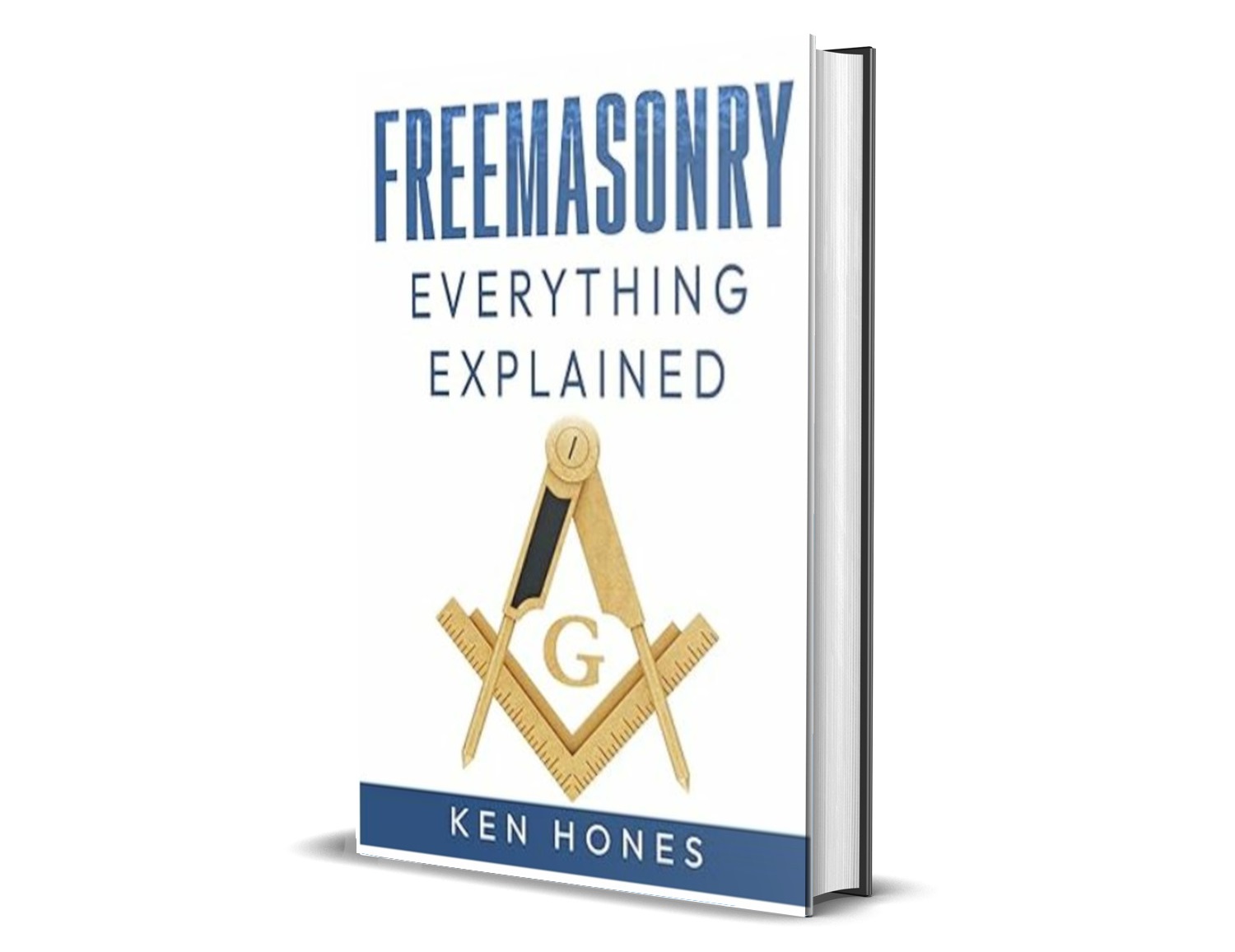
The Square and Compasses is the most universally recognized symbol of Freemasonry. It is a visual representation of the fraternity’s core philosophy. Each tool has a distinct symbolic meaning that provides a moral guide for Masons.

The square is a symbol of morality, truthfulness, and honesty. It is used to test the accuracy of right angles and ensure that a stone is "square" and true. For a Freemason, it is a reminder to "square his actions" with the square of virtue. The compasses are a symbol of self-restraint and circumspection. Just as they are used to draw a circle, they remind a Mason to "circumscribe his desires and keep his passions within due bounds." Together, they represent the balance between our moral duties to others and our personal obligations to ourselves.

What other common symbols are used?
Beyond the Square and Compasses, Freemasonry employs a rich tapestry of other symbols. The letter ‘G’ often seen in the center of the emblem typically represents both God, the Grand Architect of the Universe, and Geometry, the basis of the stonemason’s art and a metaphor for the divine order of creation.
The All-Seeing Eye, a symbol of a watchful and benevolent deity, reminds a Mason that his thoughts and actions are always observed by his Creator. The plumb rule, a tool for determining a true vertical line, symbolizes uprightness of character. The level, a tool for ensuring a horizontal surface, symbolizes equality and reminds Masons that all men are equal before God. Each symbol serves as a constant, silent reminder of the principles a Mason strives to live by.

What is the History of Freemasonry?
The exact origins of Freemasonry are shrouded in the mists of time, a subject of much scholarly debate. The most accepted theory traces its roots to the guilds of operative stonemasons who built the castles and cathedrals of the Middle Ages. These guilds had secrets of their trade, modes of recognition, and a strong sense of fraternity.
Over time, during the 16th and 17th centuries, these operative lodges began accepting men who were not stonemasons as "speculative" or "accepted" members. These new members were gentlemen and scholars who were more interested in the moral and philosophical lessons that could be drawn from the stonemasons’ tools and traditions than in the physical craft of building. This transition marked the shift from operative to speculative Masonry.

Where did Freemasonry begin?
Modern, speculative Freemasonry as we know it today took its organized form on June 24, 1717. On that day, four existing lodges in London, England, met at the Goose and Gridiron Alehouse and established the first Grand Lodge of England. This event is widely considered the birth of the formal Masonic institution.

The creation of a Grand Lodge provided a central governing body that could charter new lodges and standardize the rituals and regulations of the Craft. This organizational structure proved incredibly successful and became the model for the spread of Freemasonry across the globe. It transformed a loose collection of independent lodges into a cohesive and enduring fraternity.

How did Freemasonry spread around the world?
Freemasonry spread rapidly from England throughout the 18th century, following the pathways of the British Empire, trade, and military expansion. Colonists, merchants, and soldiers who were Masons established lodges in new territories, from the American colonies and India to Africa and the Caribbean.
Its principles of religious tolerance, rational thought, and brotherhood resonated with the spirit of the Enlightenment. The fraternity provided a unique space where men of influence and ideas could meet on equal footing, regardless of their station or creed. This appeal helped it take root and flourish in diverse cultures around the world, making it a truly global phenomenon.

Who were some famous Freemasons?
The roles of Freemasonry are filled with men who have made significant contributions to history, science, arts, and politics. In the United States, many of the Founding Fathers were Masons, including George Washington, Benjamin Franklin, Paul Revere, and John Hancock. Their belief in liberty, equality, and individual rights aligned closely with Masonic principles.
Across the Atlantic, prominent members included Sir Winston Churchill, writers like Rudyard Kipling and Oscar Wilde, and the composer Wolfgang Amadeus Mozart, whose opera "The Magic Flute" is filled with Masonic themes and symbolism. These men, and countless others, were drawn to the fraternity not for worldly advancement, but for the moral instruction and genuine brotherhood it provided.

What are the Main Criticisms of Freemasonry?
For an organization dedicated to morality, Freemasonry has faced significant criticism and opposition throughout its history. This opposition often stems from a misunderstanding of its private nature, its use of symbolism, and its relationship with religion.
Being a private organization that uses oaths and secret modes of recognition has naturally bred suspicion. Critics have often filled the vacuum of knowledge with their own fears and interpretations, leading to accusations of elitism, political manipulation, and anti-religious sentiment. While most of these criticisms are unfounded, they have persisted for centuries.

Why have some religious groups opposed Freemasonry?
Some religious institutions, most notably the Catholic Church, have historically opposed Freemasonry. This opposition is often based on several concerns. The use of oaths or obligations taken in the degree rituals has been seen as problematic, as has the fraternity’s principle of religious indifferentism, the idea that men of different faiths can meet as equals without asserting one religion’s supremacy.
Critics have sometimes misinterpreted Masonic symbolism as being pagan or occult in nature. The deistic and non-denominational language used to refer to a Supreme Being, like "Grand Architect of the Universe," has been viewed by some as an attempt to create a new, universalist religion that undermines established faiths. For Freemasons, however, these practices are intended to promote harmony and respect among men of different beliefs, not to supplant them.

What about the conspiracy theories?
Freemasonry has long been a favorite subject of conspiracy theorists. These theories often paint the fraternity as a shadowy cabal secretly controlling world governments, financial systems, and historical events. The idea of a "New World Order" is frequently and incorrectly linked to the Masons.
In reality, Freemasonry is a decentralized organization with no international headquarters or single leader. A Grand Lodge in Ohio has no authority over a Grand Lodge in France or Japan. Furthermore, the strict prohibition of discussing politics within the lodge makes coordinated political action virtually impossible. The fraternity’s focus is on individual moral development, not global domination.
Frequently Asked Questions

How much does it cost to be a Freemason?
The cost of being a Freemason varies significantly from one lodge to another. There is typically a one-time initiation fee for the three degrees, and then annual dues to the lodge. These fees cover the operating costs of the lodge building, contributions to the Grand Lodge, and charitable activities. The costs are generally quite modest and are not intended to be a barrier to men of any economic background.

Does Freemasonry have a political agenda?
No, Freemasonry is strictly apolitical. One of the most important rules in any Masonic lodge is that the discussion of partisan politics and sectarian religion is absolutely forbidden. This rule is designed to maintain the harmony of the lodge and ensure that it remains a place where men of all political persuasions and religious beliefs can meet in peace and brotherhood.
What is the difference between Freemasonry and groups like the Shriners or Scottish Rite?
Groups like the Shriners, the Scottish Rite, and the York Rite are known as appendant or concordant bodies. They are part of the larger Masonic family, but they are separate organizations that a man can only join after he has become a Master Mason in a Blue Lodge. The Blue Lodge is the foundation of all Freemasonry. These other bodies offer further opportunities for Masonic education, fellowship, and charity, each with its own unique focus and rituals.
This guide has opened the door. If you feel the pull to understand the deeper meanings behind the symbols, to explore the rich philosophy that has guided great men for centuries, then your journey has just begun. Esoteric Freemasons is your compass. We are dedicated to illuminating the profound wisdom of the Craft for the modern seeker and the dedicated Brother. Step beyond the surface and discover the true light of Masonic knowledge with us.