Unveiling the Craft: A Modern Guide to UK Freemasonry
What is this ancient fraternity that meets in plain sight, its symbols adorning town centres across the United Kingdom? It is a world often misunderstood, wrapped in rumour and speculation. Yet, for hundreds of thousands of men in the UK, it is a source of friendship, self-improvement, and charitable purpose. This is Freemasonry, a tradition with deep roots in British history, now navigating the complexities of the 21st century.
Forget the shadowy cabals of fiction. The reality of Freemasonry in the UK is both more ordinary and more profound than the myths suggest. It is a journey, a system of learning, and a community. This guide will part the veil, exploring the genuine history, structure, and meaning of the Craft in Britain today, answering the questions you may have been hesitant to ask.

What is Freemasonry, really?
At its core, Freemasonry is one of the world’s oldest and largest non-religious, non-political, fraternal and charitable organisations. It is a society of men concerned with moral and spiritual values, taught through a unique system of allegorical plays and symbolic language. The fraternity is founded upon three great principles: Brotherly Love, Relief, and Truth.
Brotherly Love refers to the care and respect members show for each other and the wider community. Relief, known today as charity, is a cornerstone of the institution, with Freemasons being one of the UK’s largest charitable givers. Truth represents the lifelong pursuit of knowledge and self-improvement, a quest to become a better person.
Freemasonry describes itself as a "peculiar system of morality, veiled in allegory and illustrated by symbols". This means it uses stories, ceremonies, and symbols, many borrowed from the craft of ancient stonemasonry, to teach valuable life lessons. It provides a framework for its members to develop their character, strengthen their integrity, and contribute positively to society.
It is not a religion, nor is it a substitute for one. Freemasonry requires its members to believe in a Supreme Being, but it does not tell them how to conceive of that being. Discussions of specific religions, like discussions of politics, are strictly forbidden in Lodge meetings to preserve harmony among men from all walks of life and faiths.

Where did Freemasonry begin in the UK?
Modern, organised Freemasonry as we know it today began in London on the 24th of June 1717. On that day, four existing London Lodges gathered at the Goose and Gridiron Alehouse in St Paul’s Churchyard to form the first Grand Lodge of England. This pivotal event marked the transition from a collection of independent lodges to a structured, governed body.
This new Grand Lodge created a central authority that could issue warrants for new Lodges, standardise rituals, and manage the affairs of the Craft. It was an act of organisation that propelled Freemasonry’s growth, not just across Britain, but throughout the world. The United Grand Lodge of England (UGLE), its direct successor, remains the governing body for the majority of Freemasons in England, Wales, the Channel Islands, and the Isle of Man.

How did it exist before 1717?
Before the formation of the Grand Lodge, Freemasonry existed in a different form, known as "operative" masonry. This refers to the actual working stonemasons who built the magnificent cathedrals and castles of the medieval period. These craftsmen formed guilds or "lodges" to protect the secrets of their trade and to provide mutual aid and support.
These lodges were not just trade unions, they had initiation ceremonies, secret modes of recognition, and a strong sense of fraternity. As the era of great cathedral building waned, these operative lodges began to accept men who were not stonemasons. These "accepted" or "speculative" Masons were gentlemen and scholars, attracted by the moral philosophy and fellowship of the lodges.

What changed with the Grand Lodge of England?

The formation of the Grand Lodge in 1717 marked the ascendancy of "speculative" Masonry over "operative" Masonry. The focus shifted decisively from the practical art of building with stone to the philosophical art of building a better character. The tools of the stonemason, like the square, compasses, and gavel, were retained but reinterpreted as symbolic instruments for moral self-improvement.
This new structure provided the stability and framework for rapid expansion. The Grand Lodge became a clearinghouse for Masonic thought, ritual, and governance. It was during this 18th-century period, the Age of Enlightenment, that Freemasonry truly flourished, attracting men of science, art, and philosophy who were drawn to its ideals of reason, tolerance, and brotherhood.

Are there different types of Freemasonry in the UK?
Yes, while they all share the same fundamental principles, there are distinct and sovereign Grand Lodges for each of the home nations. The United Grand Lodge of England (UGLE) is the largest and oldest, governing Freemasonry in England and Wales. The Grand Lodge of Scotland and the Grand Lodge of Ireland operate independently, with their own unique histories, traditions, and minor variations in ritual.
These three "home Grand Lodges" recognise each other as regular and are in full amity, meaning members can visit each other’s Lodges. While the core tenets are identical, a discerning visitor might notice subtle differences in ceremonies, regalia, and lodge customs, reflecting the distinct cultural heritage of each nation.

What happens inside a Masonic Lodge meeting?
A typical Lodge meeting is a structured affair, usually split into three parts. It begins with the formal business of the Lodge, which includes reading minutes, discussing finances, planning charity events, and voting on proposals, much like any other club or society.
The second part, and the heart of the meeting, involves the ceremonial aspect of Freemasonry. This is where candidates are admitted into the fraternity or where existing members progress through the Masonic "degrees". These ceremonies are structured as one-act plays, learned by heart and performed by the Lodge members, using allegory and symbolism to impart moral lessons.
Finally, most Lodge meetings conclude with a social gathering, often a dinner known as the "Festive Board". This is a time for members to relax, enjoy each other’s company, and strengthen the bonds of friendship in a more informal setting. It is here that the true sense of camaraderie and fellowship is often most keenly felt.

What is the purpose of Masonic ritual?
The purpose of Masonic ritual is to teach the principles of the fraternity in a memorable and impactful way. Humans learn and remember through stories and participation, and the rituals are essentially allegorical plays in which the candidate is the main character. By experiencing the ceremony, the lessons are impressed upon the mind more deeply than if they were simply read from a book.
Each part of the ritual, every symbol shown, and every word spoken is designed to encourage a member to reflect on his own character and his relationship with others. The ceremonies guide a member on a symbolic journey of self-discovery and moral development, providing a shared experience that connects him with every other Freemason around the world.

What do the different “degrees” mean?
Freemasonry’s core teachings are delivered through a series of three ceremonies known as "degrees". These are the Entered Apprentice, the Fellow Craft, and the Master Mason. Each degree represents a stage in a man’s personal and Masonic development, using the symbolism of a stonemason’s career path from apprentice to master craftsman.

The first degree, Entered Apprentice, focuses on beginnings and the importance of a moral foundation. The second degree, Fellow Craft, encourages the pursuit of knowledge and the development of one’s intellectual faculties. The third degree, Master Mason, contemplates the final stages of life and teaches powerful lessons about integrity, fidelity, and mortality. Upon completing the third degree, a man becomes a full member of the fraternity.

What is the “Festive Board”?
The Festive Board is the formal dinner that follows most Lodge meetings. It is a crucial part of the Masonic experience, a tradition that fosters fellowship and reinforces the bonds of brotherhood in a relaxed and convivial atmosphere. It is far more than just a meal, it is a structured event with its own set of customs and toasts.
Toasts are proposed to the Monarch, to the Grand Master, and to the well-being of the fraternity and its visitors. The Festive Board is where friendships are forged and strengthened, where members from all different backgrounds can converse as equals. It is the social glue that binds the formal ceremony of the Lodge room to the everyday lives of its members.

Who can become a Freemason in the UK?
The requirements for becoming a Freemason in the UK are straightforward and have remained largely unchanged for centuries. To be considered, a candidate must be a man, typically at least 18 years old (though some Lodges and UGLE require 21), and be of good character, with no criminal record.
Crucially, he must also profess a belief in a Supreme Being. His particular religion is not a concern, only that he has a faith. Finally, he must be joining of his own free will, not for personal gain or advancement. Freemasonry is a journey of self-improvement, not a business networking club.

Why is belief in a Supreme Being required?
The requirement of a belief in a Supreme Being is a foundational principle of Freemasonry. It is not about religious dogma, but about establishing a common ground of reverence and moral accountability. This belief provides a framework for the lessons on morality, truth, and the nature of existence that are central to the Masonic system.
By requiring this belief, Freemasonry ensures that every member acknowledges a power greater than himself, which helps to foster humility and a sense of shared purpose. It allows men of different faiths, a Christian, a Jew, a Muslim, a Sikh, a Hindu, to meet together in harmony, as the specific nature of their belief is considered a private matter and is never discussed in the Lodge.

Why is it traditionally for men only?
Traditional Freemasonry, as governed by bodies like UGLE, remains a single-sex organisation for men, a structure that dates back to the operative stonemason guilds which were exclusively male. This is not seen as an act of exclusion, but as a preservation of a long-standing tradition. Many members feel the single-sex environment fosters a unique type of open and supportive fellowship.
This is similar to many other single-sex organisations that exist for both men and women, such as the Women’s Institute or men’s sporting clubs. The focus is on providing a particular kind of supportive environment. UGLE maintains that it is a men’s fraternity and has no plans to change this, but it does acknowledge the existence of women’s Freemasonry.

What about Freemasonry for women in the UK?
Yes, Freemasonry for women exists and thrives in the United Kingdom. There are two main Grand Lodges for female Freemasons: The Honourable Fraternity of Ancient Freemasons (HFAF), which was founded in 1913, and The Order of Women Freemasons (OWF), founded in 1908.

These organisations are run by women for women. They practice the same core principles, rituals, and symbolism as their male counterparts, offering a parallel path of moral and spiritual development. While the men’s and women’s Grand Lodges do not formally meet together in a Lodge room, UGLE has acknowledged them as regular in practice and has stated that the two fraternities have a relationship of mutual respect and support.

What are the symbols of Freemasonry?
Masonic symbols are primarily the working tools of a medieval stonemason, repurposed to teach moral and philosophical lessons. They are visual aids for the allegorical system of Freemasonry, providing a universal language that transcends cultural and religious differences. They are not objects of worship, but prompts for contemplation.
These symbols are introduced and explained during the degree ceremonies. Each has a specific meaning related to character building, ethics, or the pursuit of knowledge. By constantly seeing these symbols, a Freemason is reminded of the lessons he has learned and the commitments he has made.

What do the Square and Compasses represent?
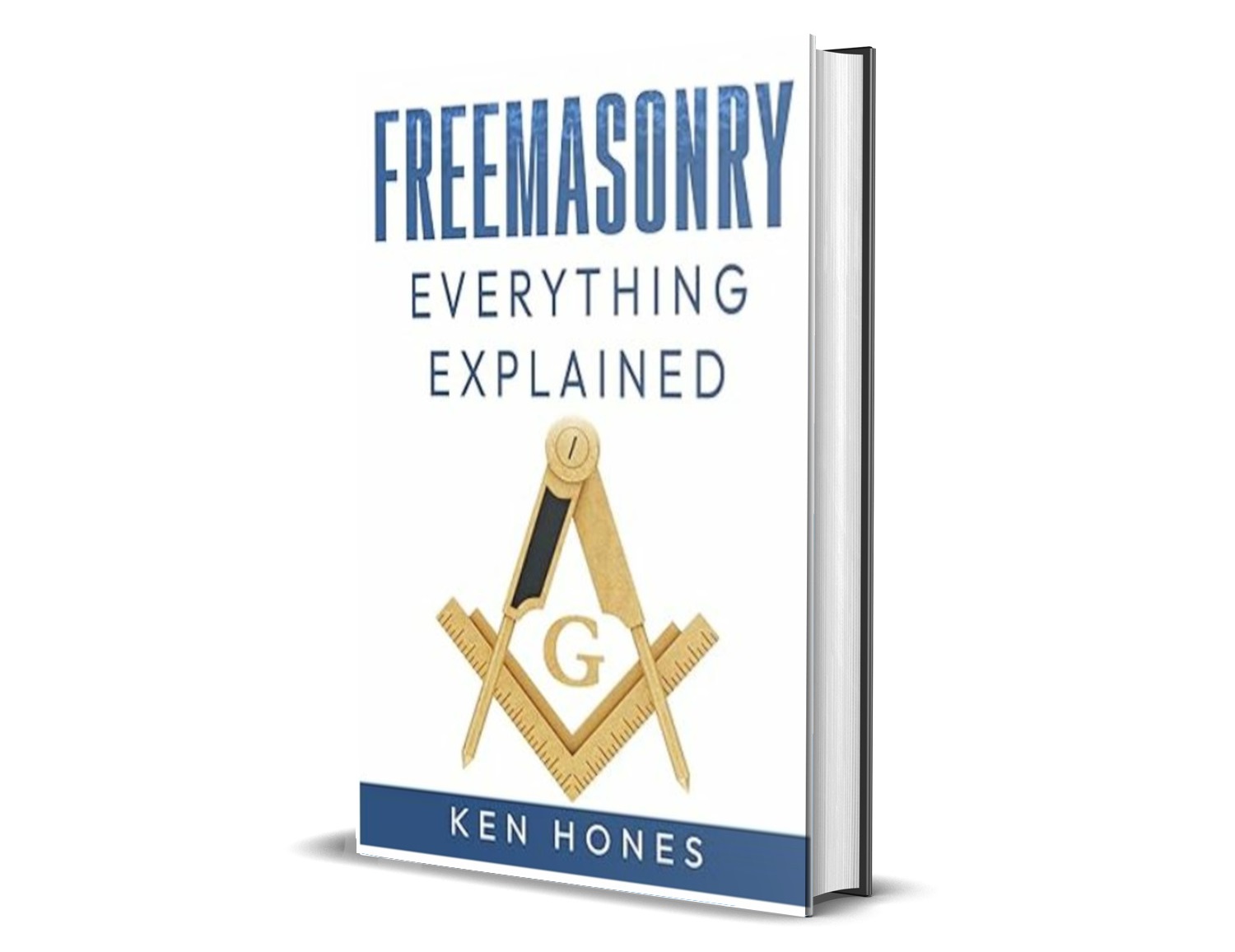
The Square and Compasses are the most universally recognised symbol of Freemasonry. Together, they form an emblem that encapsulates the core philosophy of the Craft. They are architect’s tools, used for creating perfect lines and circles, and their symbolic meaning is directly related to this function.
The Square is a symbol of morality, truthfulness, and honesty. It reminds a Freemason to "square his actions" by the "square of virtue" with all mankind. The Compasses symbolise the importance of circumscribing one’s passions and desires, keeping them within due bounds. Together, they represent the balance between our moral duties to others and our personal responsibility for self-control, the foundation of a well-regulated life.

Why is the letter ‘G’ so prominent?
The letter ‘G’ often seen in the centre of the Square and Compasses has multiple layers of meaning. In the English-speaking world, it most commonly represents God, or the Grand Geometrician of the Universe, a non-denominational term for the Supreme Being that each member must believe in.

It serves as a constant reminder of this central prerequisite of Masonry, the presence of a higher power at the centre of a Mason’s life and actions. Some Masonic scholars also suggest it can stand for Geometry, which was considered the noblest of sciences and the foundation upon which the structure of Freemasonry was built.

What is the significance of the chequered floor?
The mosaic pavement, or chequered floor of black and white tiles, is one of the most prominent features of a Lodge room. It represents the floor of King Solomon’s Temple and is a powerful symbol of duality and the interplay of opposites in human life.
The black and white squares symbolise light and darkness, good and evil, joy and sorrow. It teaches that life is a mixture of these opposing forces and that a man must learn to navigate them with balance and integrity. It reminds a Freemason of the importance of finding harmony and equilibrium amidst the inevitable ups and downs of existence.

Is Freemasonry a secret society?
No, Freemasonry is not a secret society, though it is a society with secrets. This is a critical distinction. A truly secret society is one whose very existence is hidden, whose membership is unknown, and whose meeting places are concealed. Freemasonry fails on all these counts.
Masonic halls are clearly marked and often listed in phone books and online maps. Members are free to tell people they are Freemasons, and many do so by wearing rings or other insignia. Grand Lodges have public websites, press offices, and engage with the community. It is one of the most visible "secret" societies in the world.

What are these “secrets”?
The "secrets" of Freemasonry are limited to the traditional modes of recognition, the specific handshakes, words, and signs used to prove one’s membership when visiting another Lodge. These are historical traditions, dating back to a time when operative masons needed to prove their qualifications to strangers in a new town to find work.
Today, their purpose is primarily to guard the privacy of the Lodge meetings and to preserve the tradition and heritage of the Craft. The moral and philosophical teachings of Freemasonry are not secret at all, they are widely available in countless books and online resources for anyone who wishes to read them.

Why the secrecy at all?
The element of confidentiality serves a key purpose in the Masonic experience. Firstly, it preserves the impact of the ceremonies for new candidates. Knowing the "spoilers" beforehand would diminish the personal journey of discovery that the ritual is designed to create.
Secondly, it fosters a strong bond of shared experience and trust among members. Having a private space where men can speak openly and honestly, knowing that their conversations will remain within the Lodge, is a vital part of the fellowship. This privacy, not secrecy, is what allows for the development of deep and lasting friendships.

What about the conspiracy theories?
Conspiracy theories surrounding Freemasonry have existed for centuries and are almost entirely based on a mixture of historical anti-Masonic propaganda, misunderstanding, and creative fiction. These theories often paint the fraternity as a shadowy organisation bent on world domination or clandestine influence.
The reality is far more mundane. A Lodge meeting is more likely to be discussing fundraising for a local hospice or planning a social event than plotting global control. The decentralised and independent nature of Grand Lodges around the world would make any kind of global conspiracy impossible to coordinate or maintain.

Do Freemasons control the government or business?
No. It is a foundational rule of Freemasonry that politics and business are not to be discussed within the Lodge. Using one’s membership to promote one’s own business, political, or religious views is strictly forbidden and is known as a "Masonic offence" that can lead to suspension or expulsion.
While many influential figures in history have been Freemasons, they acted as individuals, not as agents of a Masonic agenda. The purpose of Freemasonry is to make good men better, not to give them an unfair advantage in society. The principles of honesty, integrity, and fairness are meant to be applied in public life, not subverted by it.

Is Freemasonry a religion or a cult?
Freemasonry is unequivocally not a religion. It has no specific theology, no sacraments, and does not offer a path to salvation. It is a fraternity that encourages its members to be active in their own individual faiths, whatever they may be. A Lodge is a place where men of many different religions can meet in harmony, which would be impossible if Freemasonry were itself a religion.
Similarly, it is not a cult. Cults typically involve charismatic leaders who demand unquestioning devotion, isolate members from their families and society, and exert control over their daily lives. Freemasonry does the opposite, it encourages members to be active in their communities, to prioritise their families and their work, and to think for themselves. Membership is voluntary, and any member is free to leave at any time without consequence.

What role does charity play in UK Freemasonry?
Charity, or "Relief", is one of the three great principles of Freemasonry and is at the very heart of the organisation in the UK. It is a fundamental expression of the Masonic value of caring for others and for the wider community. This charitable giving operates on multiple levels.
Individually, Lodges raise significant sums for local causes chosen by their members. Provincially, groups of Lodges support larger regional charities. Nationally, the United Grand Lodge of England operates the Masonic Charitable Foundation (MCF), which is one of the largest grant-making charities in the country, supporting thousands of individuals and charities with millions of pounds each year.

How has Freemasonry evolved in the 21st century?
Modern UK Freemasonry is undergoing a significant transformation, moving towards greater openness and engagement with the public. Recognising that the old image of a stuffy, secretive organisation is no longer fit for purpose, Grand Lodges and local Lodges are actively working to demystify the Craft.
This includes launching modern websites, engaging with the media, holding open days for the public, and using social media to communicate their values and activities. There is a concerted effort to attract a more diverse membership that reflects contemporary British society. The core principles remain the same, but the method of communication is adapting to the modern world.
Frequently Asked Questions

How much does it cost to be a Freemason in the UK? The cost varies depending on the Lodge and its location. There is typically a one-off initiation fee to cover administration and regalia, followed by an annual subscription. These fees cover the running costs of the Masonic hall and the administration of the Lodge. A typical annual fee might range from £150 to £300, though Lodges in major cities like London can be more expensive.

How much time does being a Freemason take? This is flexible and largely up to the individual. Most Lodges hold a formal meeting once a month, between four and ten times a year. Some members are content with simply attending these meetings. Others may choose to get more involved by taking on an office in the Lodge, joining committees, visiting other Lodges, or participating in social and charitable events, which would naturally require a greater time commitment.

Can I leave Freemasonry if I join? Yes, absolutely. Membership in Freemasonry is entirely voluntary. Any member may resign from his Lodge and the fraternity at any time, for any reason, simply by writing a letter to his Lodge Secretary. There is no pressure to remain a member, and no stigma attached to leaving.

What is the relationship between Freemasonry and the Royal Family? There has been a long and open history of association between the British Royal Family and Freemasonry. Several monarchs and many royal princes have been members of the Craft. The current Grand Master of the United Grand Lodge of England is a member of the Royal Family, His Royal Highness The Duke of Kent, who has held the office for over 50 years. This public association underscores the fraternity’s long-standing place within the fabric of British society.

***
The Square and Compasses are more than just a symbol, they are an invitation. They ask us to measure our actions, to circumscribe our desires, and to build a better world, starting with ourselves. But to truly understand these tools, one must look beyond the surface, into the rich vein of philosophy, history, and esoteric wisdom that gives them meaning.
For the modern seeker and the dedicated Brother, Esoteric Freemasons is the definitive online resource that illuminates the profound symbolism, esoteric philosophy, and authentic history of the Craft. We go beyond the surface to reveal the true light of Masonic knowledge. If your journey into the meaning of Freemasonry has just begun, or if you wish to deepen a lifelong study, we invite you to explore with us. Your quest for more light starts here.