A Complete History of Freemasonry: From Ancient Guilds to Modern Lodges
Freemasonry. The name itself conjures images of secret handshakes, mysterious symbols, and influential men meeting behind closed doors. For centuries, it has been the subject of fascination, speculation, and sometimes, suspicion. But beyond the myths and legends lies a rich and complex history that stretches back to the stonemason guilds of the Middle Ages.
This journey is a remarkable story of transformation. It details how a practical craft of stone builders evolved into a worldwide philosophical fraternity dedicated to moral and spiritual improvement. To truly understand Freemasonry today, we must travel back in time, exploring its humble beginnings and tracing its path through centuries of change. A complete history of Freemasonry reveals a narrative far more compelling than any conspiracy theory.
Understanding this evolution is key to appreciating the Craft’s enduring appeal. We will peel back the layers of time, from the rough-hewn stones of medieval cathedrals to the polished floors of modern lodges, to uncover the authentic story of this ancient and honorable institution.

What Were the Origins of Operative Masonry?

Where did the first Masons work?
The story of Freemasonry begins not in a lodge, but in the bustling, noisy, and often dangerous worksites of medieval Europe. The masons of this era were not philosophers but ‘operative’ masons. They were the highly skilled artisans and engineers responsible for building the magnificent Gothic cathedrals, castles, and abbeys that still dominate many European skylines.
These were not simple laborers. A master mason was an architect, an engineer, and a project manager all in one. They possessed a sophisticated understanding of geometry, structural mechanics, and logistics. Their craft was essential, respected, and shrouded in a necessary layer of professional secrecy.

Why did stonemasons form guilds?
In an age without patents or formal education systems, a craftsman’s knowledge was his most valuable asset. To protect their trade secrets, maintain high standards of quality, and regulate their wages, stonemasons organized themselves into guilds. These guilds provided a structured system for training, social support, and quality control.
A young boy would enter the trade as an apprentice, learning the basics of stonecutting and dressing. After years of training, he could become a ‘Fellow of the Craft’, a qualified journeyman able to travel and earn a master’s wages. Finally, a select few would achieve the rank of Master Mason, capable of designing and supervising a major construction project.

What were the Old Charges?
The rules and regulations of these early guilds were recorded in documents known as the ‘Old Charges’ or ‘Gothic Constitutions’. These manuscripts, the oldest of which dates to the late 14th century, are the earliest surviving records of Masonic organization. They outlined the duties a mason owed to his master, his fellow workers, and his God.
These documents did more than just set out work rules. They contained a legendary history of the craft, tracing its origins back to biblical figures like King Solomon and even Euclid, the father of geometry. This blend of practical regulation and mythical history created a strong sense of identity and shared heritage among operative masons, laying the groundwork for the philosophical fraternity to come.

How Did Guilds Evolve into Philosophical Lodges?

What caused the shift from building with stone?
By the late 16th and early 17th centuries, the great age of cathedral building was drawing to a close. The Protestant Reformation changed religious practices, and architectural styles shifted. As large-scale stone construction projects dwindled, the operative mason guilds found their traditional role diminishing.

To survive, these guilds began to change. They started admitting men who were not actual stonemasons. These new members, often local gentlemen, intellectuals, and merchants, were known as ‘accepted’ or ‘speculative’ masons. They were not drawn to the craft for employment but were fascinated by its history, its moral teachings, and its spirit of fellowship.

How did the tools of masonry gain symbolic meaning?
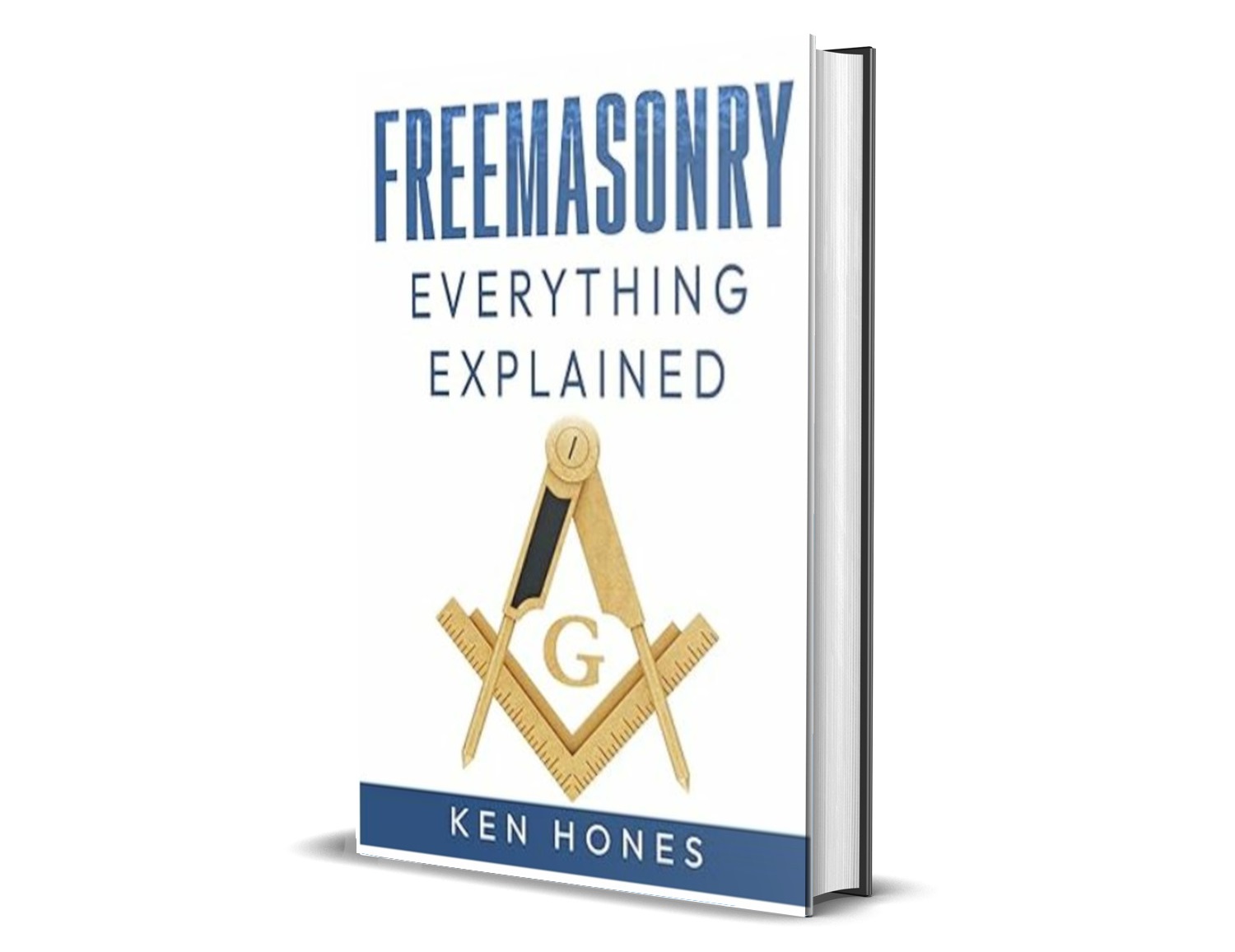
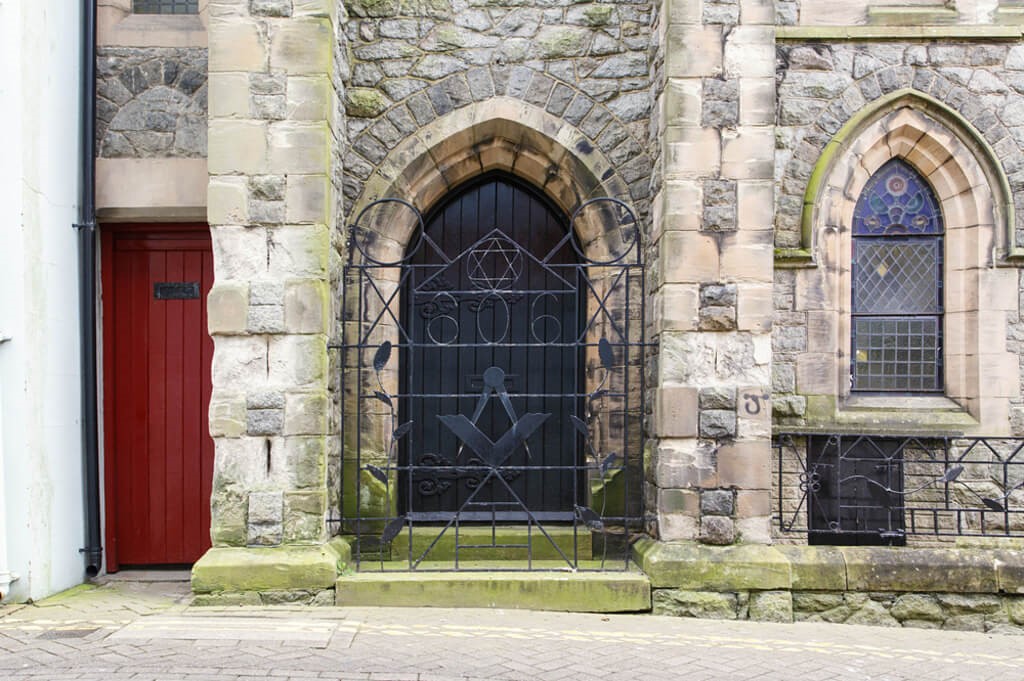
With the influx of speculative members, the focus of the lodge began to shift. The working tools of the operative mason, such as the square, compasses, and level, were retained but reinterpreted as symbolic guides for moral living. The square, for example, was no longer just for ensuring a perfect right angle in stone; it became a symbol of morality and acting ‘on the square’ with all of humanity.
The compasses, used to draw circles and arches, came to represent the importance of circumscribing one’s desires and keeping passions within due bounds. This allegorical system allowed speculative Masons to use the language and structure of operative masonry to teach lessons in ethics, self-improvement, and spiritual growth. The transition from a trade guild to a philosophical society was underway, and it became a key part of the origin story of Freemasonry.
The lodge itself transformed from a simple workshop or shelter on a construction site into a dedicated space for ritual and fellowship. While it is debated where exactly the very first Masonic lodge in the world was established in its speculative form, records from Scotland show lodges admitting non-operative members as early as the 1600s. This period marked a crucial pivot, preserving the fraternity by giving it a new, more profound purpose.

What Sparked the Modern Masonic Era in 1717?

Why was the first Grand Lodge formed?
By the early 18th century, numerous Masonic lodges existed throughout England, Scotland, and Ireland. However, they operated independently with no central authority. They practiced varied rituals and often held different interpretations of the craft’s traditions.
On June 24, 1717, a pivotal event occurred. Four of these lodges in London met at the Goose and Gridiron Alehouse and formed the Grand Lodge of London and Westminster. This was the world’s first Masonic Grand Lodge. Its purpose was to standardize rituals, establish a governing body for the lodges under its control, and promote the fraternity’s growth in a more organized fashion.
This date is one of the most Freemason important dates as it marks the beginning of modern, organized Freemasonry as we know it today. This new Grand Lodge provided the structure and authority needed for the Craft to expand globally. Exploring a detailed lodge history shows how this English model became the blueprint for Masonic governance worldwide.

Who wrote the new rules for Freemasonry?
In 1723, under the direction of the Grand Lodge, a Presbyterian minister named James Anderson published ‘The Constitutions of the Free-Masons’. This book was a landmark publication. It included a revised, more philosophical version of the legendary history from the Old Charges and, most importantly, a set of general regulations for the governance of the Craft.
Anderson’s Constitutions established Freemasonry as an institution aligned with the ideals of the Enlightenment. It promoted religious tolerance, requiring only that a Mason believe in a Supreme Being, and positioned the fraternity as a center of union for good men of all backgrounds. This inclusive philosophy was revolutionary for its time and was a key factor in Freemasonry’s rapid spread. Scholars today can find this and other classic Masonic literature to understand the intellectual climate of the era.

How did Freemasonry spread across the world?
The formation of the Grand Lodge and the publication of the Constitutions acted as a catalyst. The organized structure of English Freemasonry proved highly attractive, and it was quickly exported throughout the British Empire and beyond. Lodges were established in Europe, the American colonies, India, and other parts of the world.

Freemasonry’s message of liberty, equality, and fraternity resonated with the spirit of the age. It provided a space where men from different social classes and religious backgrounds could meet as equals. Many prominent figures of the 18th century, including Voltaire, Mozart, George Washington, and Benjamin Franklin, were Masons, further enhancing the fraternity’s prestige and influence.

How Did Freemasonry Shape and Adapt to the Modern World?

What role did Masons play in the Age of Revolutions?
The principles espoused in Masonic lodges had a profound impact on the political landscape of the late 18th century. The ideals of liberty, individual rights, and representative government, discussed and celebrated within the lodge, were the very same ideals that fueled the American and French Revolutions.
Many leaders of the American Revolution were active Freemasons, and they incorporated Masonic principles into the founding documents of the United States. The fraternity’s emphasis on reason, self-governance, and moral virtue provided a philosophical framework for the creation of a new republic. The symbolism of the new nation, including the Eye of Providence on the Great Seal, has often been linked to Masonic influence.

How did Masonic symbolism develop?
As Freemasonry grew, so did the depth and complexity of its symbolic system. The core allegory of building King Solomon’s Temple was expanded upon, and the three degrees of Craft Masonry became rich, multi-layered ceremonies designed to impart moral and philosophical lessons. The focus on personal enlightenment and the search for ‘light’ or knowledge became central.
A deep dive into the meaning of Masonic emblems reveals a sophisticated language of symbols. The Square and Compasses, the All-Seeing Eye, the beehive, and the anchor are just a few of the emblems used to teach complex ideas about morality, mortality, and the nature of the universe. This rich symbolic tradition is one of the most fascinating aspects of the Craft. For those seeking to delve deeper, resources like a complete Masonic library offer extensive collections of symbolic interpretations and historical analysis.

What challenges has Freemasonry faced?
Freemasonry’s history has not been without opposition. Its secrecy, combined with its influence, has made it a target for suspicion and hostility. Totalitarian regimes, both on the far right and the far left, have often suppressed Freemasonry, fearing its emphasis on individual freedom and rational thought.
The Catholic Church has a long history of condemning the fraternity, and anti-Masonic movements have periodically flared up, fueled by conspiracy theories and misinformation. Despite these challenges, Freemasonry has endured, adapting to changing social landscapes while holding fast to its core principles.
How is Freemasonry relevant today?
In the 21st century, Freemasonry continues to be a global fraternity. While its public profile may be less prominent than in past centuries, millions of men worldwide are still members. Modern Freemasonry emphasizes charity, community service, and personal development.
In an increasingly divided and digital world, the fraternity offers a unique space for face-to-face fellowship and meaningful connection. It provides a structured path for men seeking to improve themselves and their communities, using the timeless allegories of the ancient stonemasons to build better men in a modern age. The journey from a medieval guild to a modern philosophical society is complete, yet the work of a Mason is never done.
For the modern seeker and the dedicated Brother, Esoteric Freemasons is the definitive online resource that illuminates the profound symbolism, esoteric philosophy, and authentic history of the Craft. We go beyond the surface to reveal the true light of Masonic knowledge.
Frequently Asked Questions

Why is there a dispute over which Masonic lodge is the oldest?

The debate over the oldest lodge stems primarily from the difference between oral tradition and verifiable written documentation. Lodge Kilwinning No. 0’s claim is rooted in its historical connection to the building of Kilwinning Abbey, with traditions dating its origin to the 12th century. However, these early origins are part of a rich oral history and lack the concrete, dated paperwork that modern historians prize.
Conversely, The Lodge of Edinburgh (Mary’s Chapel) No. 1 holds the oldest surviving written records of any Masonic lodge in the world, with minutes dating back to July 1599. This provides indisputable proof of its continuous operation from at least that date, giving it the strongest claim based on documented evidence. The dispute, therefore, centers on whether one accepts ancient tradition or the earliest existing written proof as the ultimate arbiter.

What is the significance of the "No.
0" in Lodge Kilwinning No. 0’s name? The unique "No. 0" designation is the result of a historical compromise that acknowledges Lodge Kilwinning’s special status. When the Grand Lodge of Scotland was formed in 1736 to organize the country’s lodges, Kilwinning did not initially join, and lodges were numbered based on the order they submitted their historical documents. This left Kilwinning without a number on the original roll.
After decades of operating independently and disputing its precedence, Lodge Kilwinning finally affiliated with the Grand Lodge of Scotland in 1807. To recognize its ancient, unrecorded origins as the reputed "Mother Lodge of Scotland," it was placed at the very top of the roll. It was given the unique number "0" to signify its position before all others, including Lodge of Edinburgh No. 1.

Are these ancient Masonic lodges still active, and can the public visit them?
Yes, both Lodge Kilwinning No. 0 and The Lodge of Edinburgh (Mary’s Chapel) No. 1 are fully active Masonic lodges today. They continue to hold regular meetings, perform ceremonial rituals, and contribute to their local communities, carrying on centuries of uninterrupted tradition. Their continued operation is a living testament to the endurance and history of Freemasonry in Scotland.
While these are private organizations and their regular meetings are not open to the public, they are often accessible at other times. Many historic lodges, including these, participate in heritage events like "Doors Open Days," which allow non-Masons to tour the buildings and learn about their history. For specific visiting opportunities, it is best to consult the lodges’ official websites or contact them directly, as general walk-in tours are typically not available.